


Ref. 2172
Susse Frères
Bronze-casters (XIXe – XXe s.)
O. Lelièvre
Sculptor (1869-1947)
(attributed to)
Elegant Chandelier
France
Circa 1900
Gilded and patinated bronze, Alabaster
Height : 80 cm (31,5 in. ) ; Diameter : 63 cm (24,8 in.)
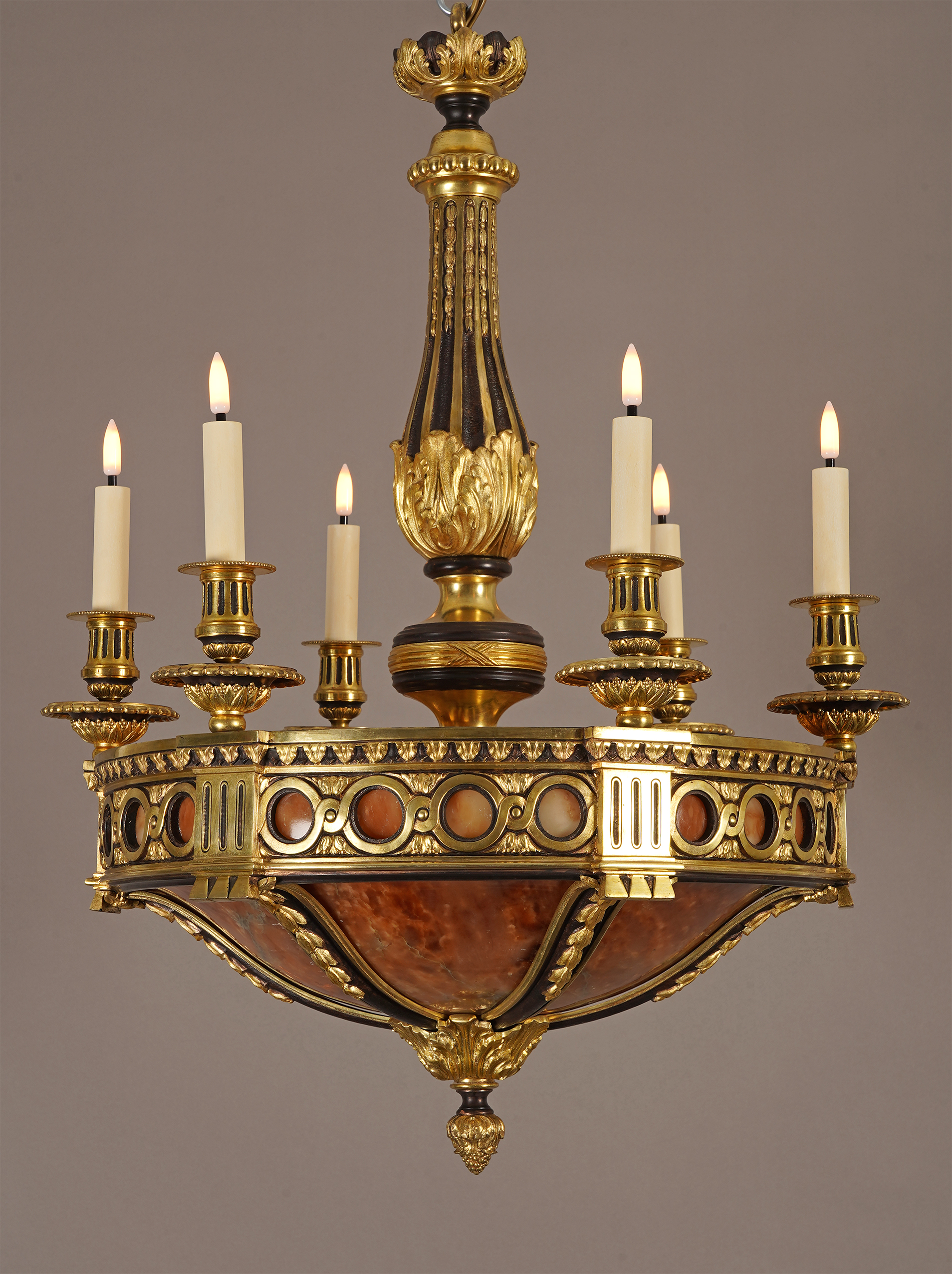
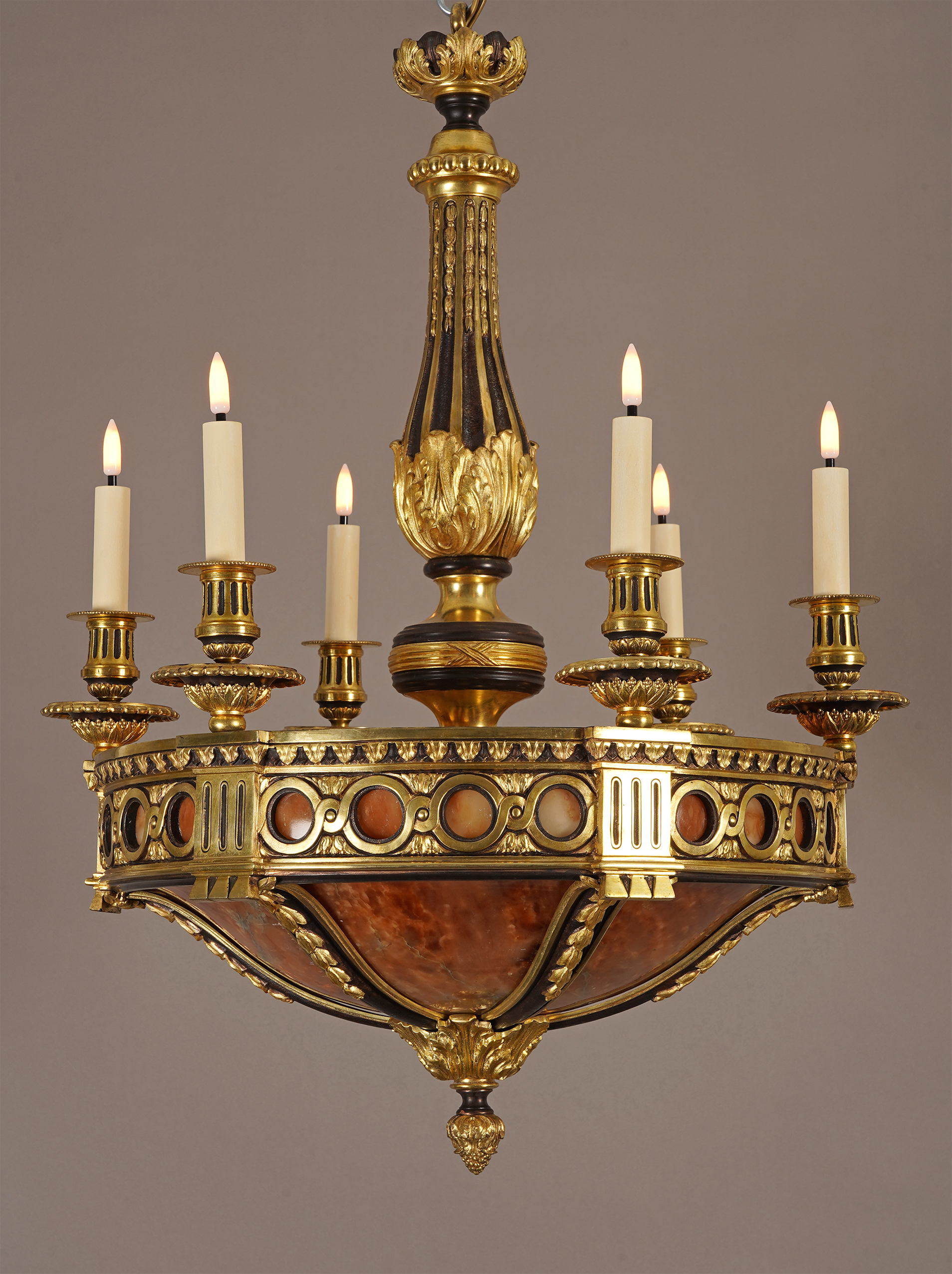
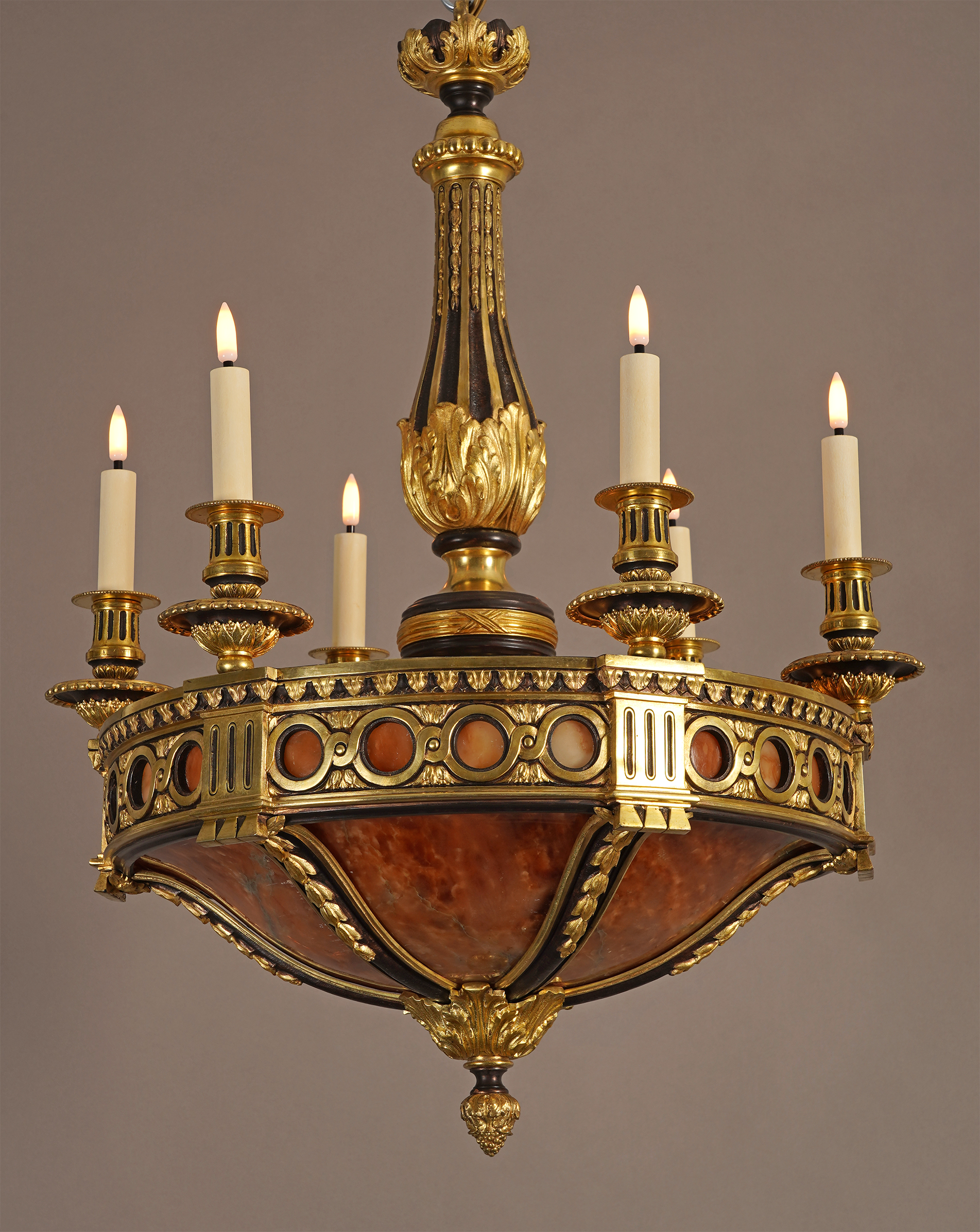
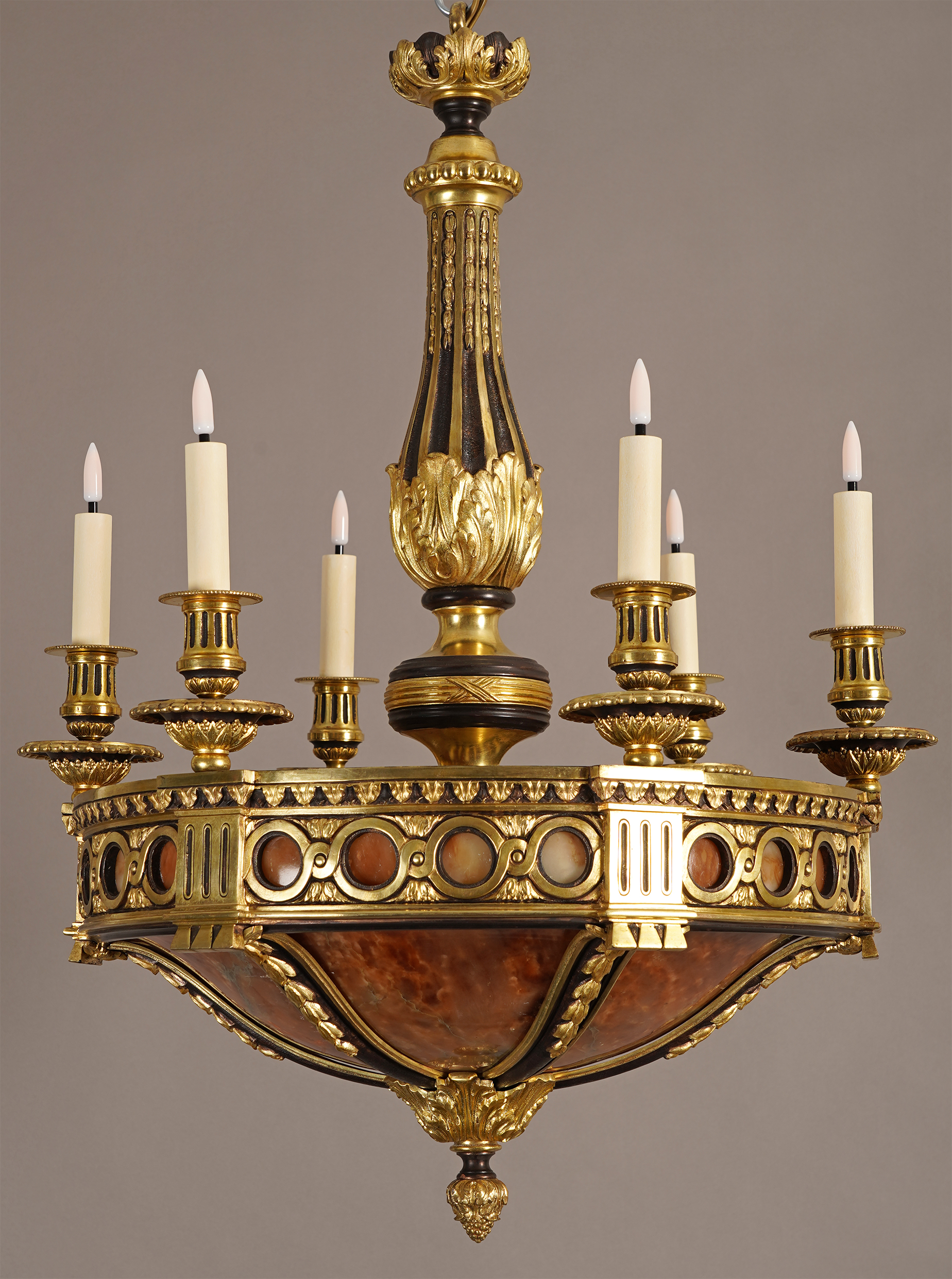
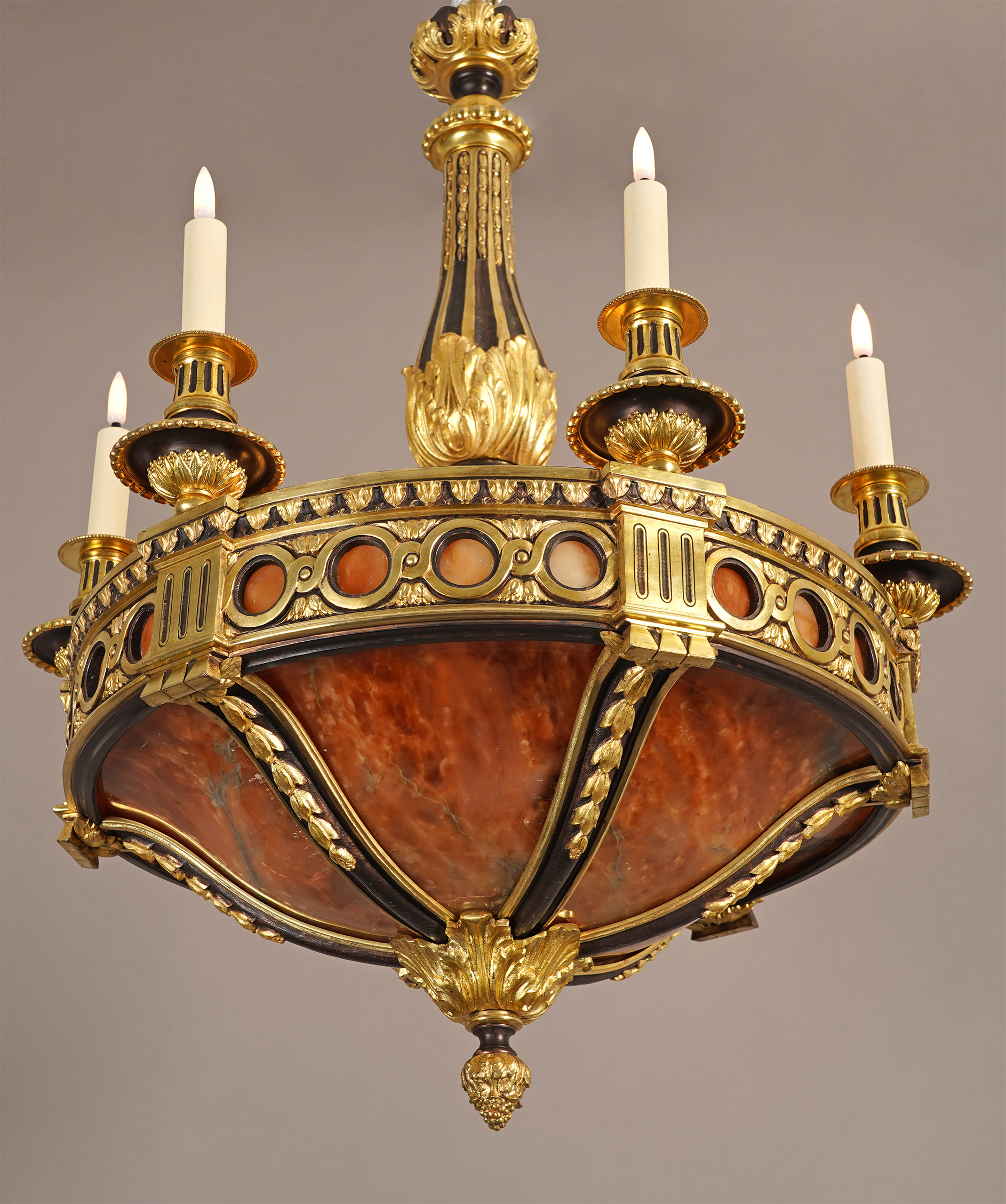
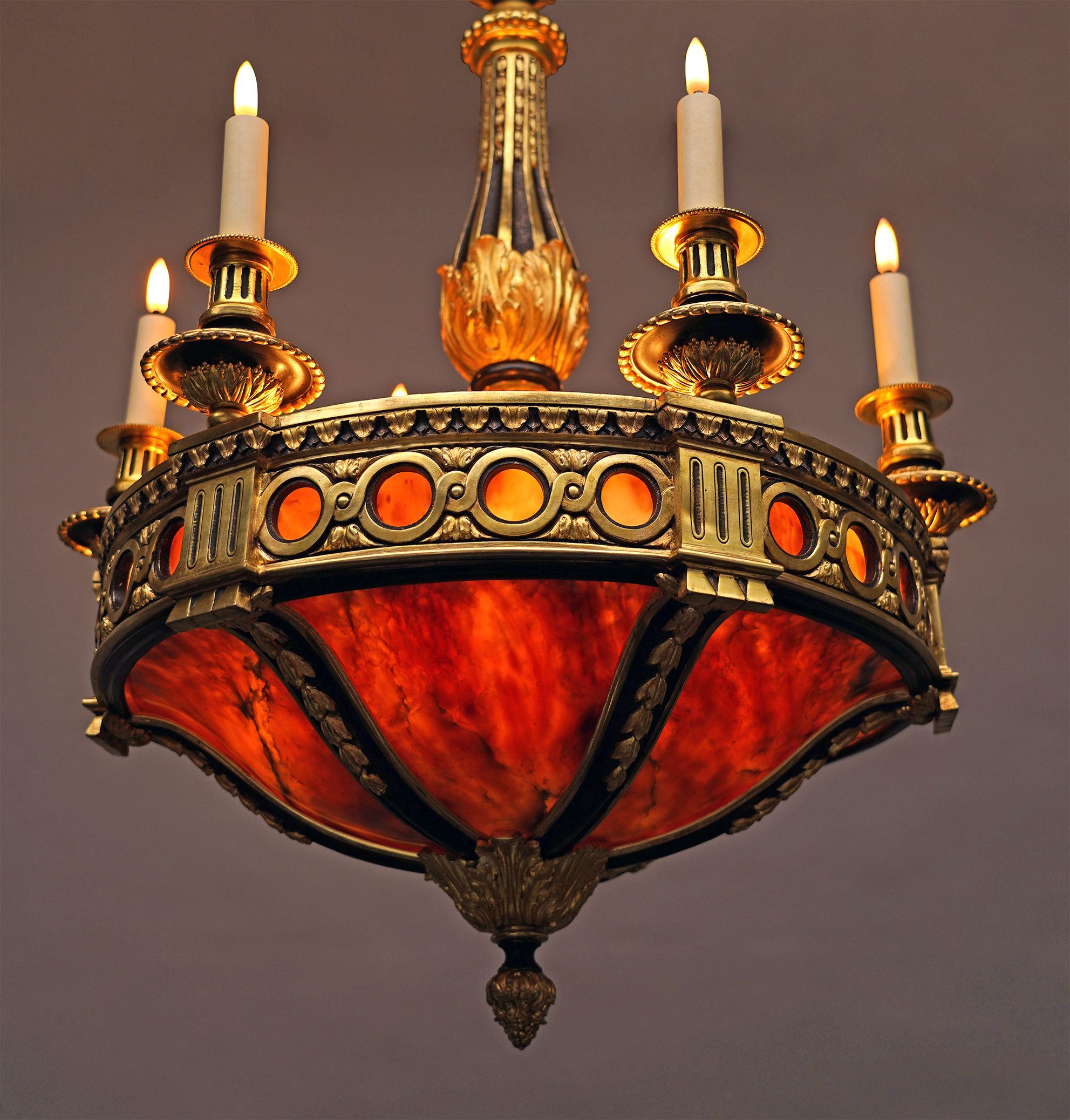
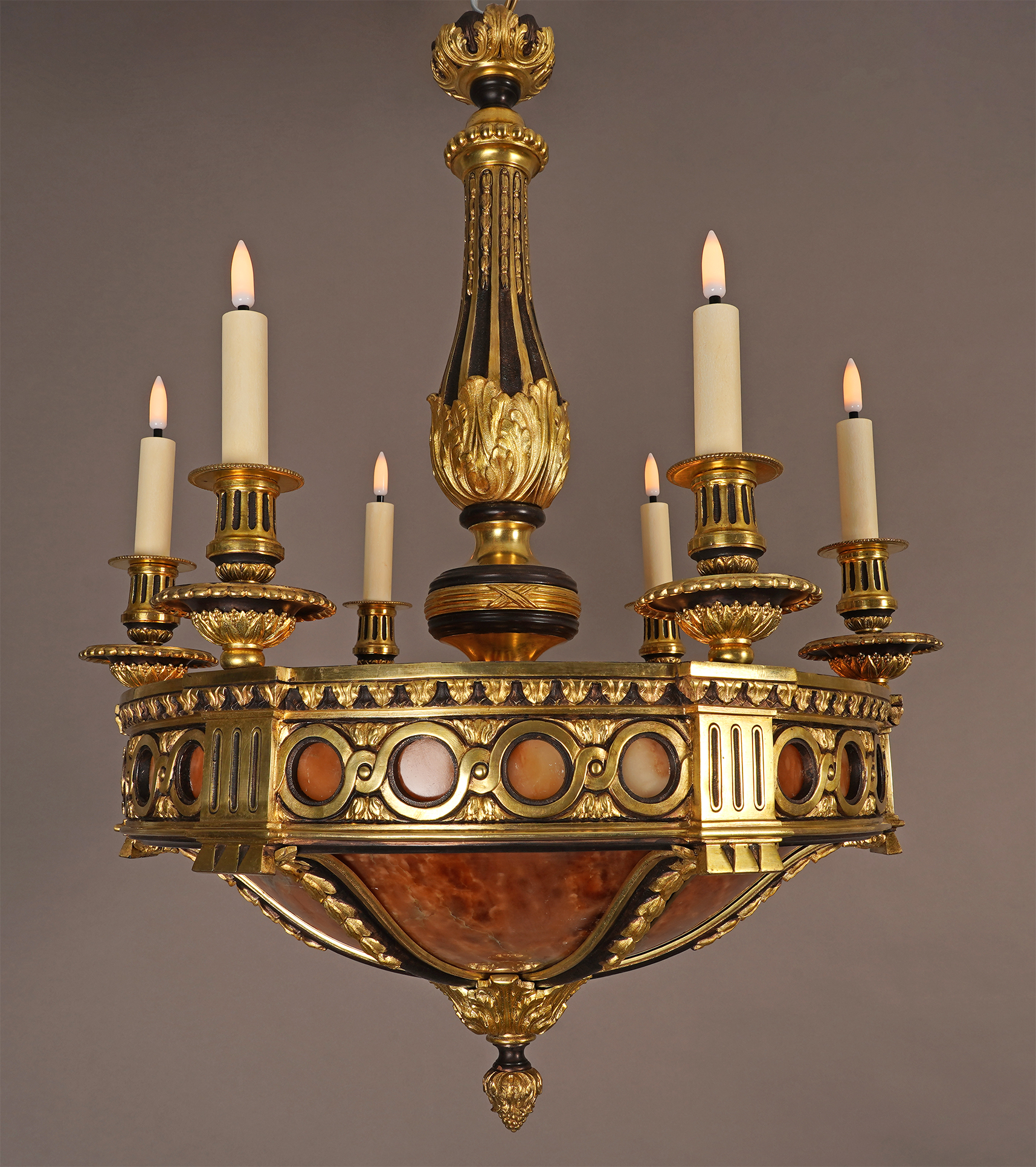
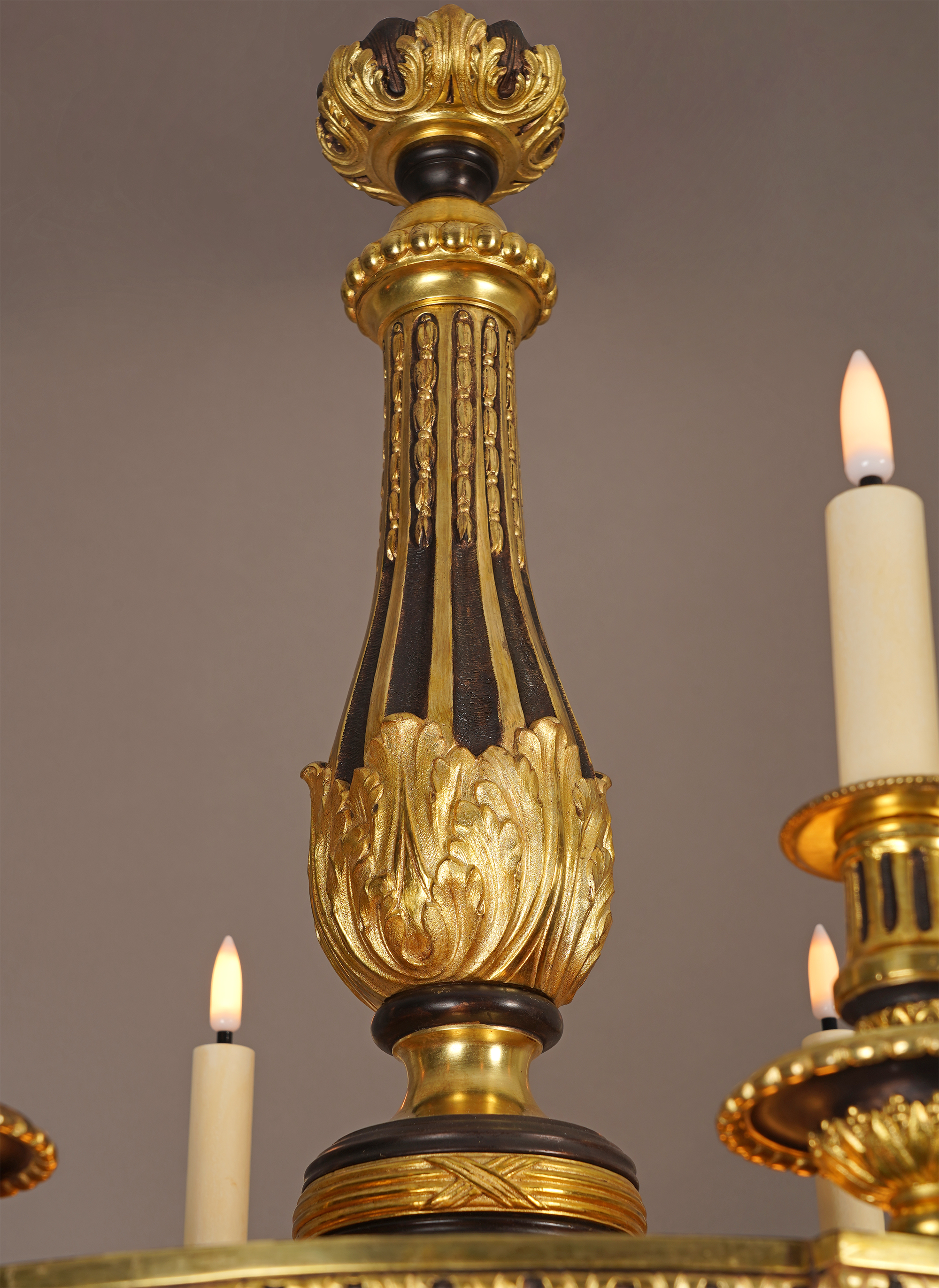
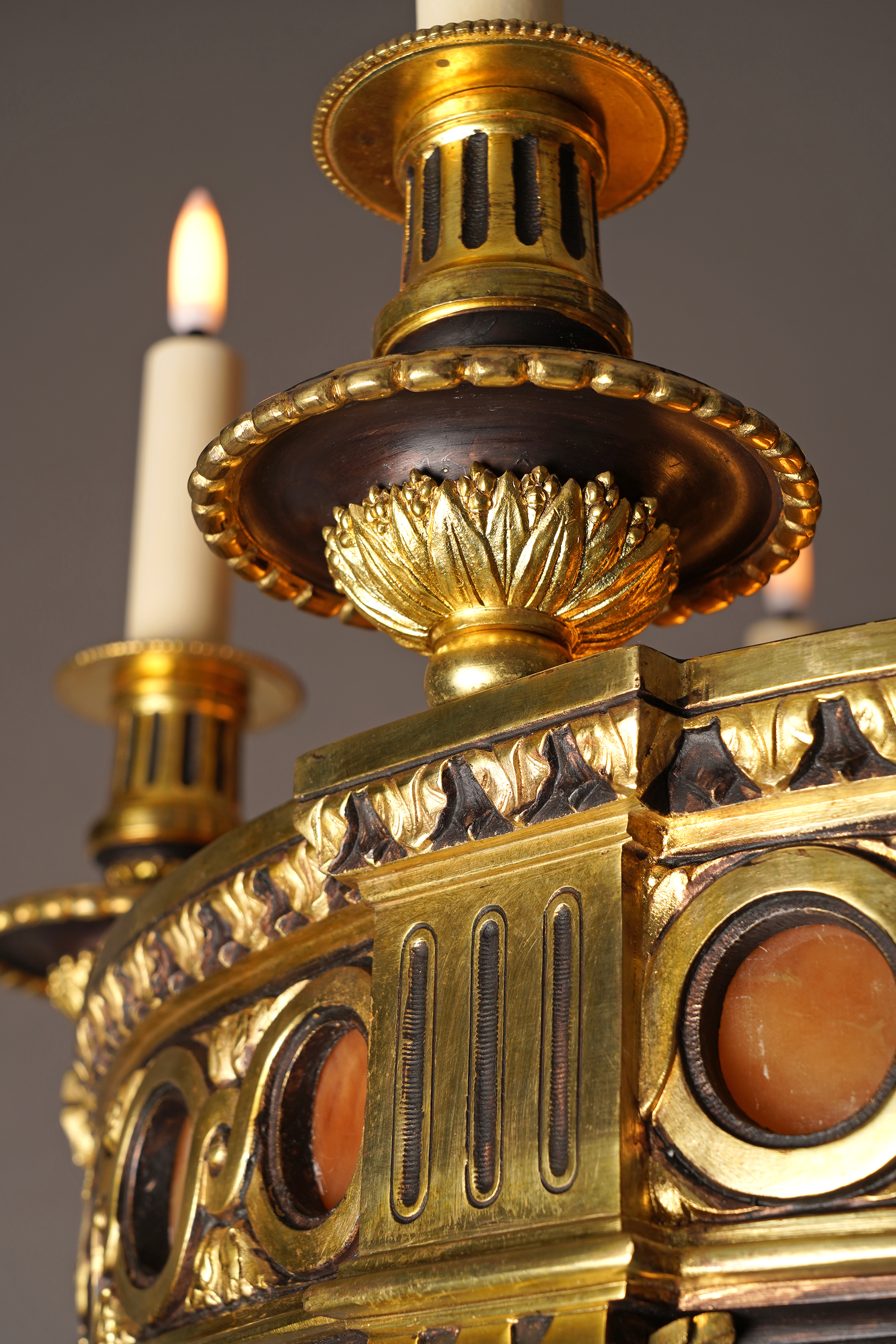
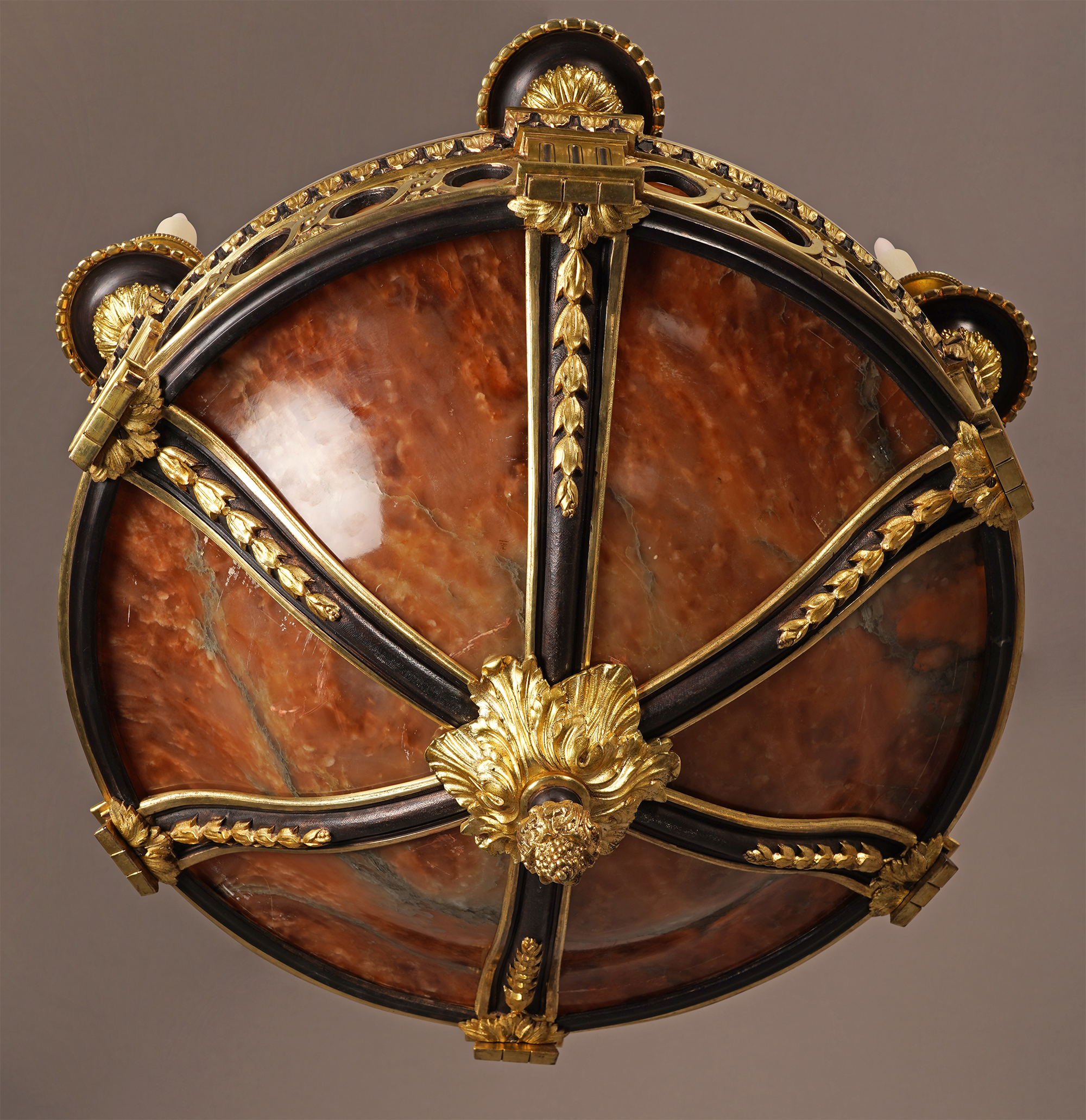
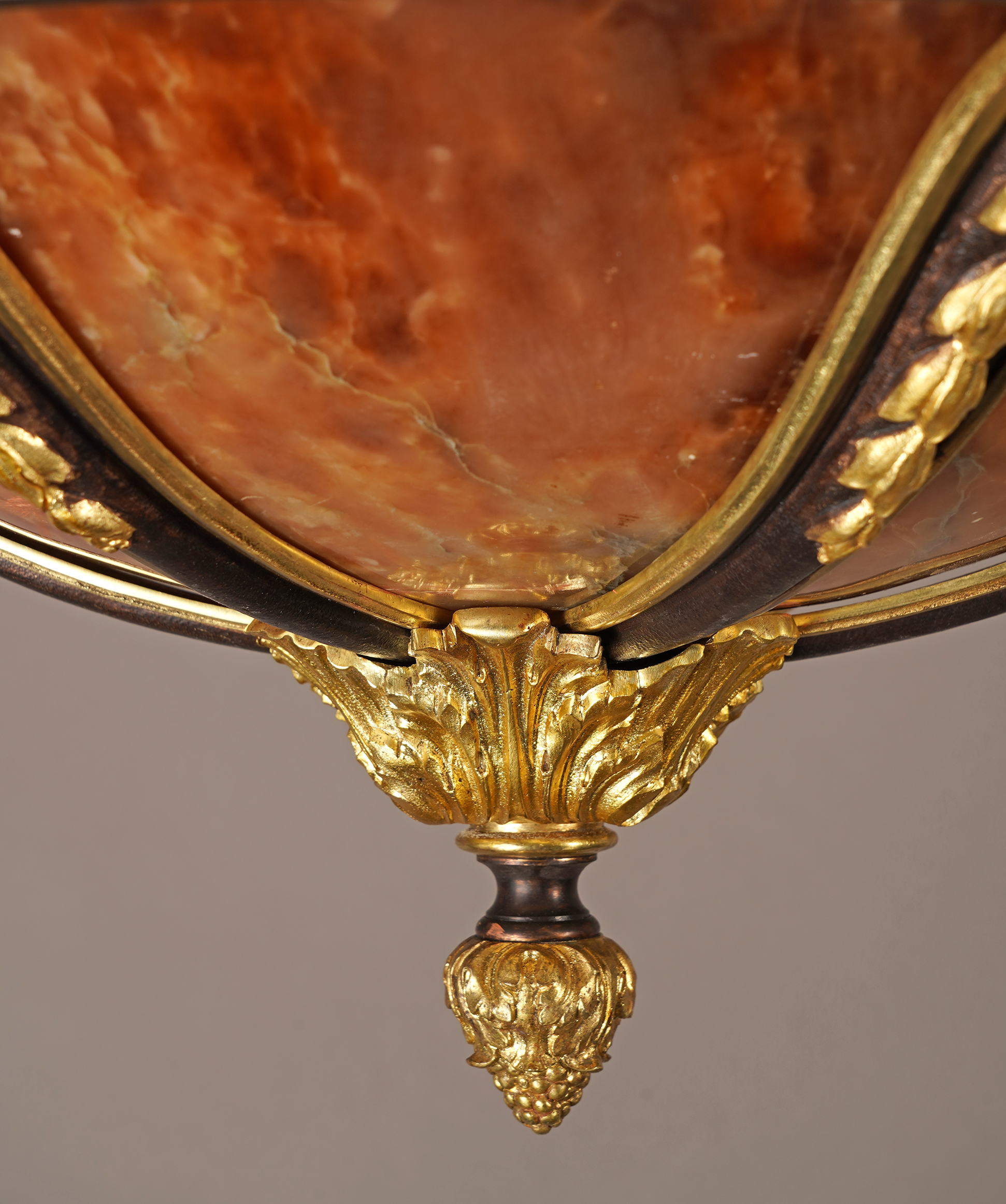
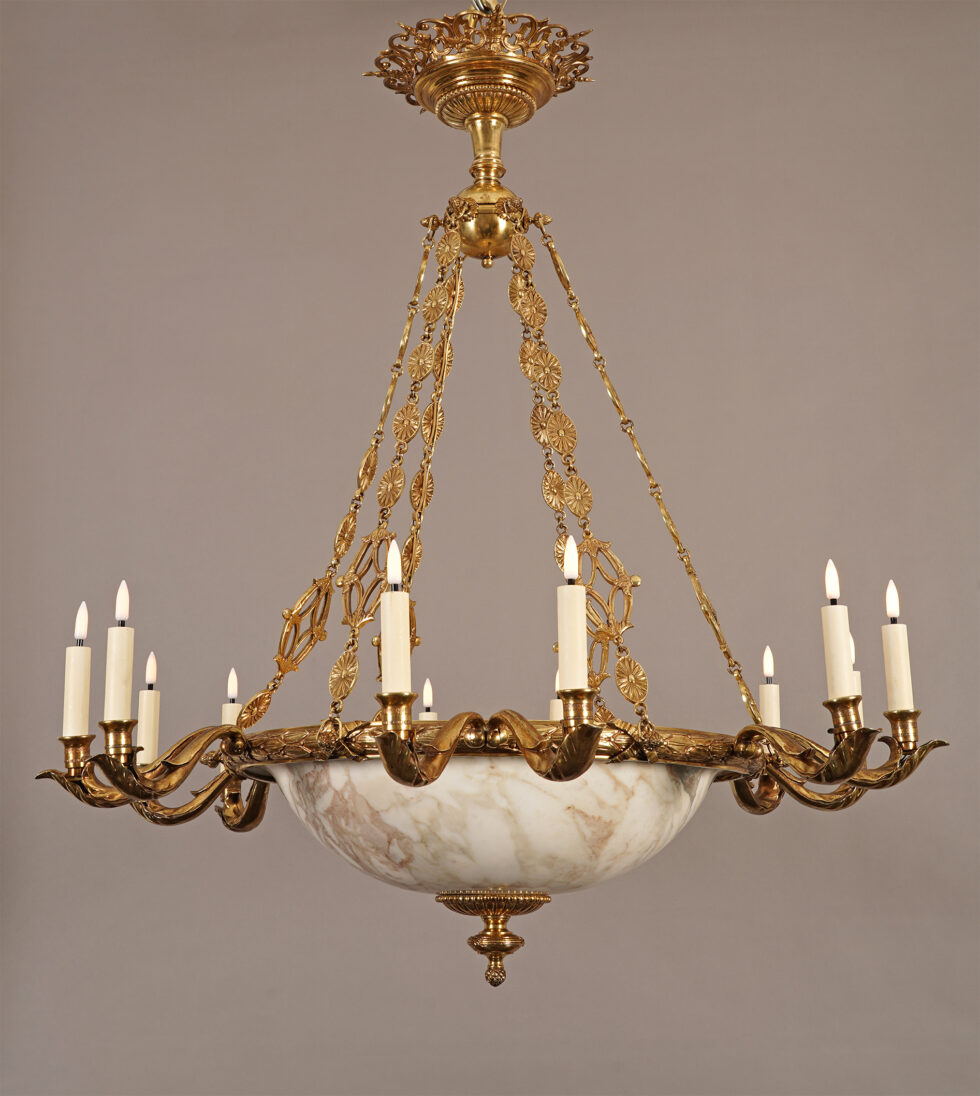
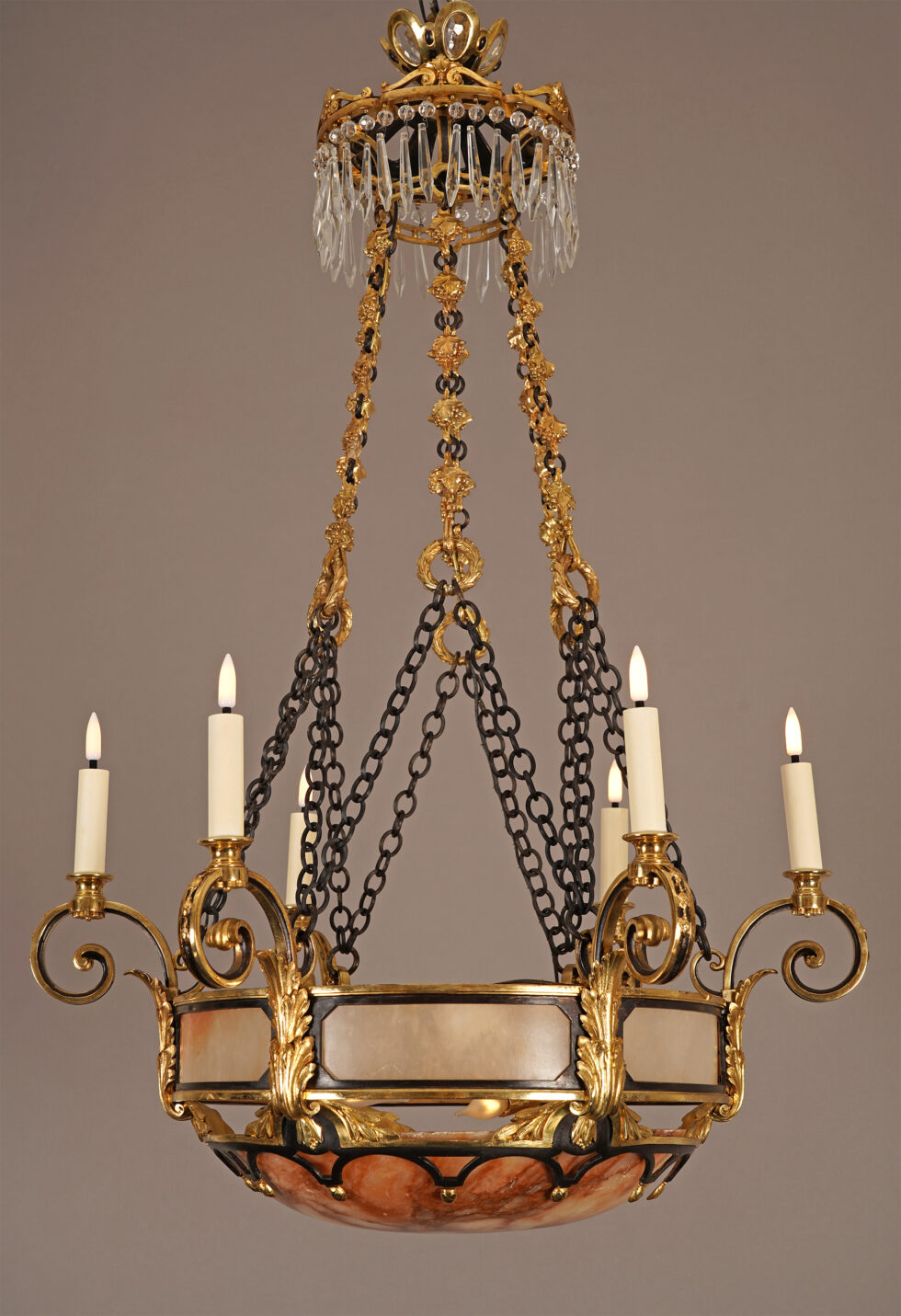
Rare Neo-Classical inspired chandelier in patinated bronze with gilt highlights and alabaster, featuring double lighting. It consists of a large veined orange-brown alabaster bowl with internal illumination, encircled by a crown decorated with an interlaced frieze punctuated by projecting triglyphs and drops, supporting six light arms with foliate bobeches and fluted candle sockets. The bowl is supported by six foliate bands converging into acanthus leaves extended by a seed motif. It is suspended from a baluster-shaped stem adorned with acanthus leaves, a ribboned torus, a pearl frieze, and rudented fluting with asparagus-tip motifs, ending in a foliate ceiling mount.
This chandelier reflects the codes of Neoclassicism developed in the late 18th and early 19th centuries, adopting a balanced composition and strict symmetry, with a structured and orderly decoration inspired by Greco-Roman Antiquity.
Biography
The world-renowned Susse Frères foundry began producing bronze works as early as the first half of the nineteenth century. Confirming their success during the celebrated Expositions des Produits de l’Industrie in Paris, the Susse brothers, Victor Susse and Amédée Susse, were listed from 1841 onward as manufacturers of “art bronzes for clocks, candelabra, vases, statuettes, etc. The greatest French sculptors entrusted them with their sculpted works to be cast in bronze, such as James Pradier, who signed in 1841 the earliest known publishing contract currently recorded. Following the deaths of the two brothers, Albert Susse succeeded them and directed the firm from 1880 to 1922. He brought renewed momentum to the company and greatly expanded the foundry’s activities. Albert Susse subsequently opened a luxurious showroom at 13 boulevard de la Madeleine in Paris.
Octave Georges Lelièvre (1869-1947) was a French sculptor and ornamentalist associated with the decorative arts of the Belle Époque and with a reinterpretation of the Louis XVI style. A student of the sculptor Théodore Eugène Victor Barrau, as well as of Auguste Dumont and Charles Gumery, his work is chiefly known through ornamental bronzes, clocks, candelabra, desk sets, and decorative objects produced by major artistic bronze foundries, notably Susse Frères. Active circa 1890–1930, he worked within the tradition of French decorative sculpture, combining neoclassical influences with the refinement of Art Nouveau and later Art Deco. His creations frequently employed gilt bronze, featuring decoration with acanthus leaves, garlands, mascarons, and motifs inspired by eighteenth-century French design.
Contact us
Related Items
H. Vian
Elegant Chandelier
Susse Frères & O. Lelièvre
Chandelier with Vine tendrils

Baccarat
Neo-Greek Chandelier
H. Vian
Chandelier with Eagle Heads
E.Lachenal
Oriental style Chandelier
Lacarrière, Delatour et Cie
“Acanthus” Chandelier
Neo-Gothic Chandelier
Maison Baguès
“Palmettes” Chandelier

E. Cornu and G. Viot et Cie
Orientalist Chandelier
An Oriental Style
Chandelier
Tobogan Newsletter
If you want to be up-to-date with our new acquirings you can sign up to our newsletter.