Ref. 2086
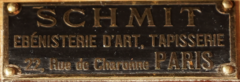
F. Schmit
Cabinet-maker (1830-1880)
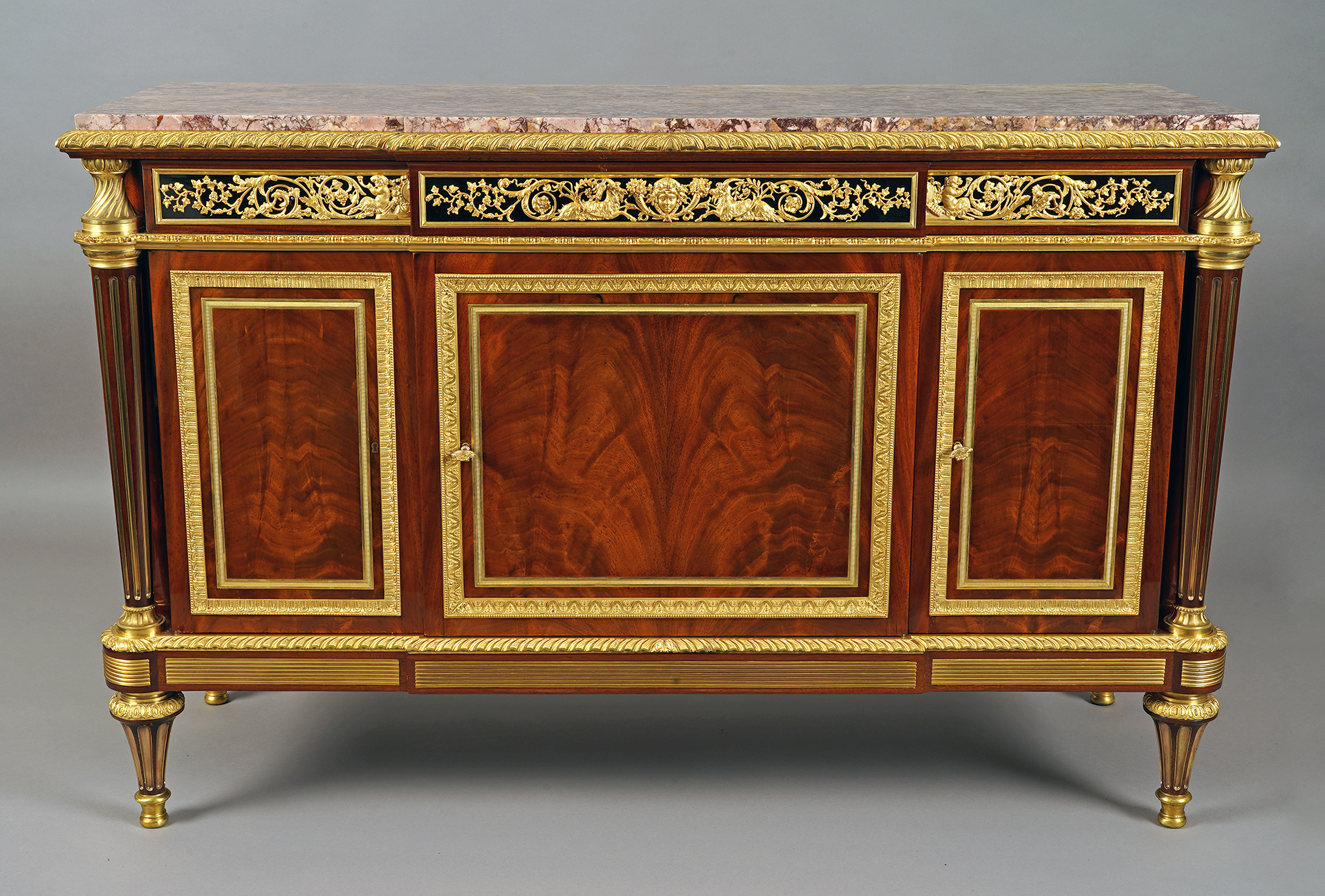
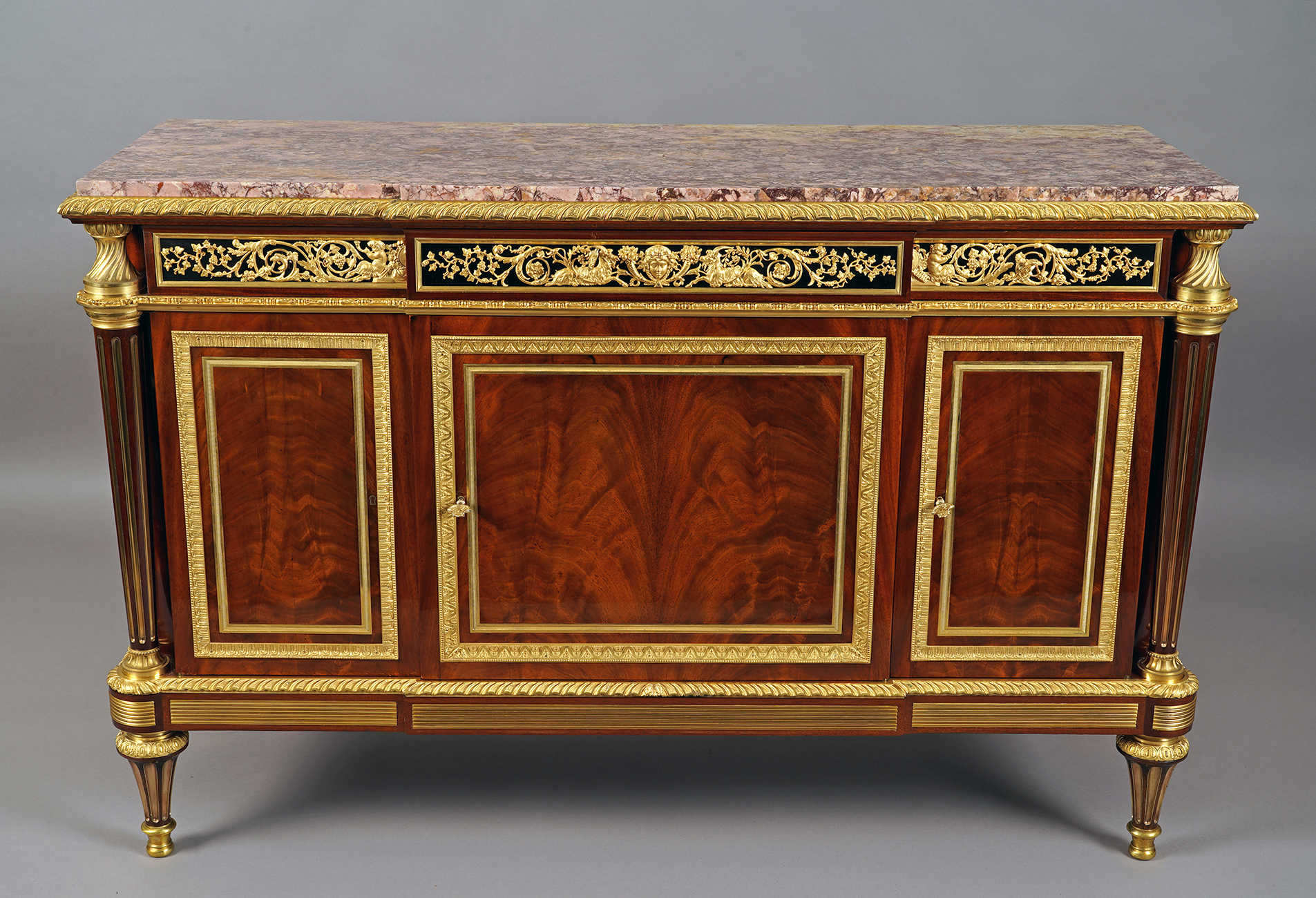
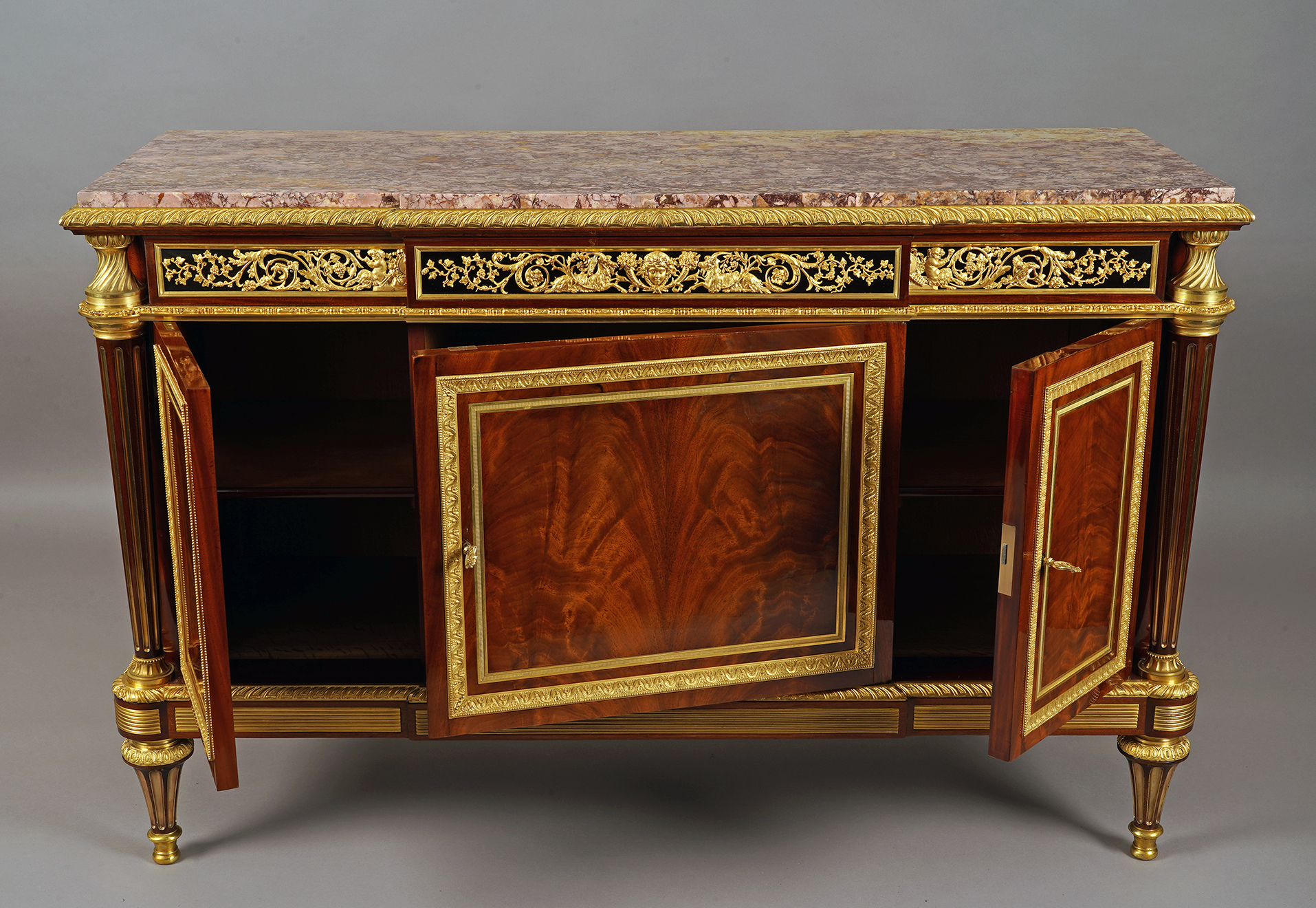
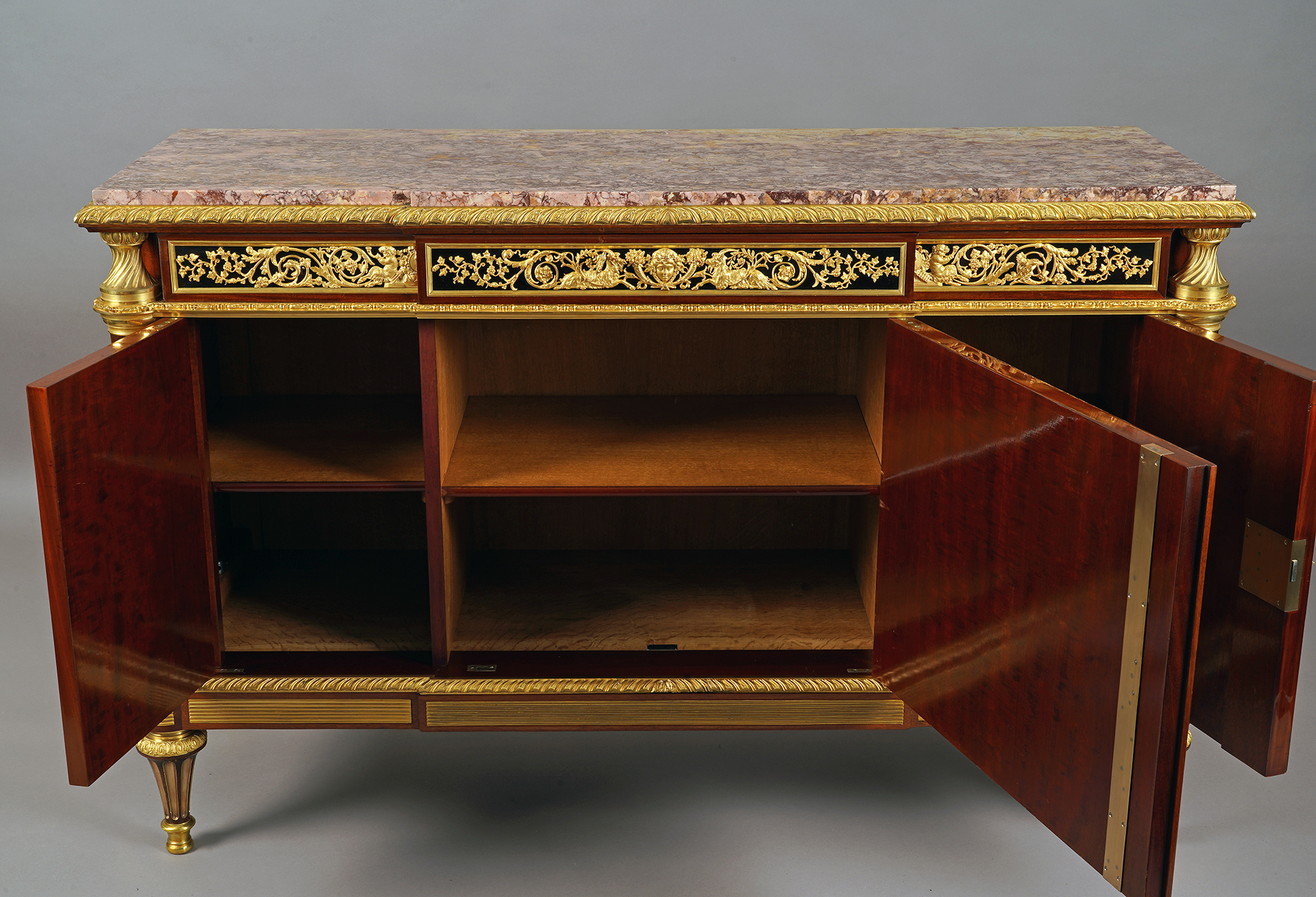
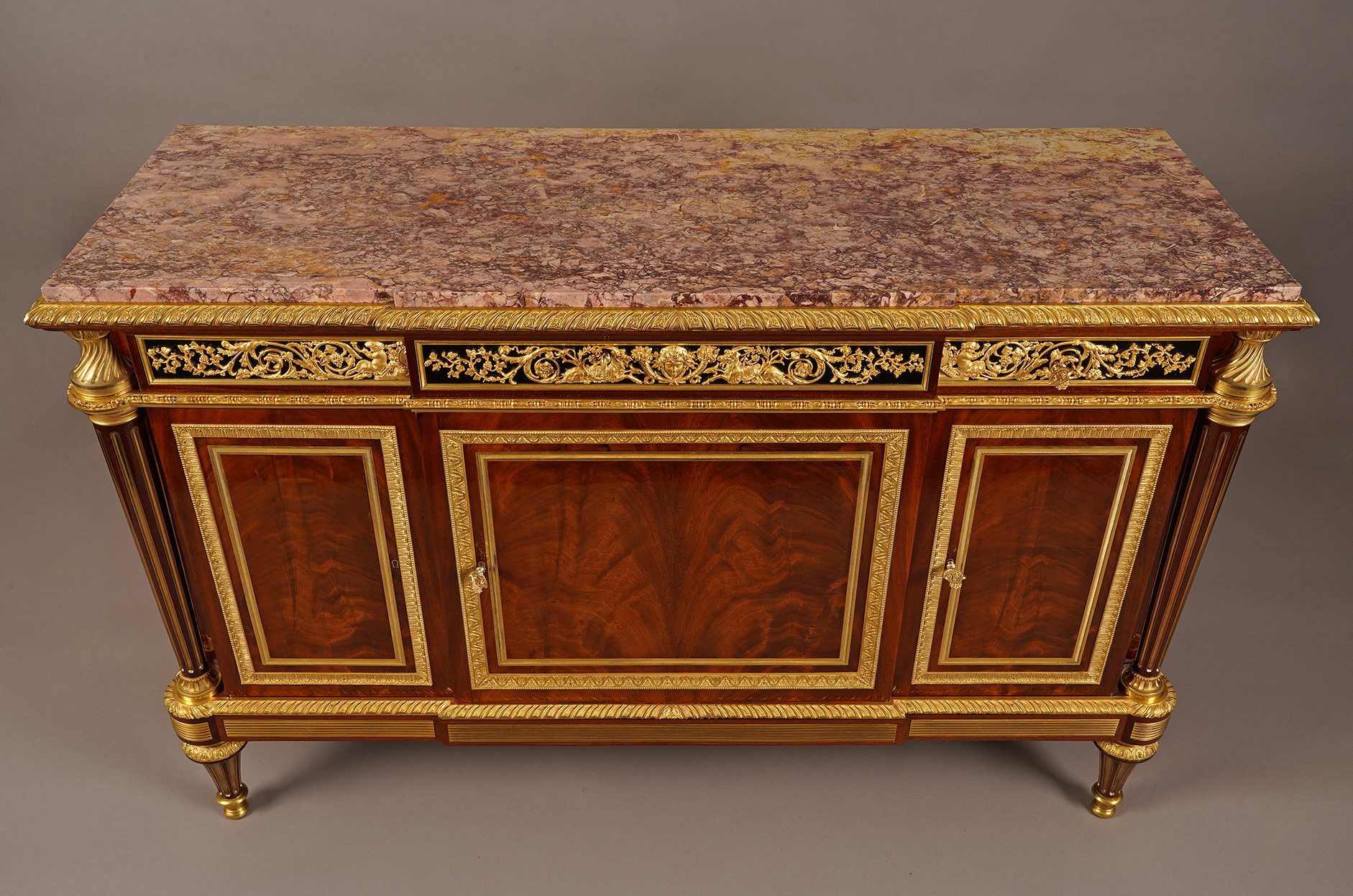
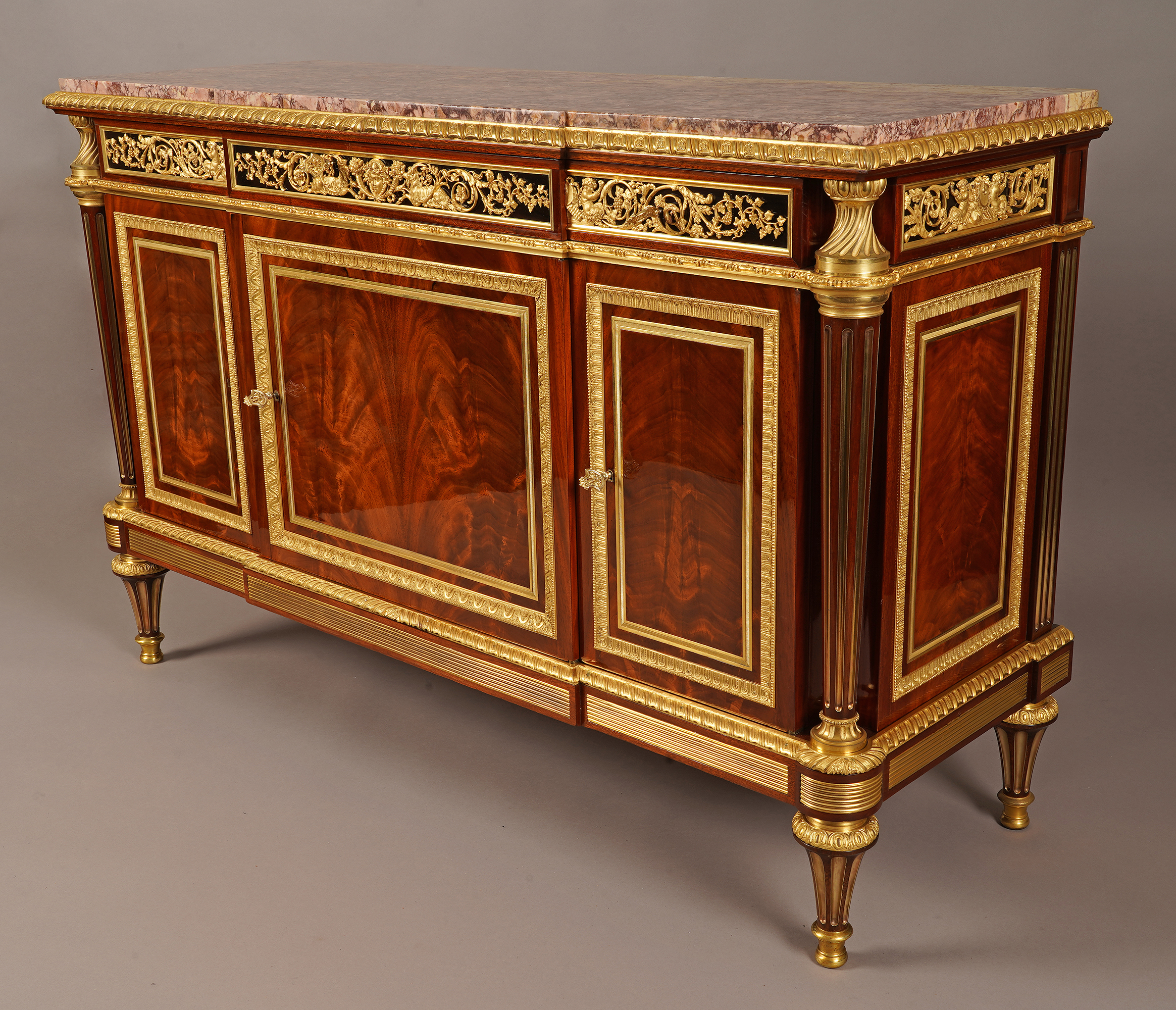
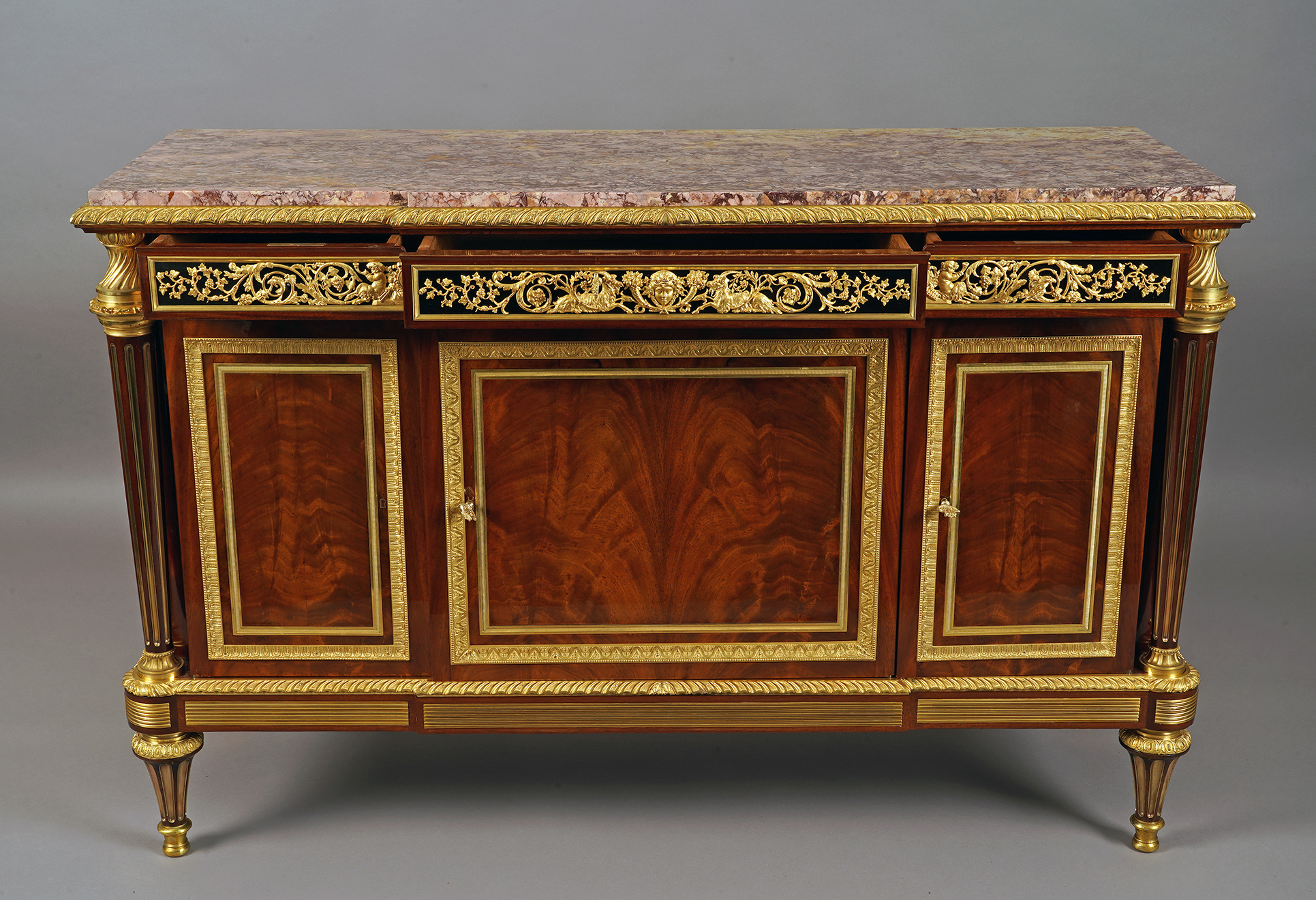
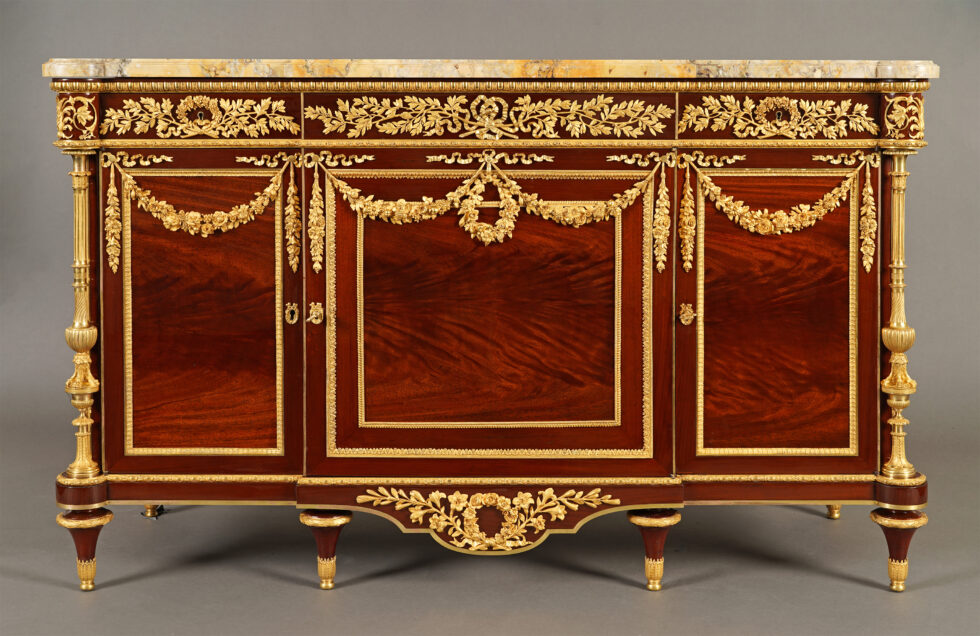
Beautiful Commode
France
Circa 1880
Height : 91 cm (35,8 in.) ; Length : 140 cm (55,1 in.) ; Depth : 48 cm (18,9 in.)
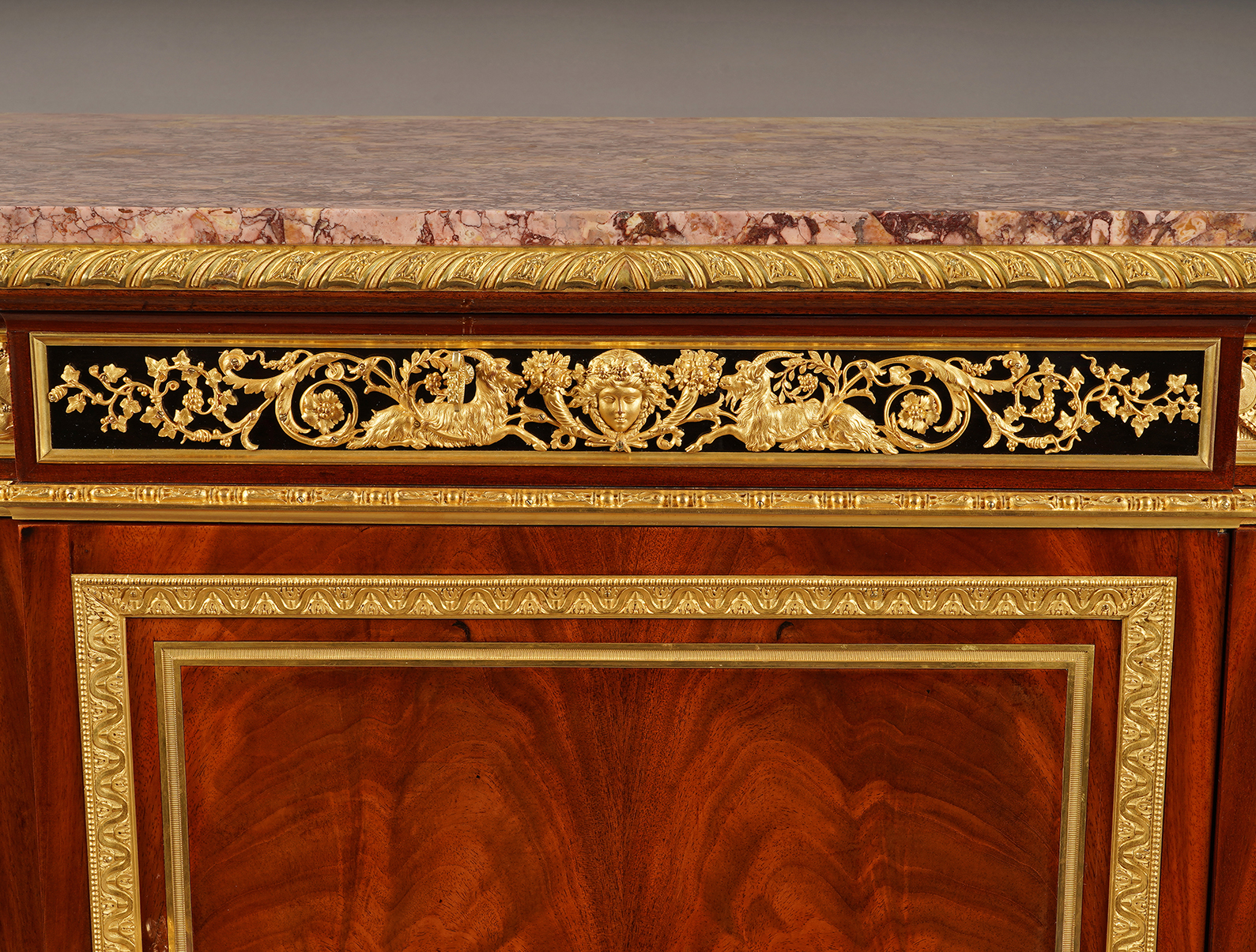
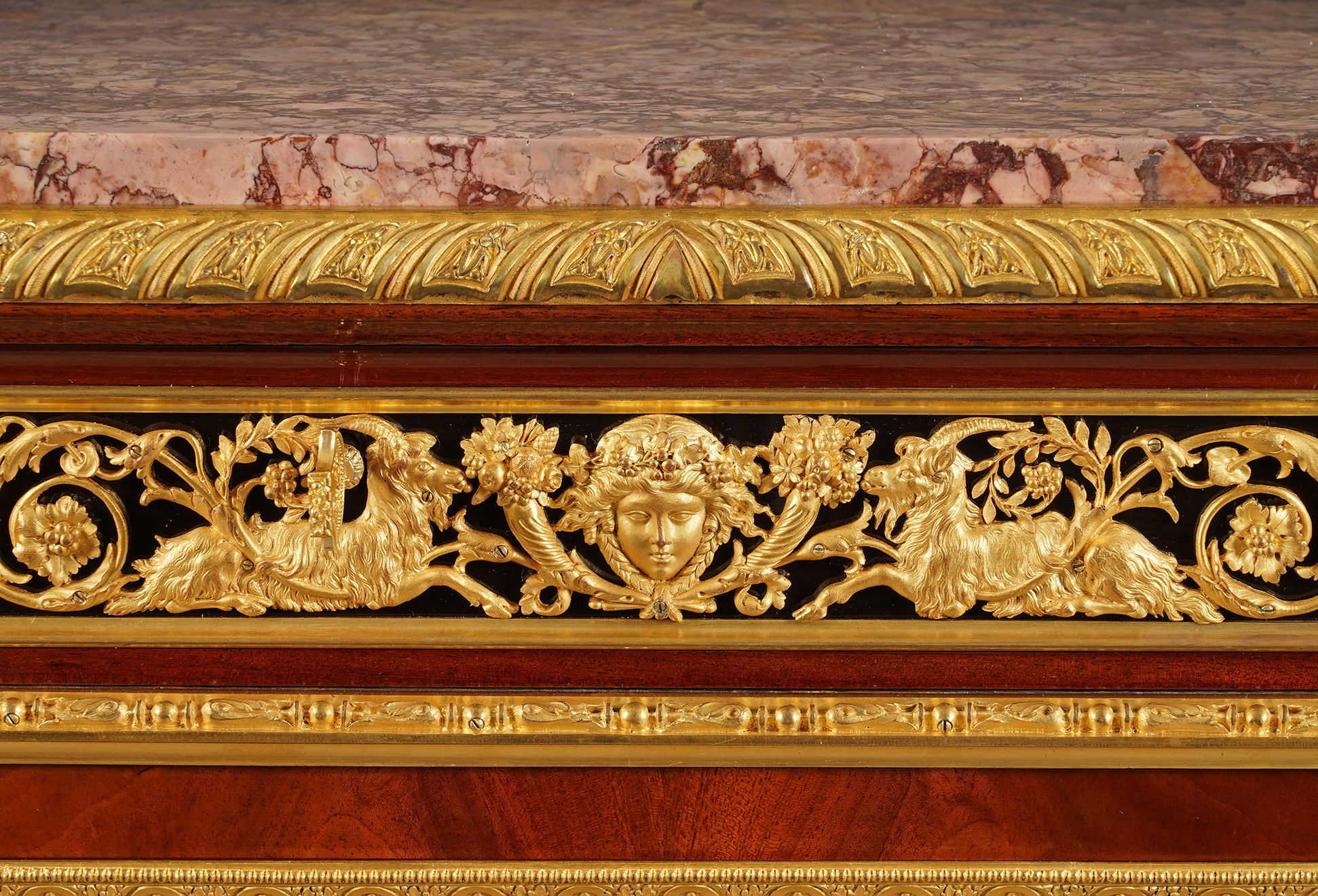
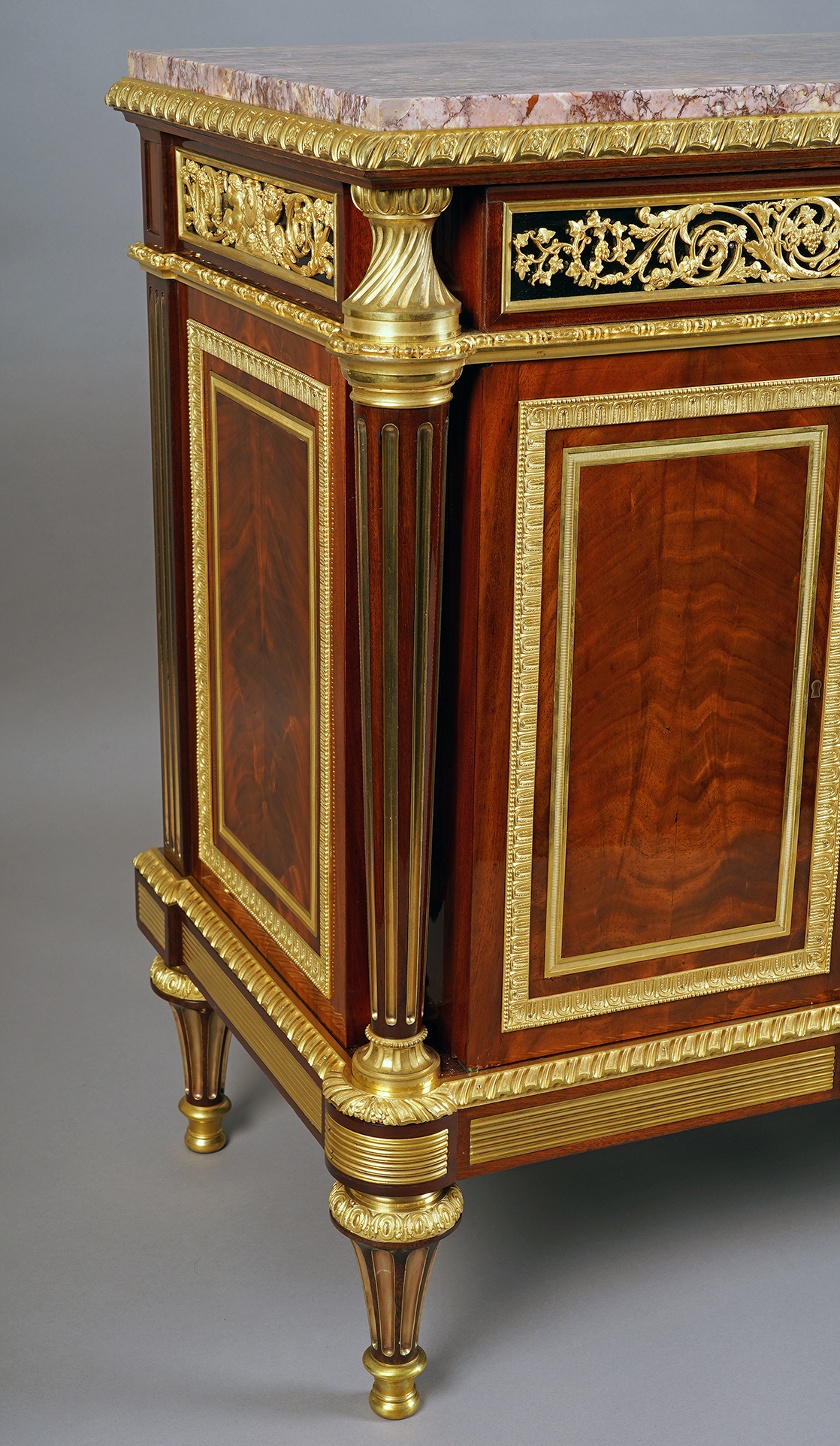
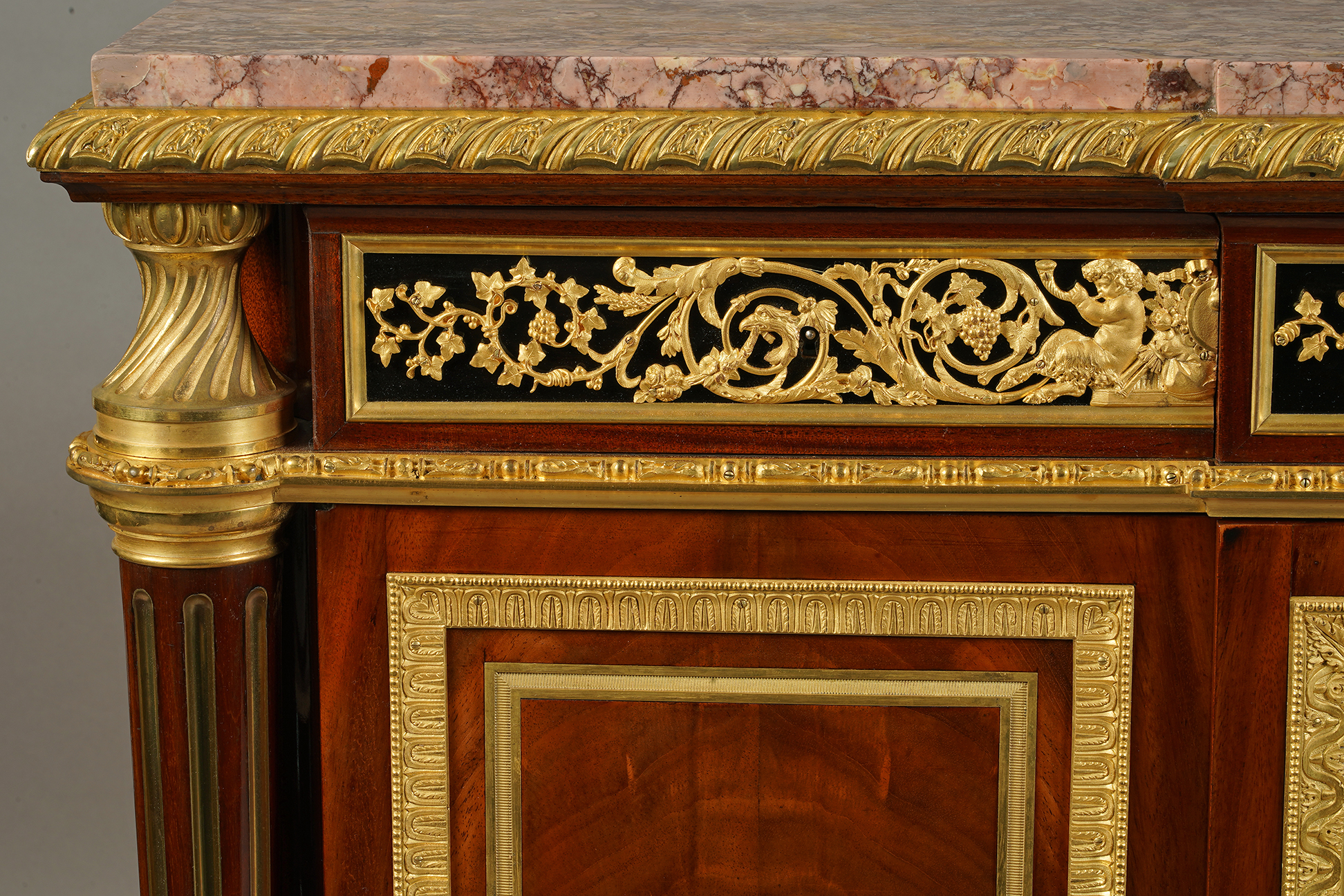
Beautiful Louis XVI style commode in mahogay, flamed mahogany veneer, opening with three doors topped with drawers decorated with rich and fine ornamentation in chased and gilded bronze of female masks, ibexes and young satyrs among foliage scrolls and vine branches on a blackened wood background, as well as friezes of oves, ribbons and canals. It is decorated with two uprights with detached columns with brass-lined fluting ending in fluted spinning feet, and topped with a Spanish brocatelle marble.
This commode is inspired by a very characteristic model by Adam Weisweiler (1744-1820), one of the most illustrious cabinetmakers of the reign of Louis XVI. He designed several variations of his models, including a series of commodes with doors such as ours: tripartite front, spinning top feet, veneer panels framed with bronze mounts, detached fluted corner columns, with or without bronze frieze.
related work
Other commodes of this model are exposed in the world’s most famous museums, including a pair at the Louvre. This model was also made with ornamentation of lacquer panels or European varnish. Two of these commodes are preserved at the Metropolitan Museum of Art in New York (Wrightsman collection, 1977.1.12) and at the Kansas City Museum.
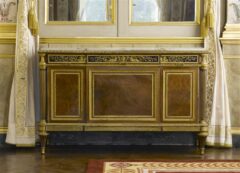
Commode by A. Weisweiler, 1788, collections of the Château de Compiègne
biography
Born in Luxembourg, Frédéric Schmit was a cabinetmaker specializing in mahogany and rosewood furniture, and meubles de fantaisie. He practiced at 9 rue de Charonne from 1856, then in 1870, the firm temporarily became SCHMIT, ALAVOINE ET PIOLLET at 9 and 24 rue de Charonne. In 1874, it became SCHMIT ET PIOLLET at 20 rue de Charonne, then moved to 22 from 1876, then became SCHMIT SUCCESSOR around 1888. He won a gold medal at the Universal Exhibitions of 1878 and 1889. Around 1878, the firm began manufacturing art furniture.
Adam Weisweiler (1744-1820), became Maître ébéniste on the 26th of March 1778. He settled rue du Faubourg Saint Antoine. Weisweiler was one of the greatest cabinet-makers of the Louis XVI period. Of German origins, he supposedly trained with the Roentgen. He came to France before 1777, when he got married in the capital. He worked essentially for marchands-merciers such as Daguerre, who sold his works to Queen Marie-Antoinette. With a great technical dexterity, he developed a very personal style playing on different materials such as pietra-dura, lacquer or Sèvres porcelaine plaques. Unlike the majority of cabinet-makers, the French Revolution did not affect his production. Weisweiler worked for Queen Hortense during the Empire period. A great part of his production is housed in public collections such as the Louvre Museum, the Museum of Decorative Arts in Paris, and the Metropolitan Museum of Art.
bibliography
P. Verlet, Le Mobilier Royal Français, Picard, Paris, 1990 ; Vol. I, plate XXIII, no.18.
D. Ledoux-Lebard, Le Mobilier Français du XIXe siècle, Dictionnaire des Ebénistes et des Menuisiers, Editions de L’Amateur, Paris, 1984, p.572.
Contact us
Related Items
H. Dasson
Louis-XVI style Commode

F. Schmit
Beautiful Commode

A.-E. Beurdeley
Pair of Lacquered Encoignures
Tobogan Newsletter
If you want to be up-to-date with our new acquirings you can sign up to our newsletter.