



Ref. 2132
“ Imari ”
Lotus Basin
Japan
Circa 1720-1750
Porcelain, Gilded bronze
Height : 52 cm (20,5 in.) ; Diameter : 56 cm (22,1 in.)
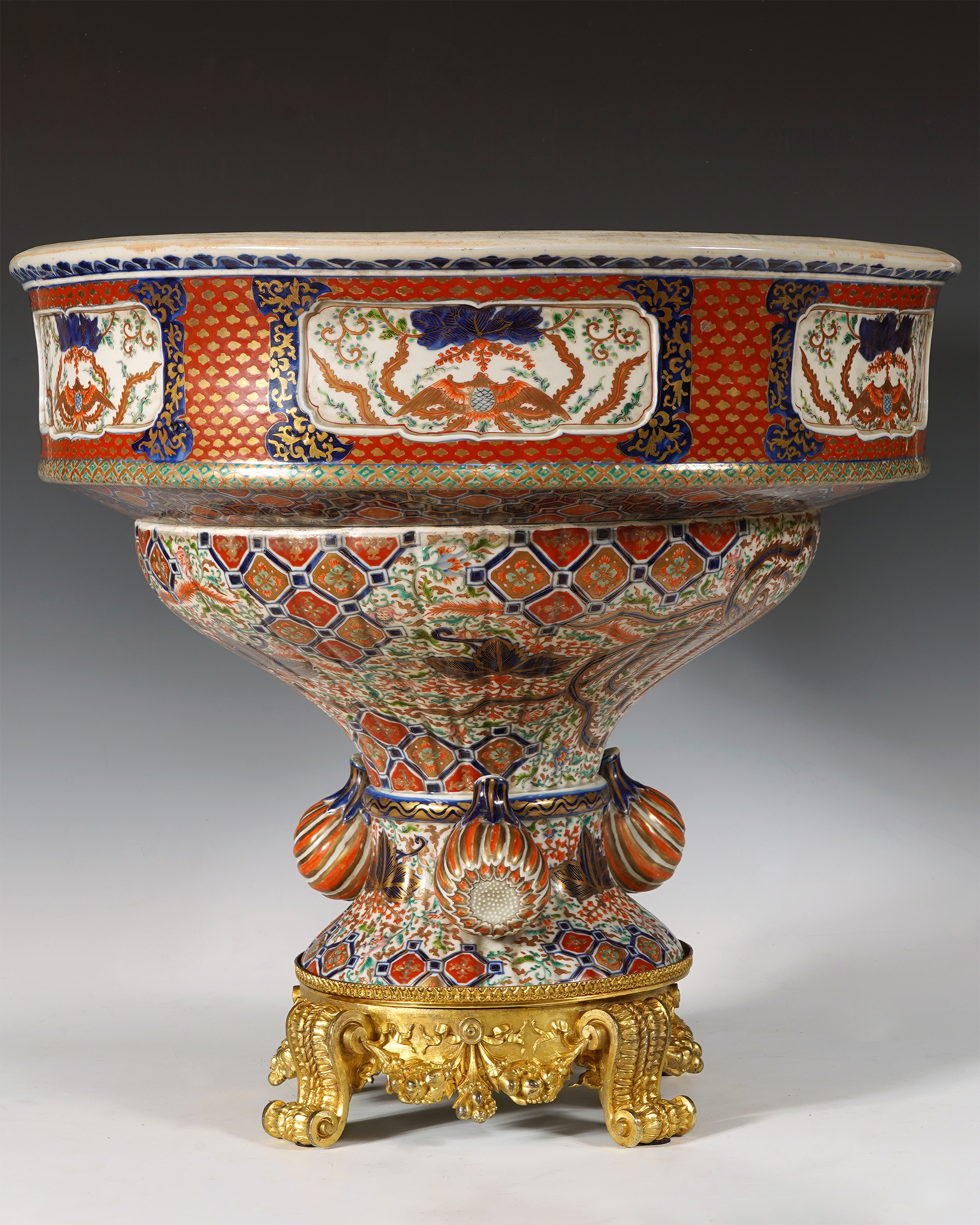
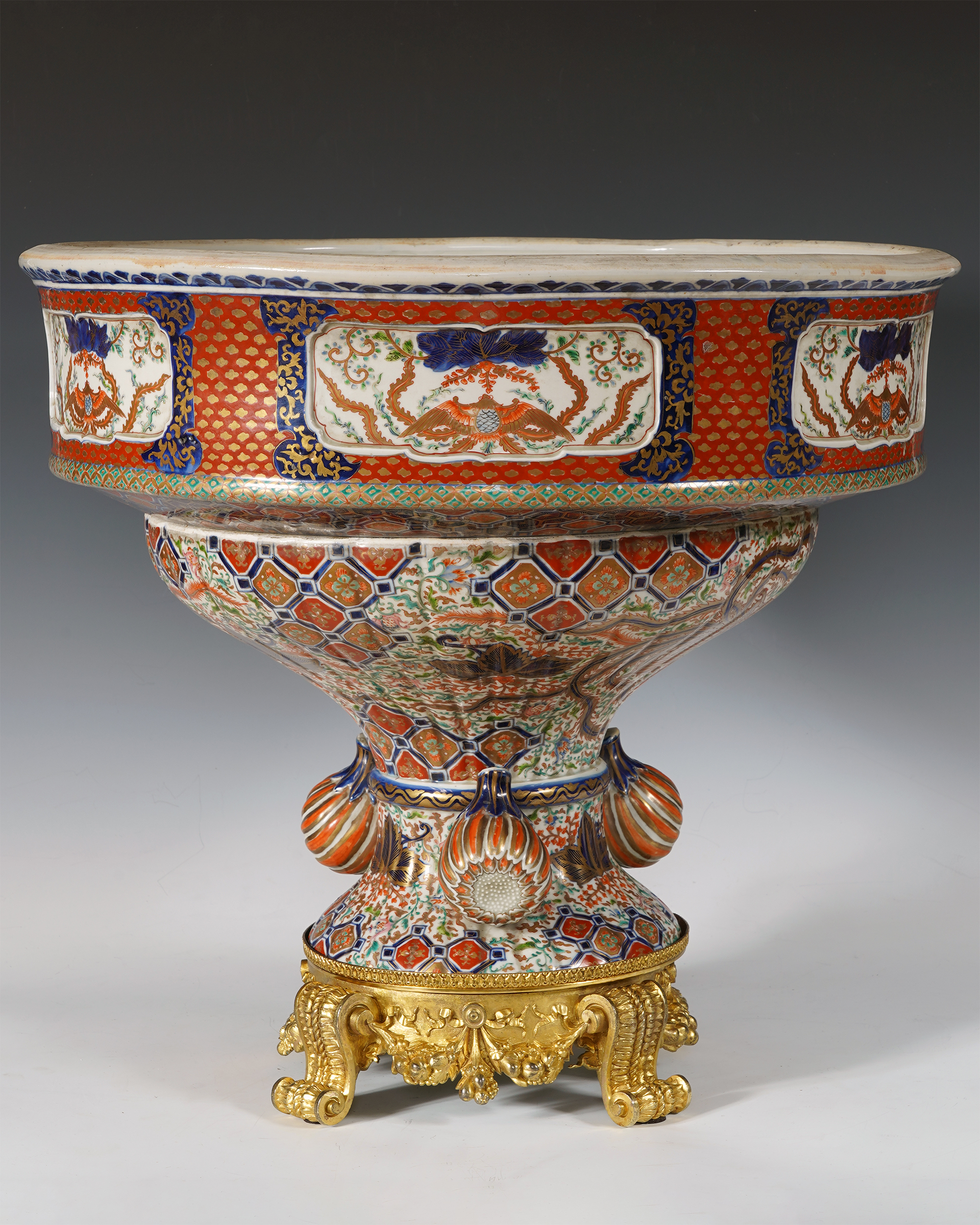
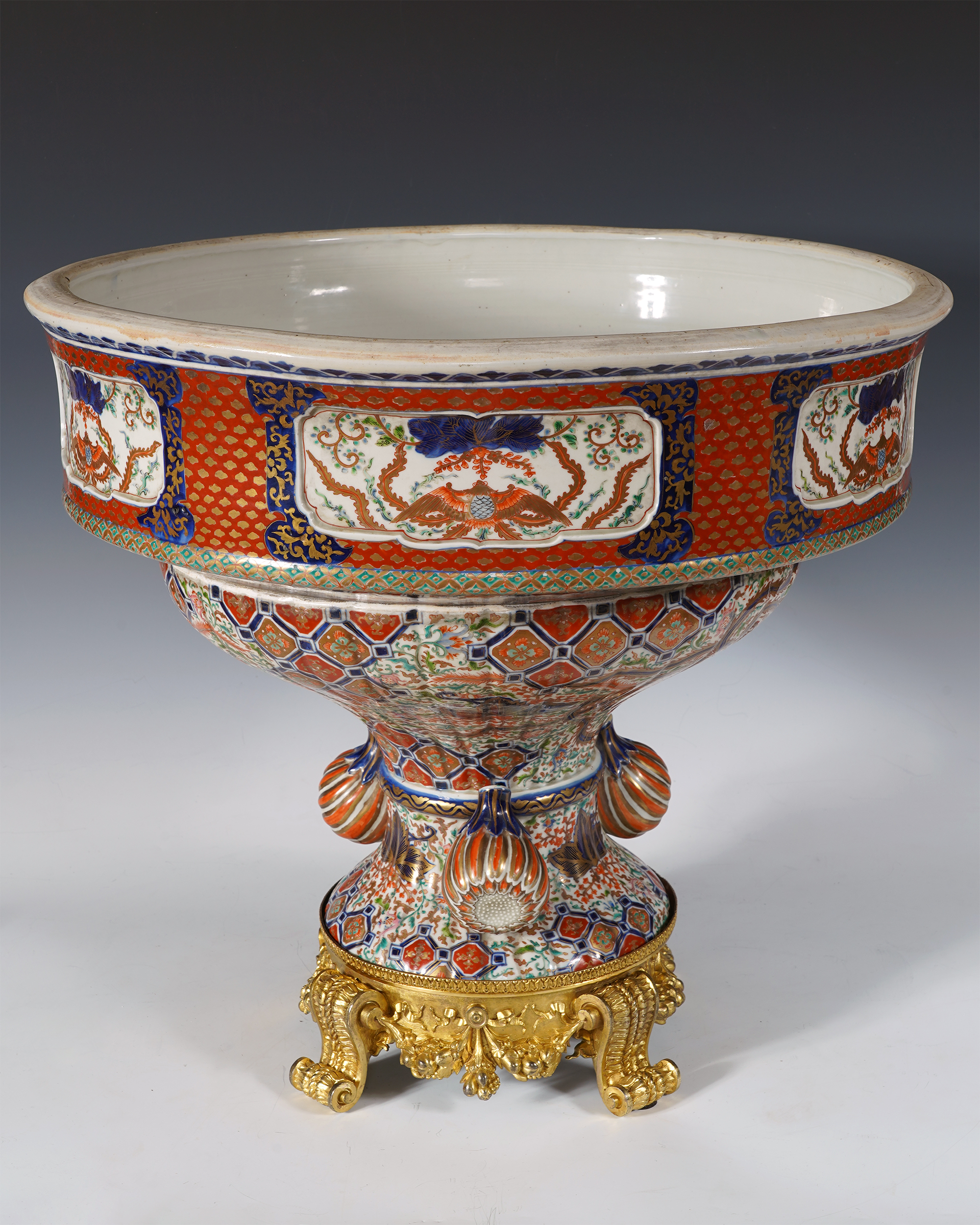
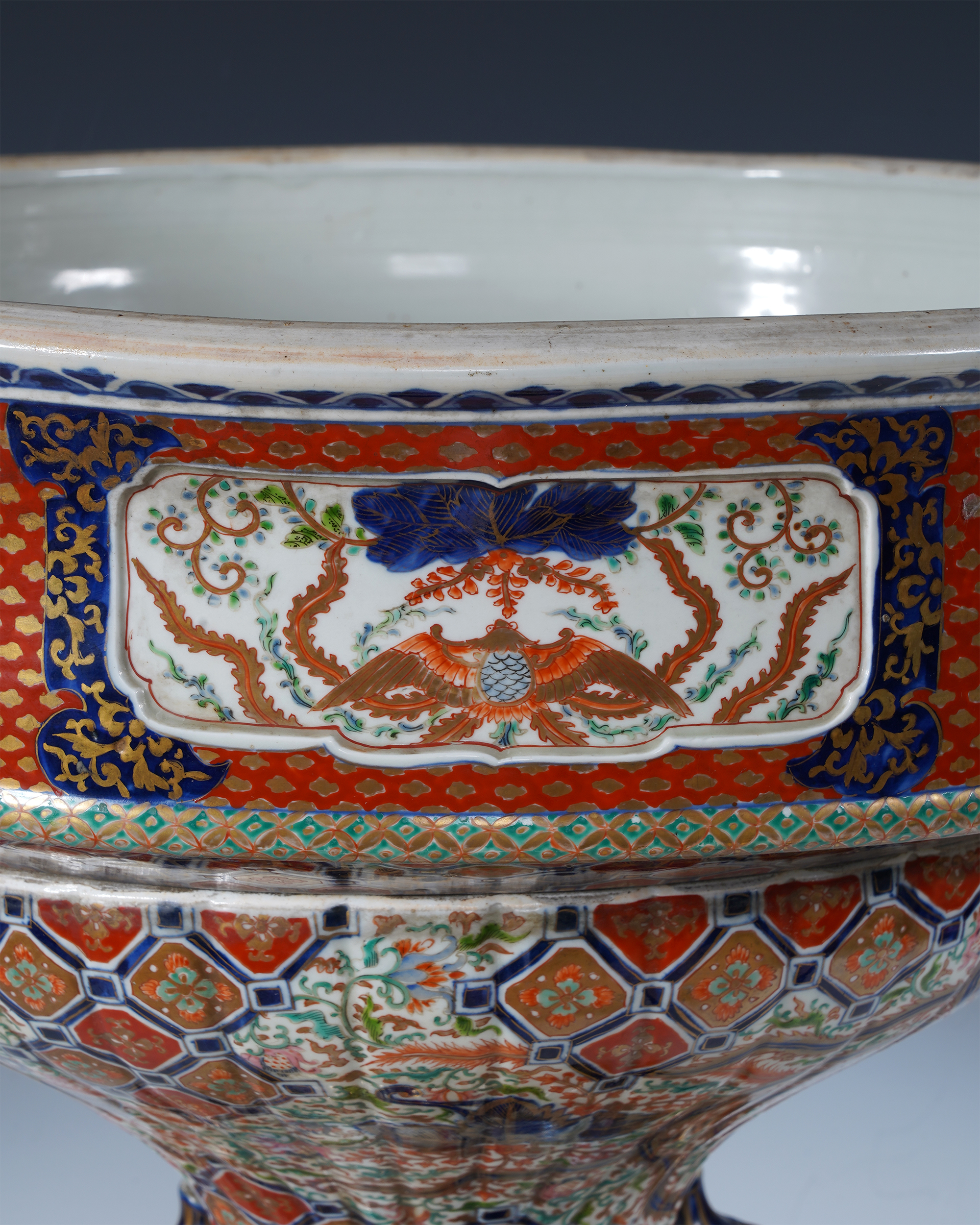
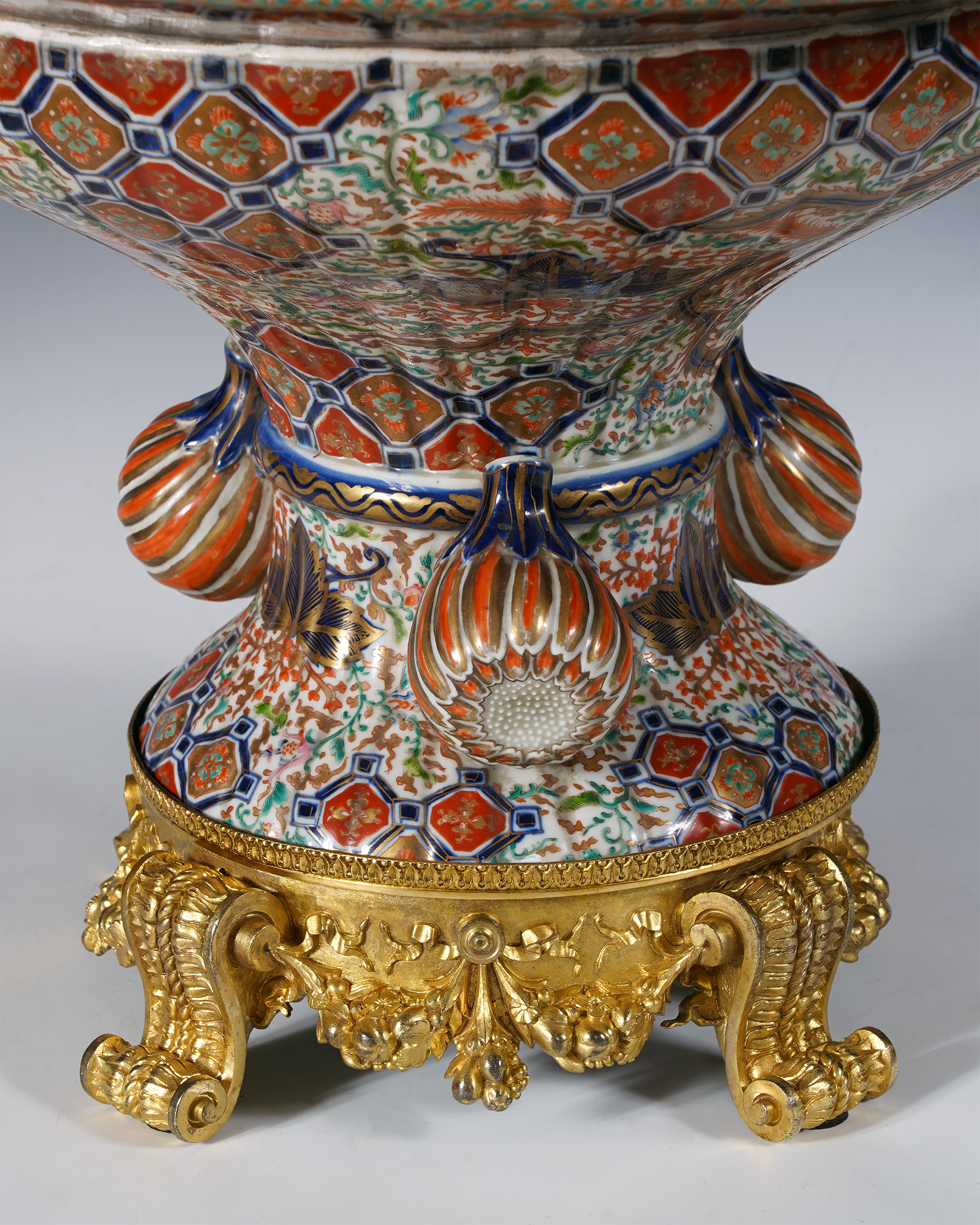
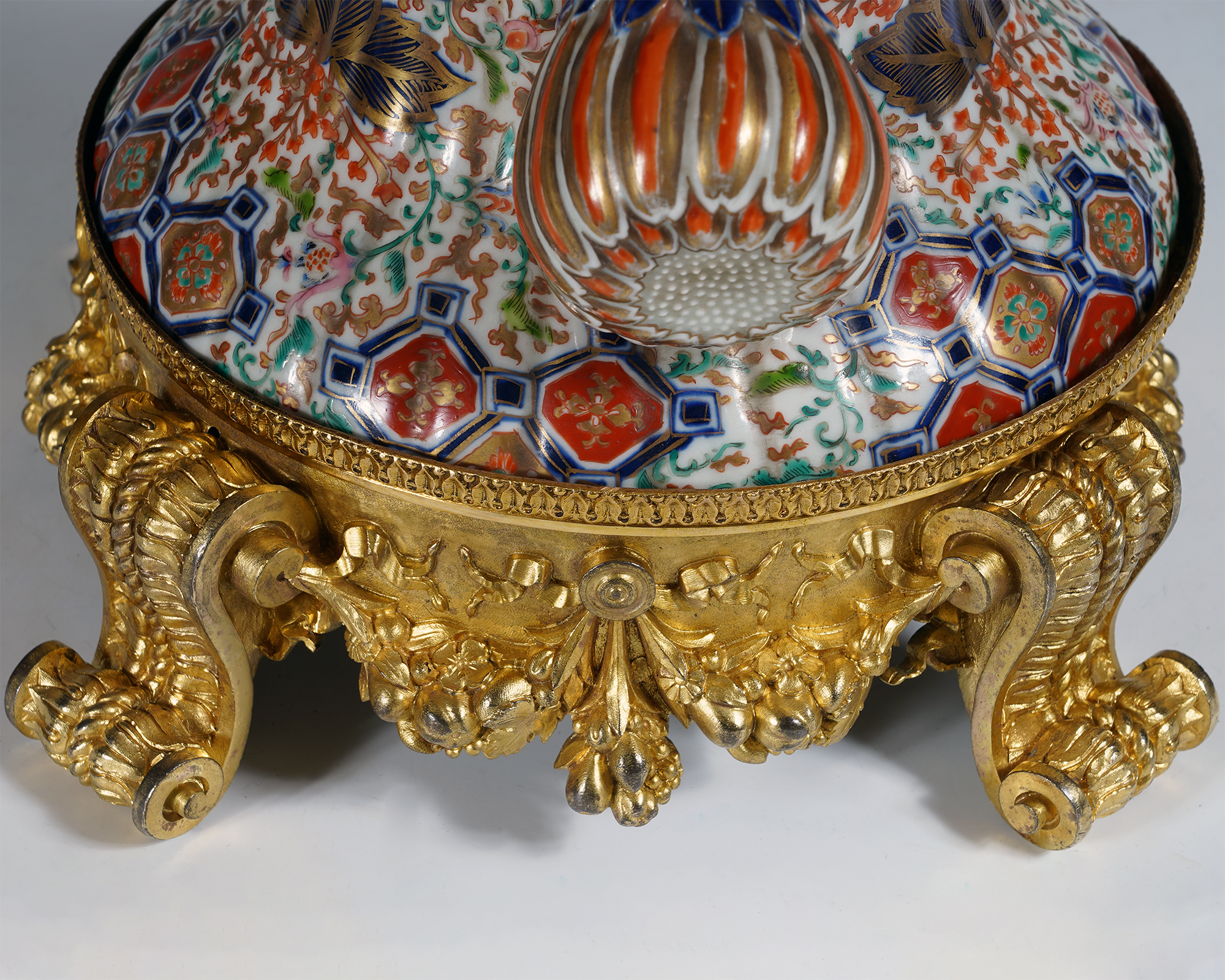
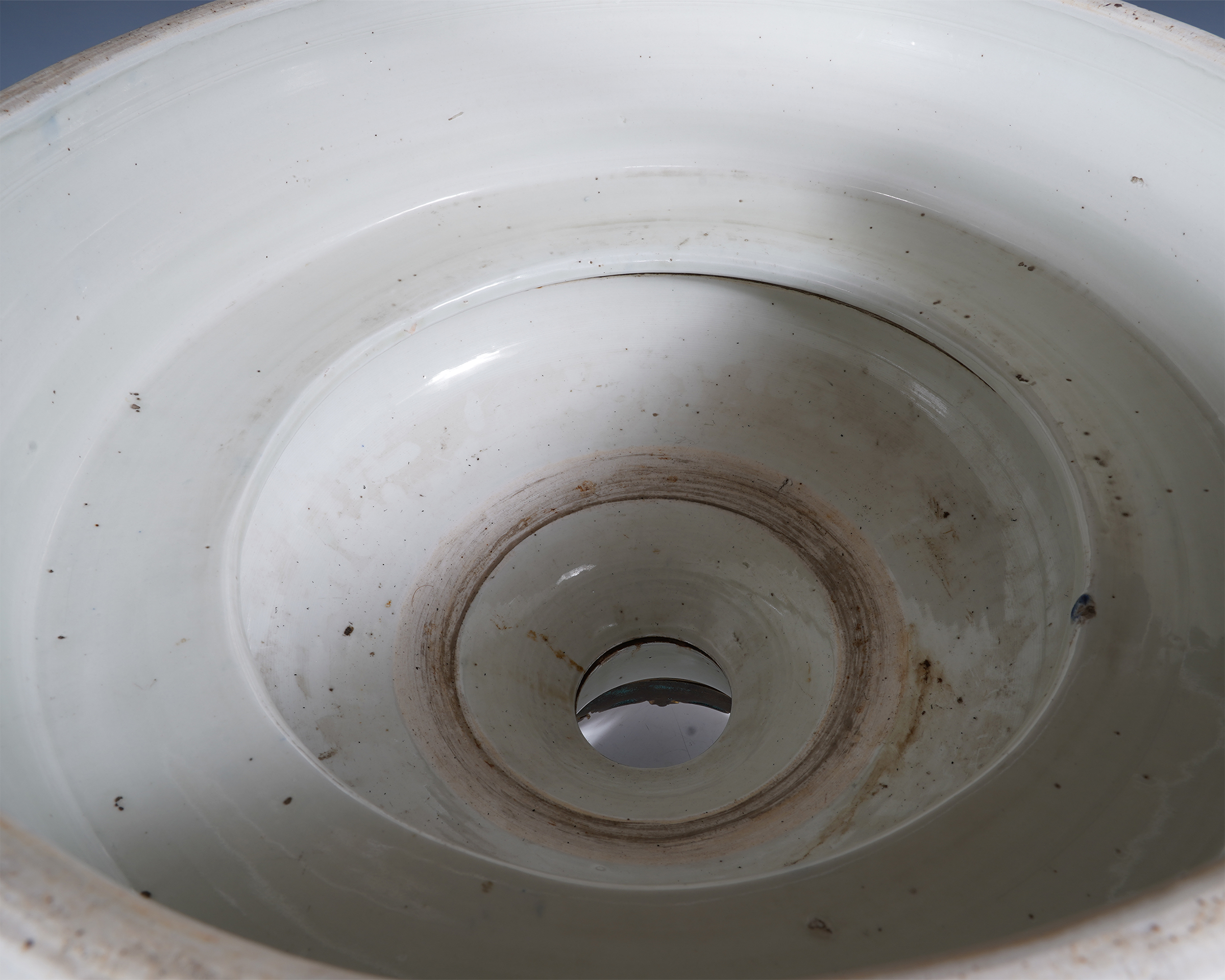
Important lotus basin with polychrome decoration in iron red, cobalt blue, and gold, known as the Imari Kinrande palette. Composed of two parts, the basin and the pedestal, the whole is decorated with stylized flowers, peonies, and chrysanthemums, framed by rectangular cartouches on a hexagonal lattice ground, typical of the Edo period (1603–1868). The interior, enameled in white, is pierced with a central drainage hole, indicating its original function as a lotus basin. The piece rests on a gilt and chased bronze base, French, from the late 19th century.
Commentary
The Imari porcelain is a ceramic style born around 1600 in the area of Arita (有田町), city of potters on the island of Kyushu, in southern Japan. According to tradition, this is a Korean named Ri Sampei installed in the region, who operated a kaolin deposit at the foot of the hill of Izumiyama. He managed the merger of kaolin, up to 1400 ° C, to obtain similar porcelain to the Chinese one’s ending thus a monopoly that was older than seven centuries. This porcelain is characterized by a decoration using three colors: cobalt blue, iron red and white background porcelain, the whole being embellished with gold. It mainly presents floral decoration and was called “Imari”, the name of the port on the island of Kyushu, from where it was exported, a few kilometers from Arita. Because of the supply problems in China due to political unrest in the seventeenth century, the Dutch, with their East Company of the United Provinces, imported the first Imaris from Japan. These porcelains were exported for European elites — kings, princes, nobles, and great merchants — who collected them as symbols of wealth, refinement, and openness to the world.
Contact us
Related Items
Maison Millet
Pair of ewers
Paris Porcelain
Floral Bowl with Tritons
H. Picard
Pair of “Cupids” Jardinieres
L’Escalier de Cristal
Japanese style planter
Valentine Manufacture
Elegant pair of Vases

D. Attarge & F. Barbedienne
Pair of “Alésia” cups
Meissen Manufactory
Pair of trumpet-shaped Vases

A.-E. Beurdeley
Rare set of urns and pedestals
Ceremonial Planter
“The Flower garden”
Tobogan Newsletter
If you want to be up-to-date with our new acquirings you can sign up to our newsletter.