


H. Journet & Cie
Compagnie des marbres Onyx d’Algérie (1879-1886)
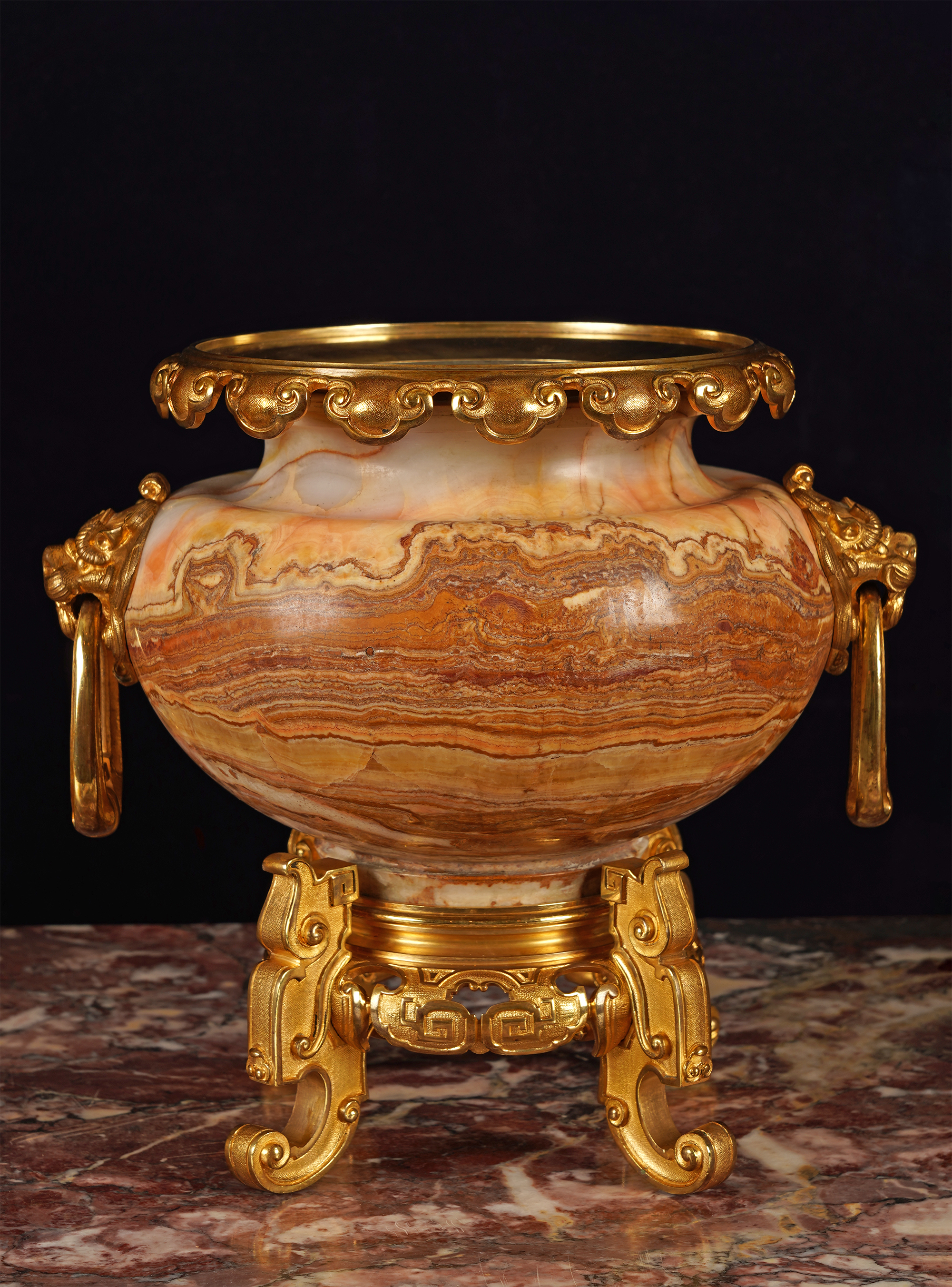
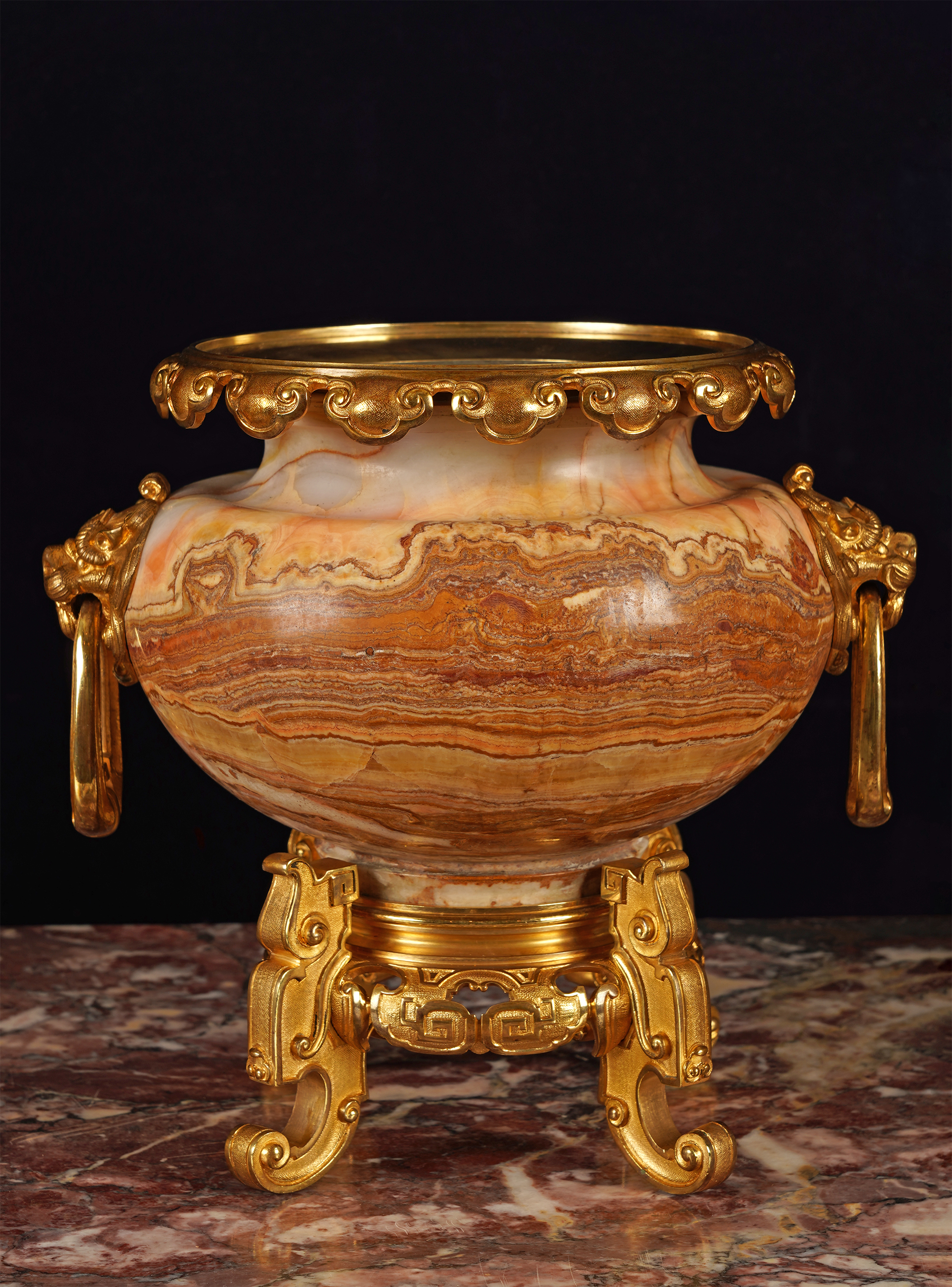
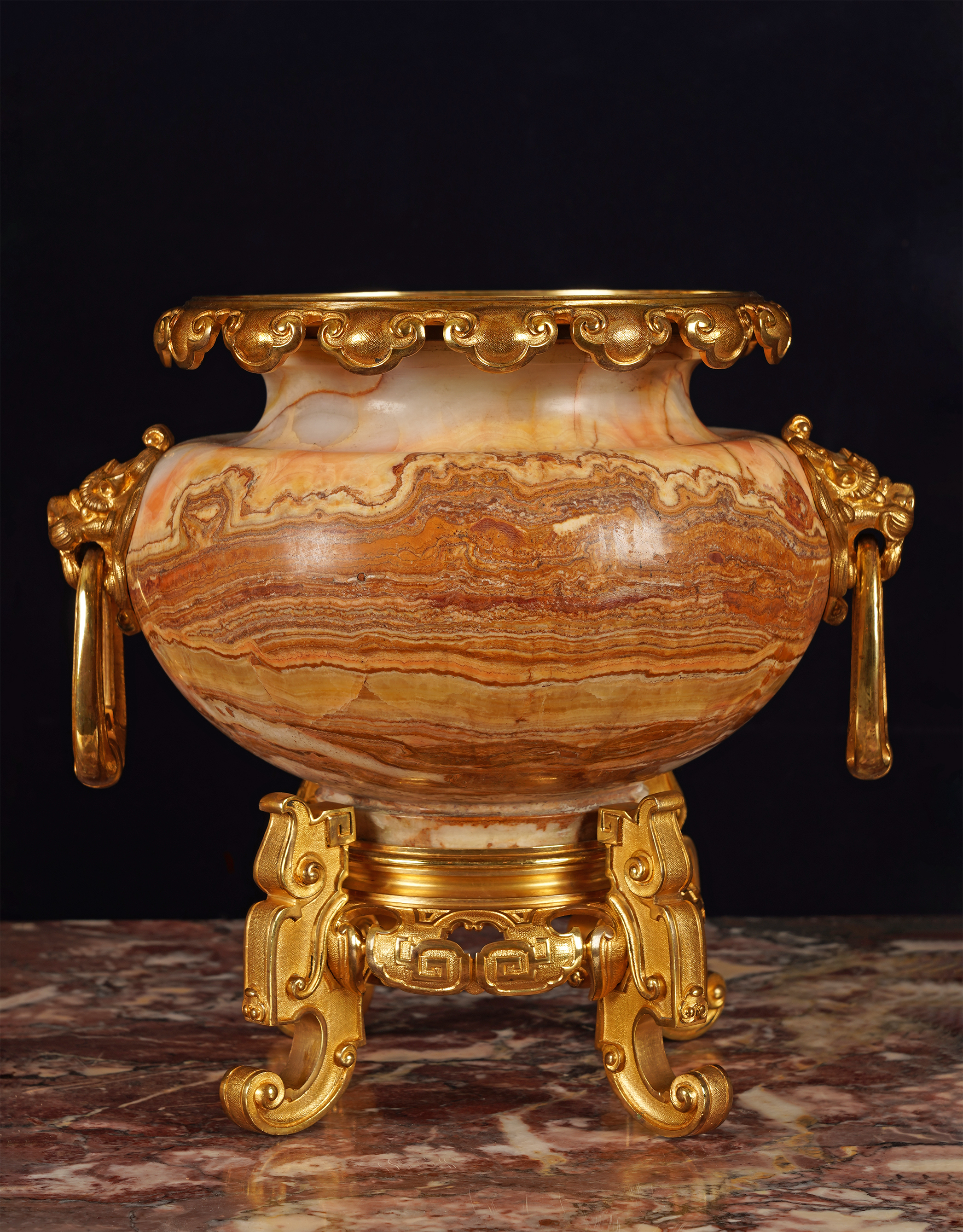
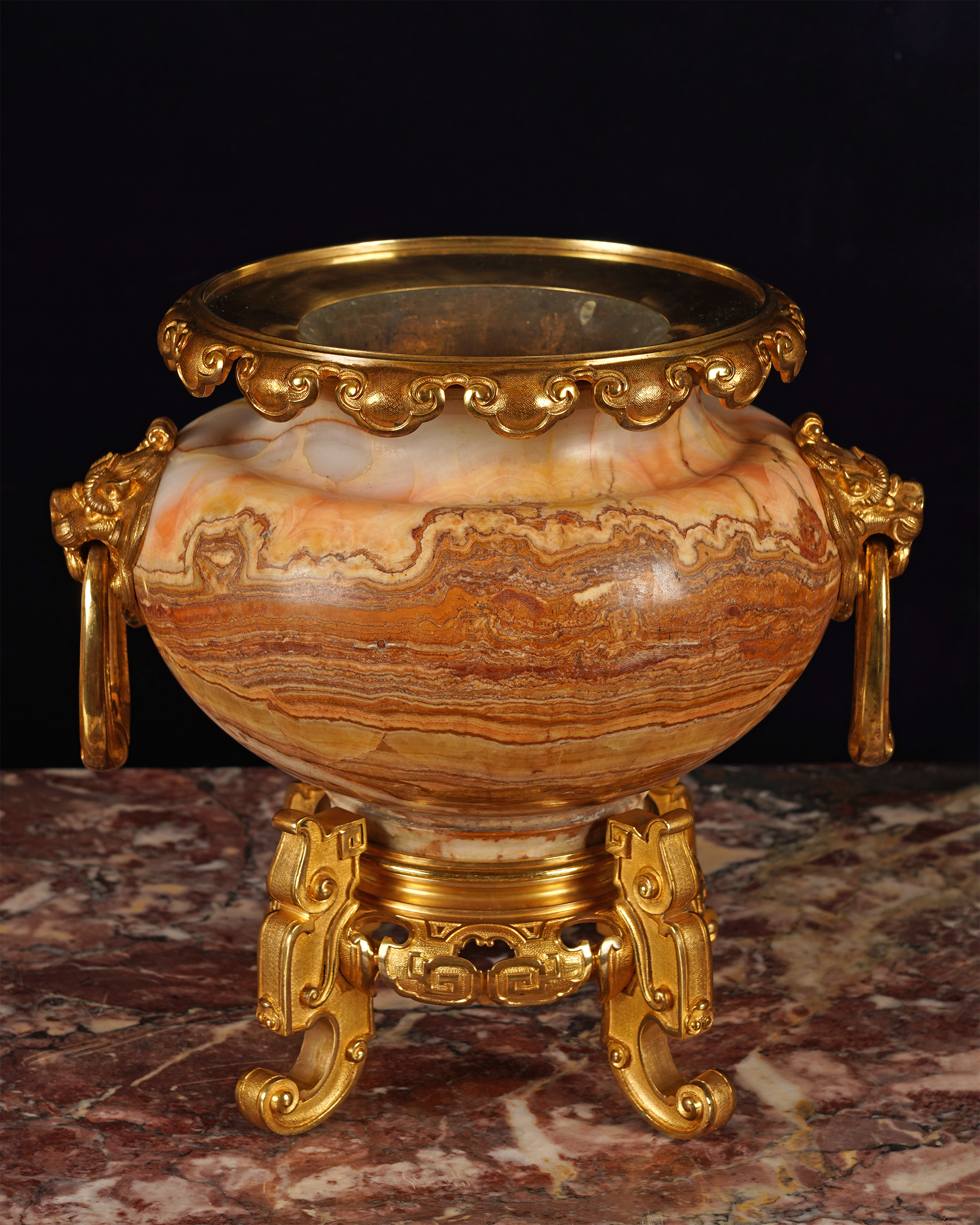
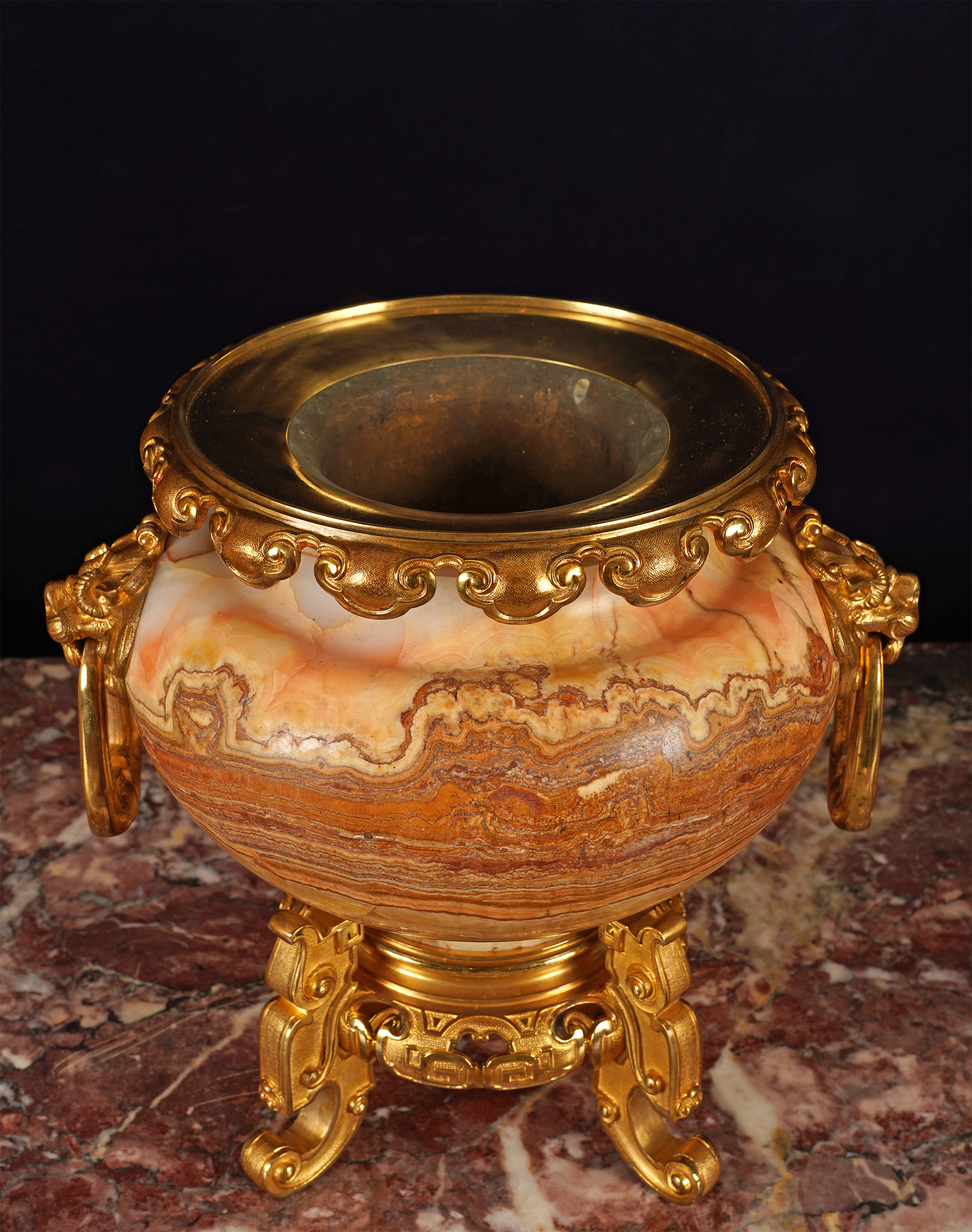
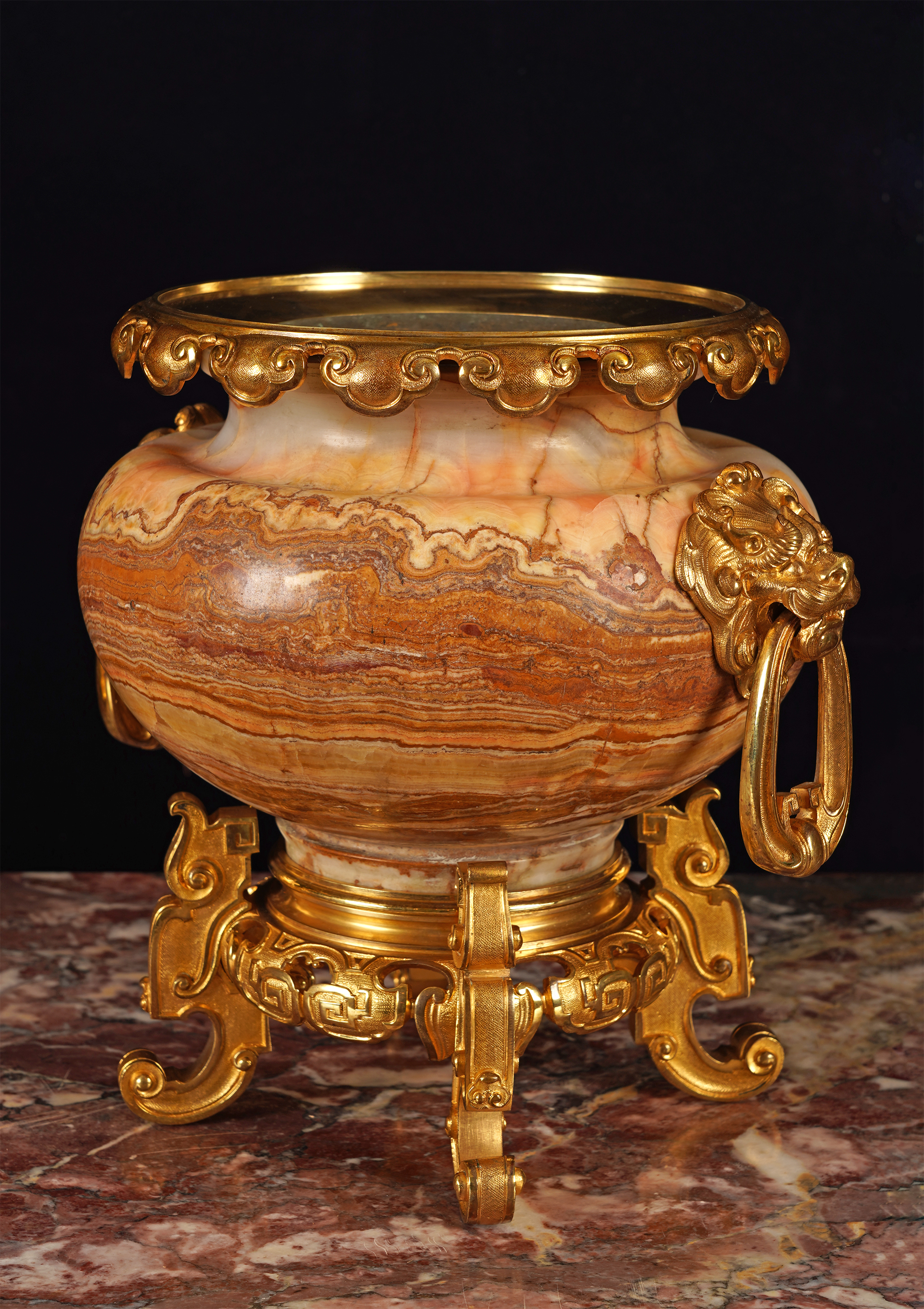
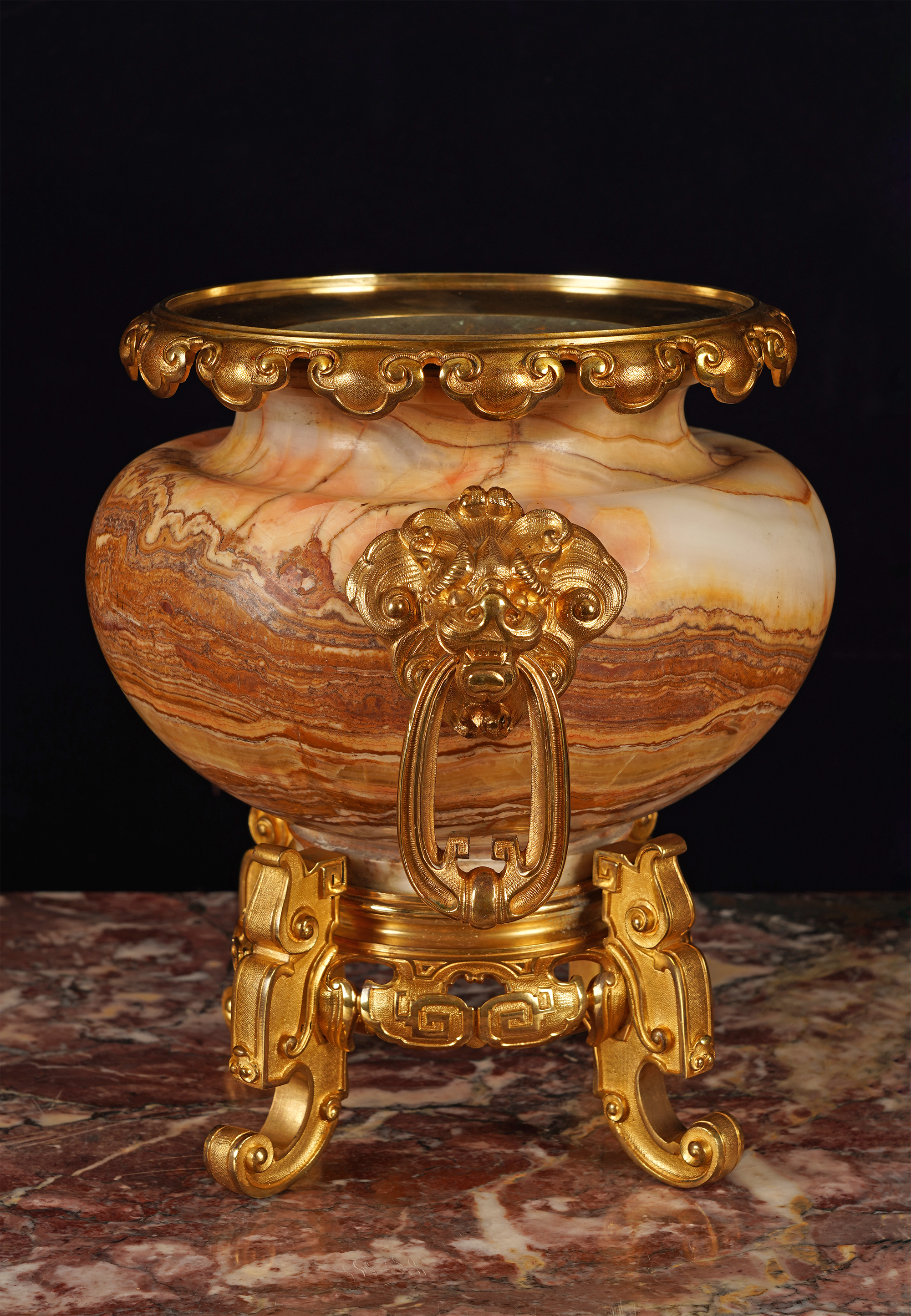
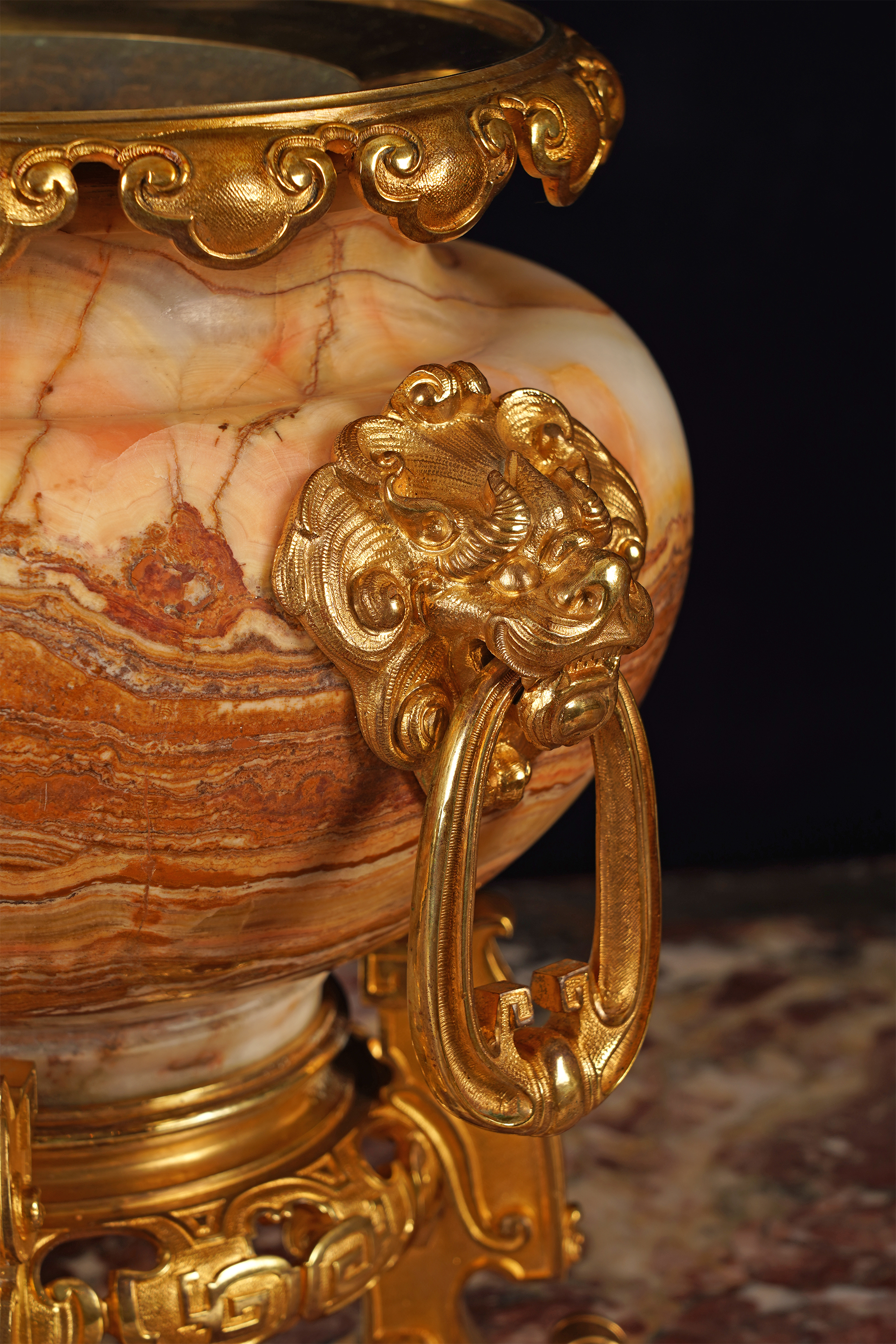
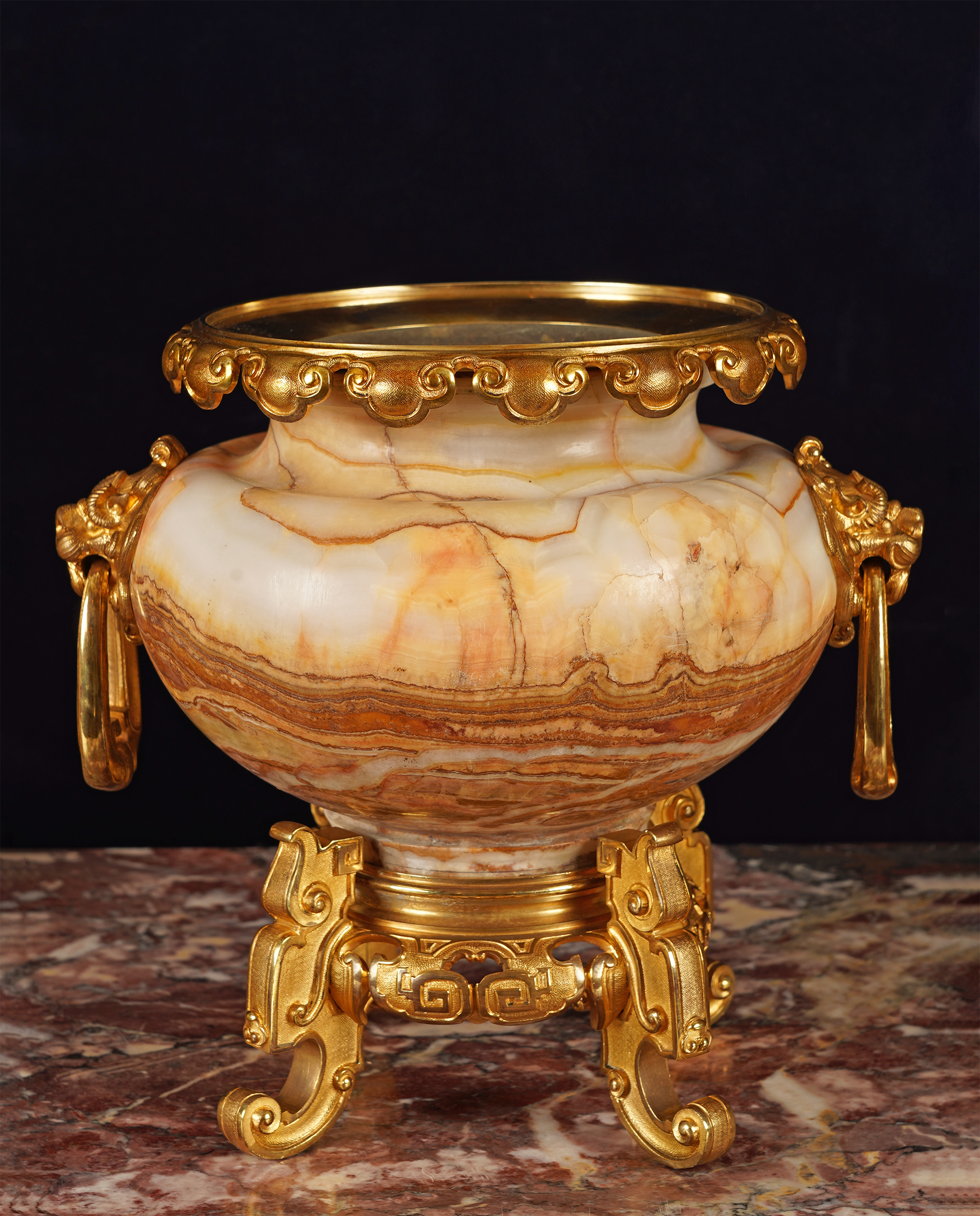
Japanese style Planter
France – Circa 1880
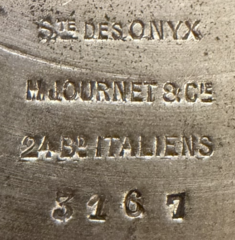
Signed Sté des onyx ; H. Journet & Cie ; 24 Bd Italiens ; 3167
Gilded bronze, Algerian onyx
Height : 30 cm (11,8 in.) ; Width : 32 cm (12,6 in.) ; Depth : 28 cm (11 in.)
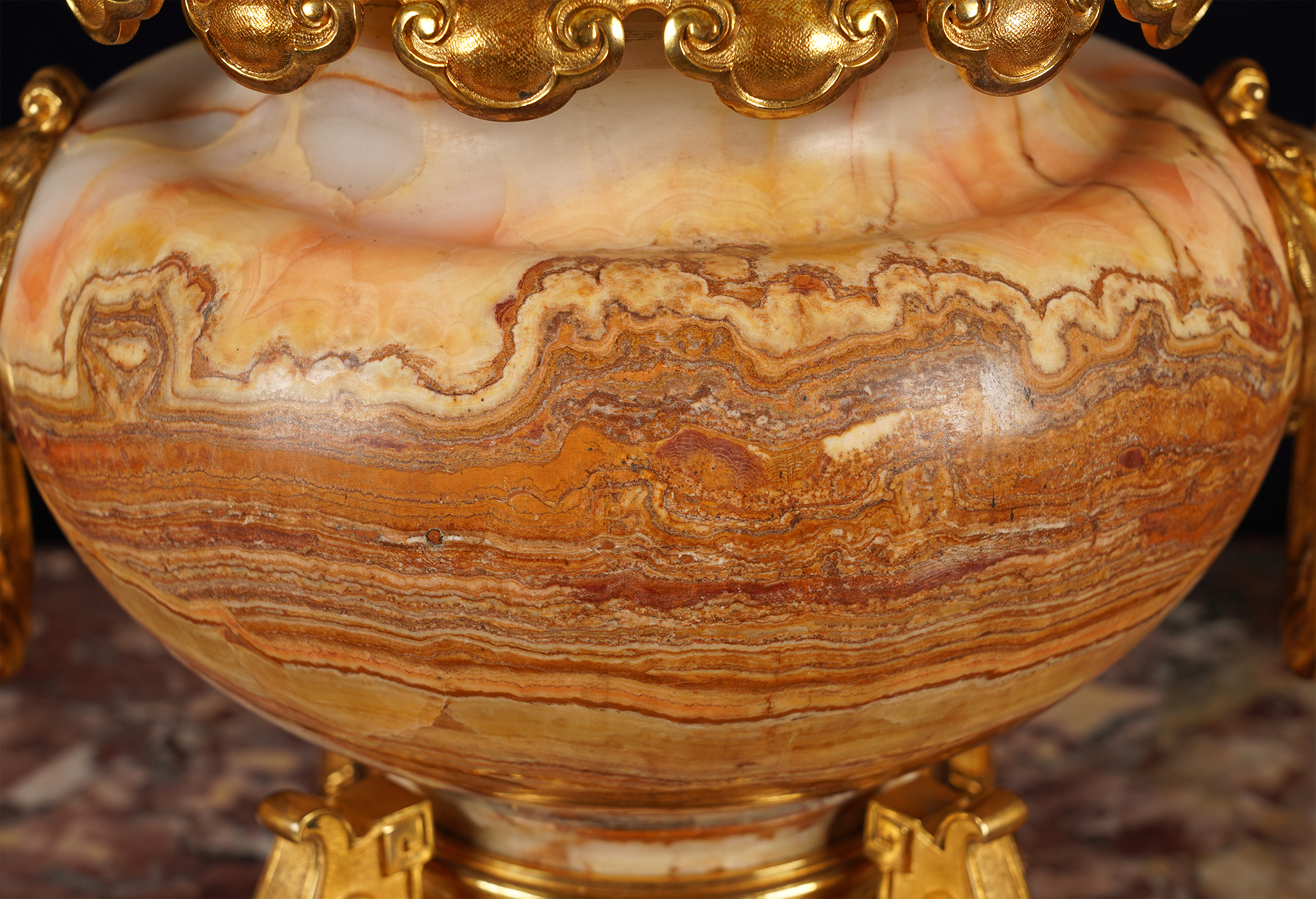
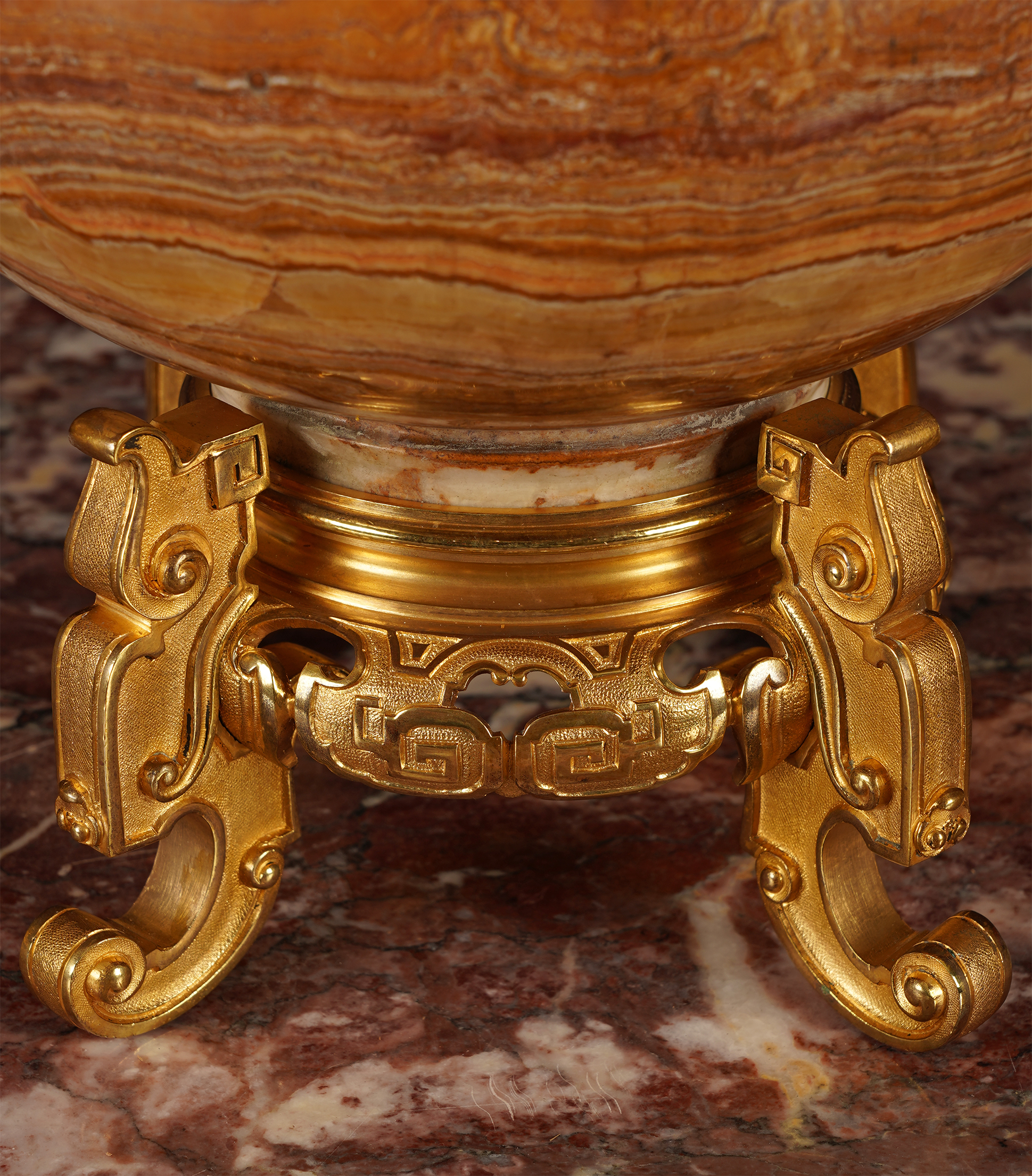
Beautiful planter made of banded Algerian onyx, mounted in gilded bronze. Resting on four legs connected by aprons with lamp-shaped bases in a fanciful Japanese-inspired style, this planter features two gilded bronze handles, each secured to the body by a Phô dog’s muzzle. The body tapers toward the neck and flares out into a continuous frieze of Japanese-style lambrequins.
It is signed with a stamp reading “Sté des onyx; H. Journet & Cie; 24 Bd Italiens; 3167,” which indicates the origin of the onyx, its gilt-bronze setting, and the model number.
Biography
The Compagnie des Marbres Onyx d’Algérie, led by Gustave Viot (1828–1897), was founded by Alphonse Pallu (1808–1880) on June 14, 1858. This company was involved in the mining of onyx, a stone known since ancient times and rediscovered in 1849 in the province of Oran, Algeria, by Del Monte, a marble craftsman. In 1863, it opened a store at 24 Boulevard des Italiens in Paris. In the mid-1860s, the company’s name changed to “G. Viot & Cie,” and it produced pieces based on models by renowned sculptors such as Eugène Cornu, Albert Carrier-Belleuse (1824–1887) (Victoria & Albert Museum, Inv. 9070-1863), Charles Cordier (1827–1905) (Orsay, Inv. RF 2996), and Louis-Ernest Barrias (1841–1905) (Orsay, Inv. RF 1409), producing highly luxurious decorative works characterized by the combination of onyx with bronze, and sometimes enamel. At their booth at the 1867 Paris World’s Fair, they presented an impressive pair of vases made of onyx, bronze, and enamel, featuring elephant-shaped bases (signed “G. Viot et Cie, 1867 Exhibition, Eugène Cornu, Inventor”; Official Exhibition Catalog, Group III, Class XIV, “luxury furniture,” No. 65), which was admired by the jury and earned them a gold medal (Reports of the International Jury, 1867 Paris World’s Fair, 1868, Vol. III, Group III, Class XV, Chapter II, § 2, pp. 45 & 46). In January 1879, Henri Journet became manager of the company, still located at 24 Boulevard des Italiens, which he renamed Henri Journet et Cie. He participated in the 1884 exhibition at the Palais de l’Industrie, where his work was once again acclaimed. In early 1886, the company closed its doors.
Contact us
Related Items
Valentine Manufacture
Elegant pair of Vases
L’Escalier de Cristal
Japanese style Planter

D. Attarge & F. Barbedienne
Pair of “Alésia” cups
G. Viardot
Aesthetic Movement jardiniere
Baccarat
Crystal cup
A. Giroux
Vase with Tritons
Maison Millet
Pair of Cassolettes

Imari
Pair of large vases
Baccarat
Charming pair of vases
Villeroy & Boch
Vase with Cranes
Tobogan Newsletter
If you want to be up-to-date with our new acquirings you can sign up to our newsletter.