Ref. 2253
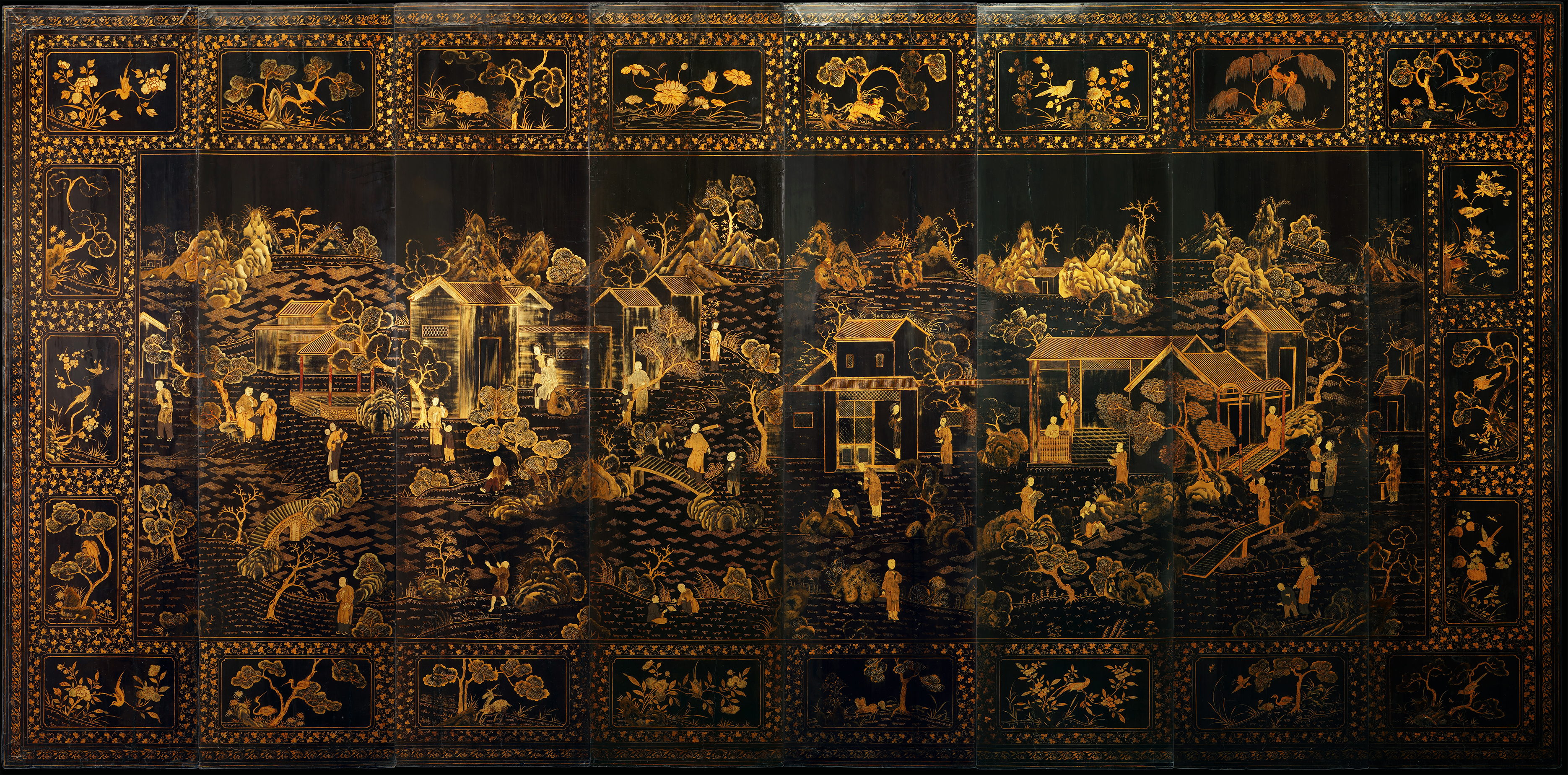
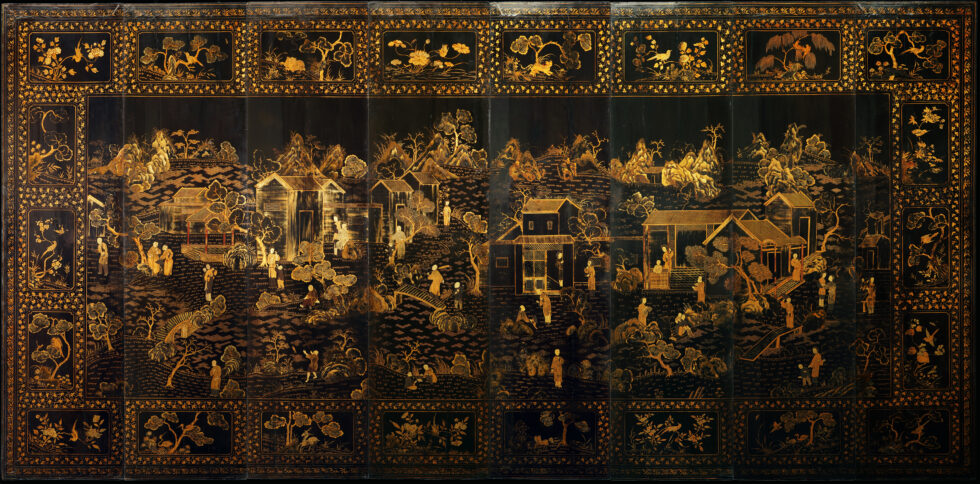
Lacquered eight-panel Screen
China, Canton
Qing Dynasty (1644-1912) – Qianlong Period, late 18th Century
Height : 205 cm (80,7 in.) ; Panel width : 55 cm (21,6 in.) ; Depth : 1,8 cm (0,7 in.)
Total width : 55 x 8 = 440 cm (173,2 in.)
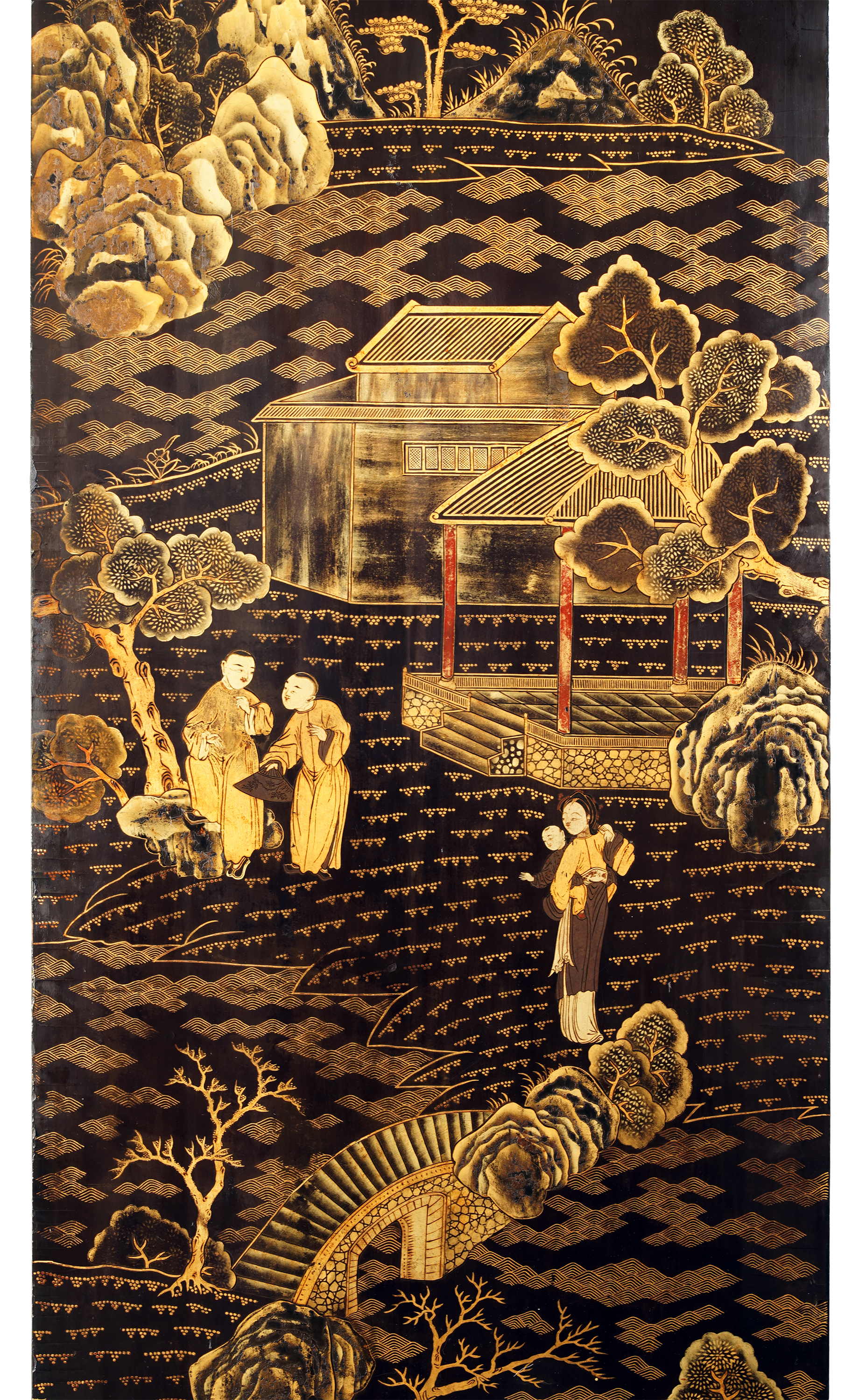
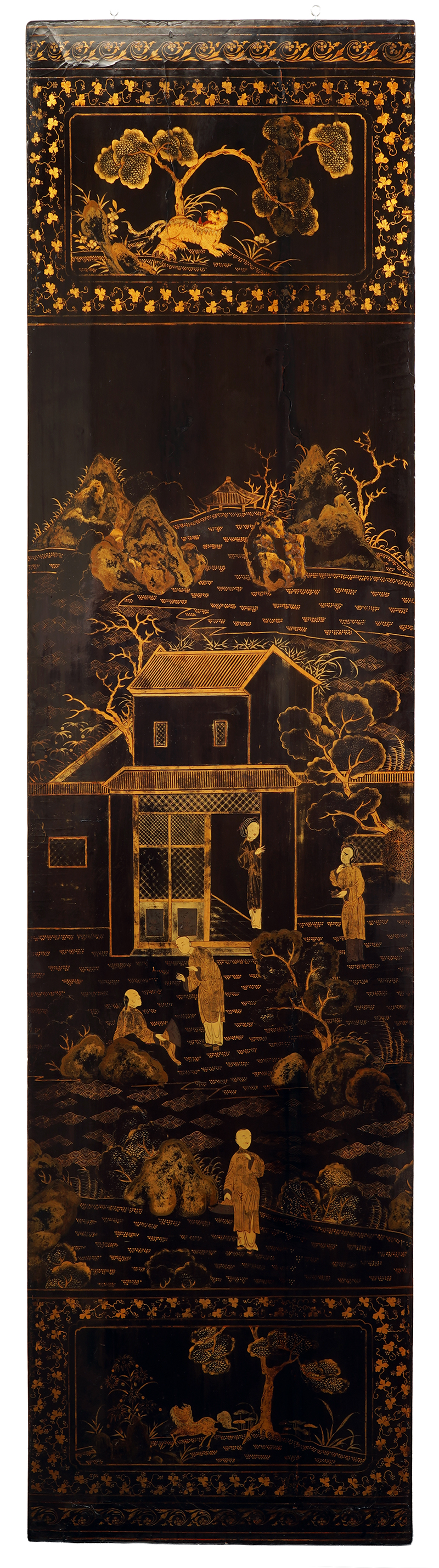
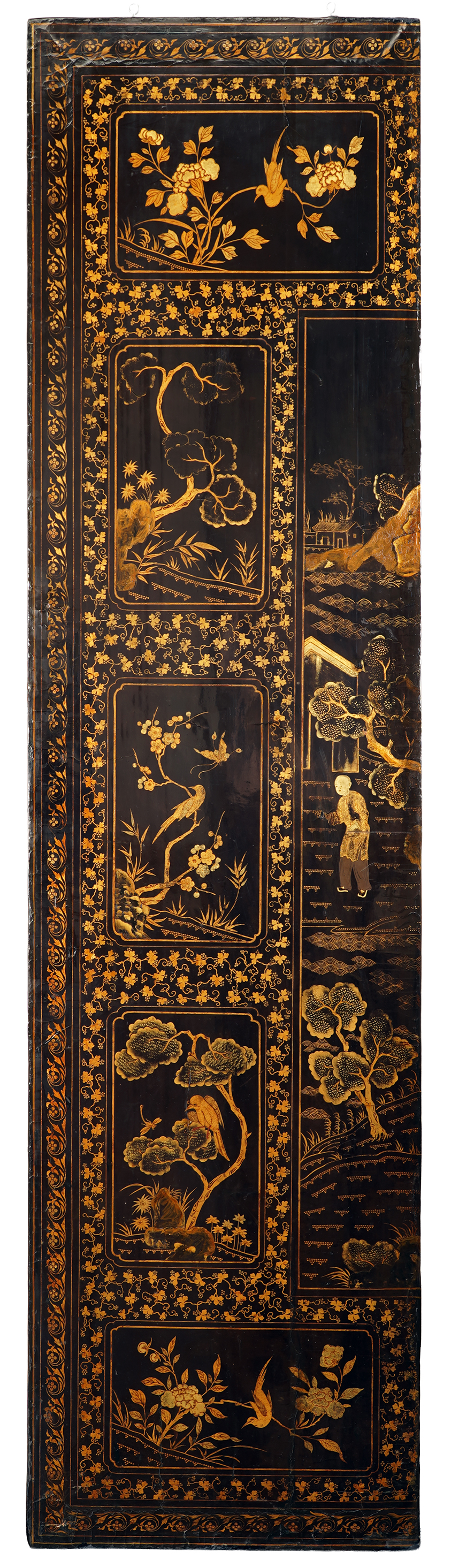
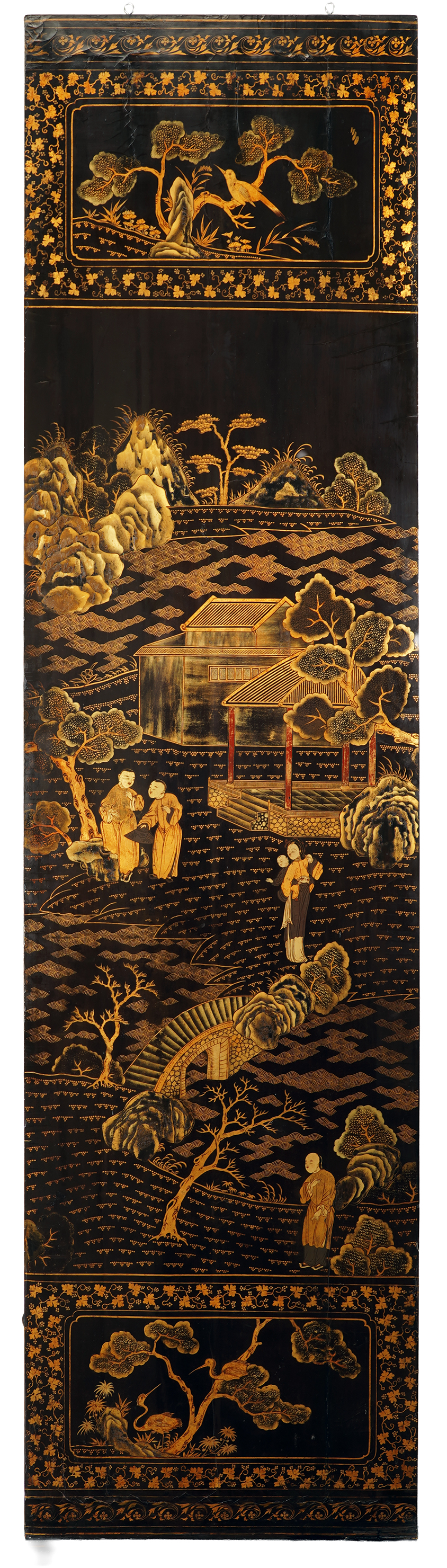
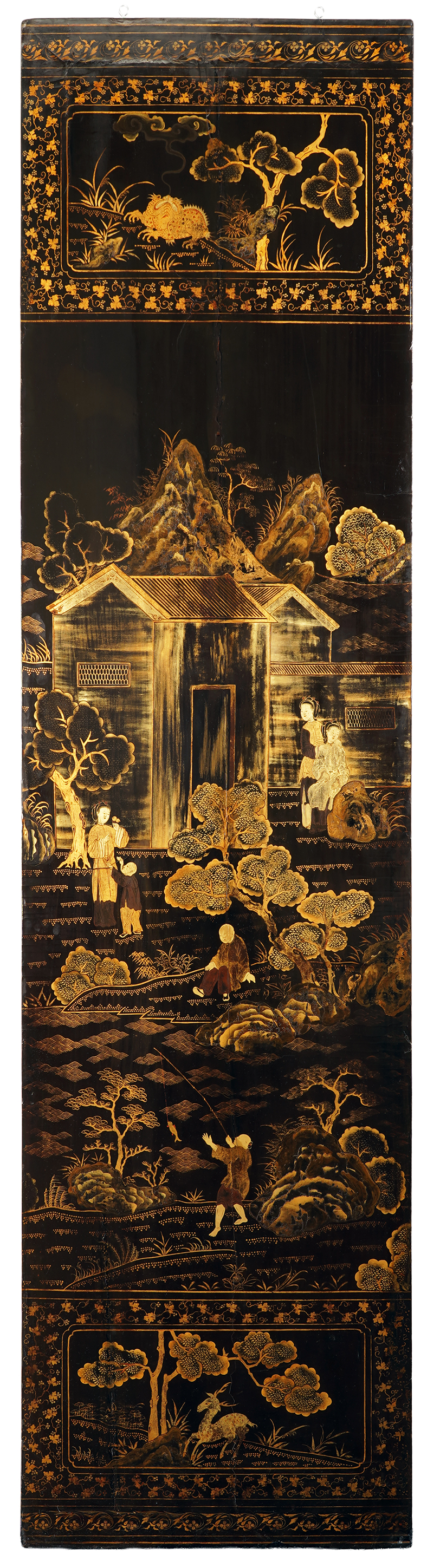
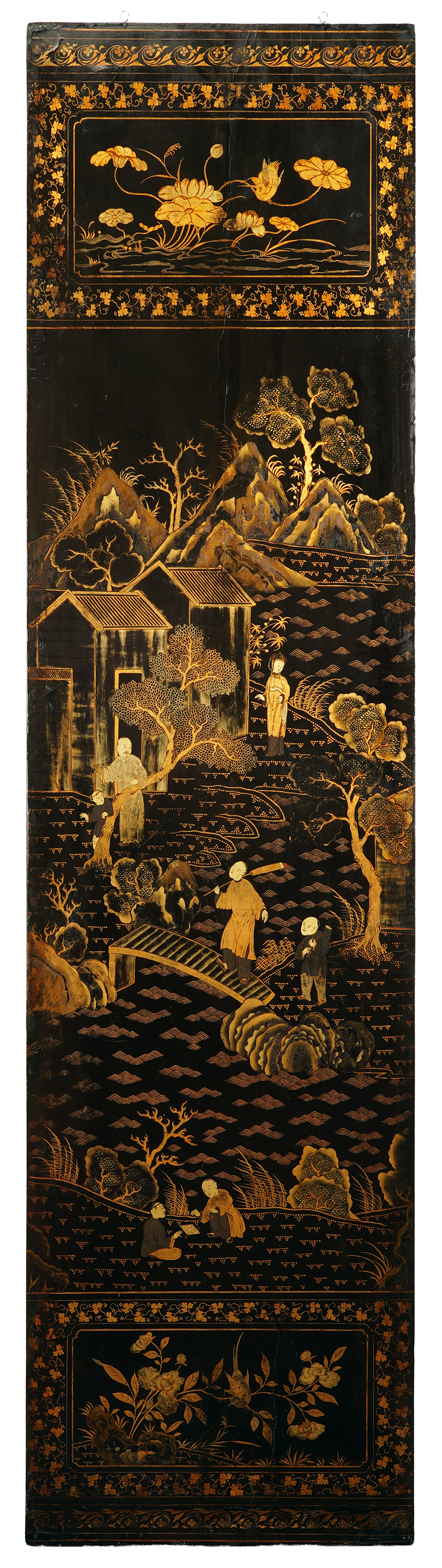
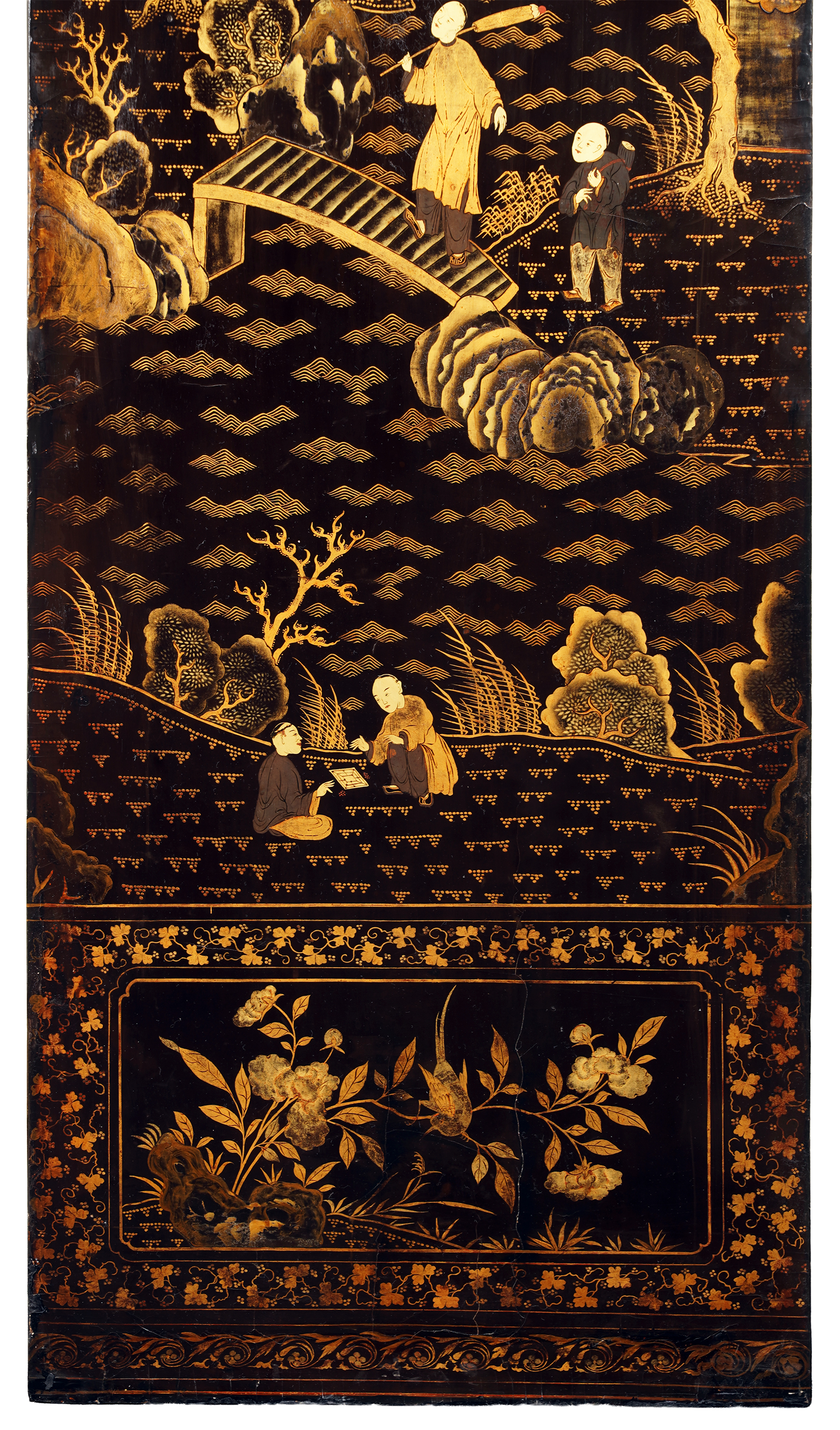
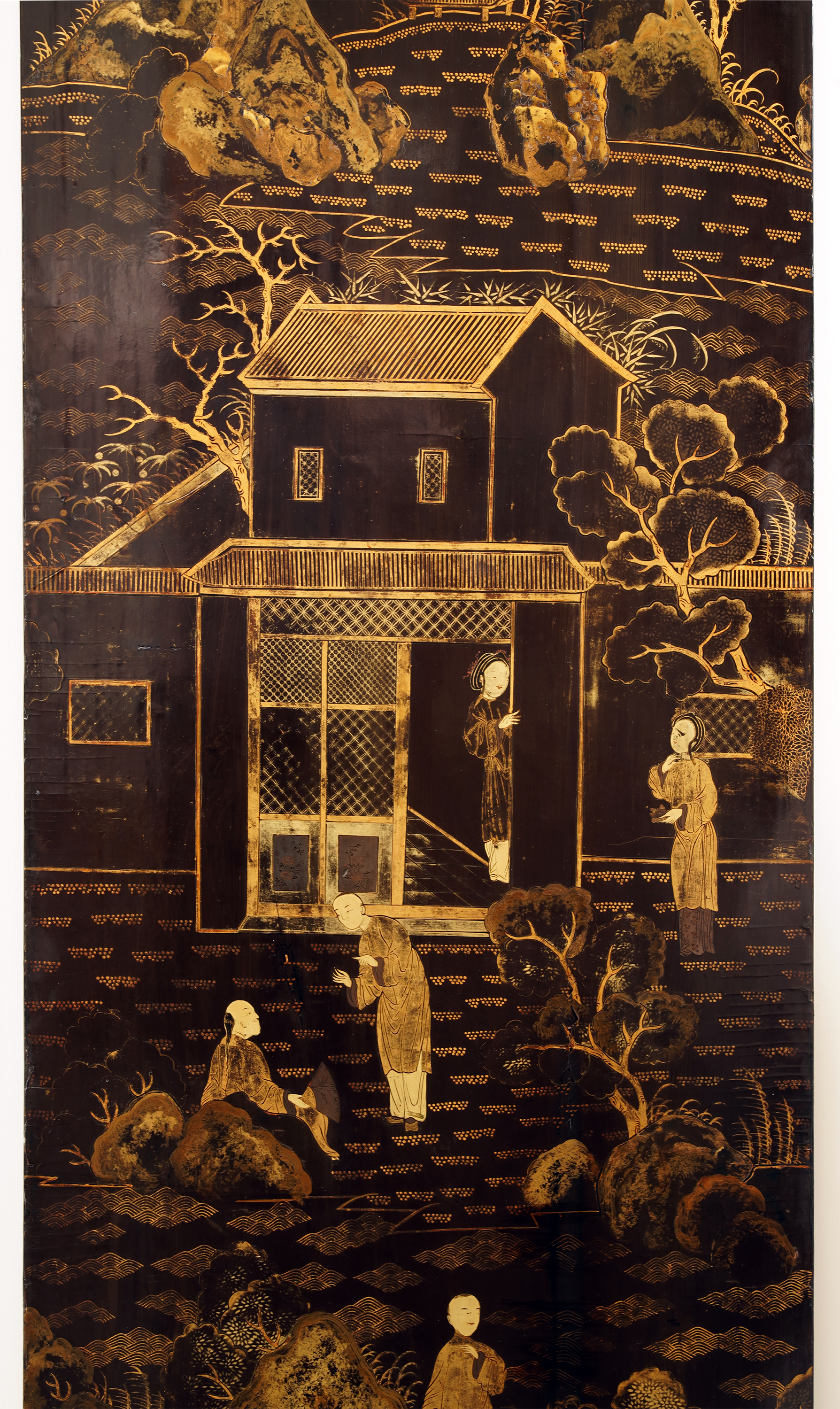
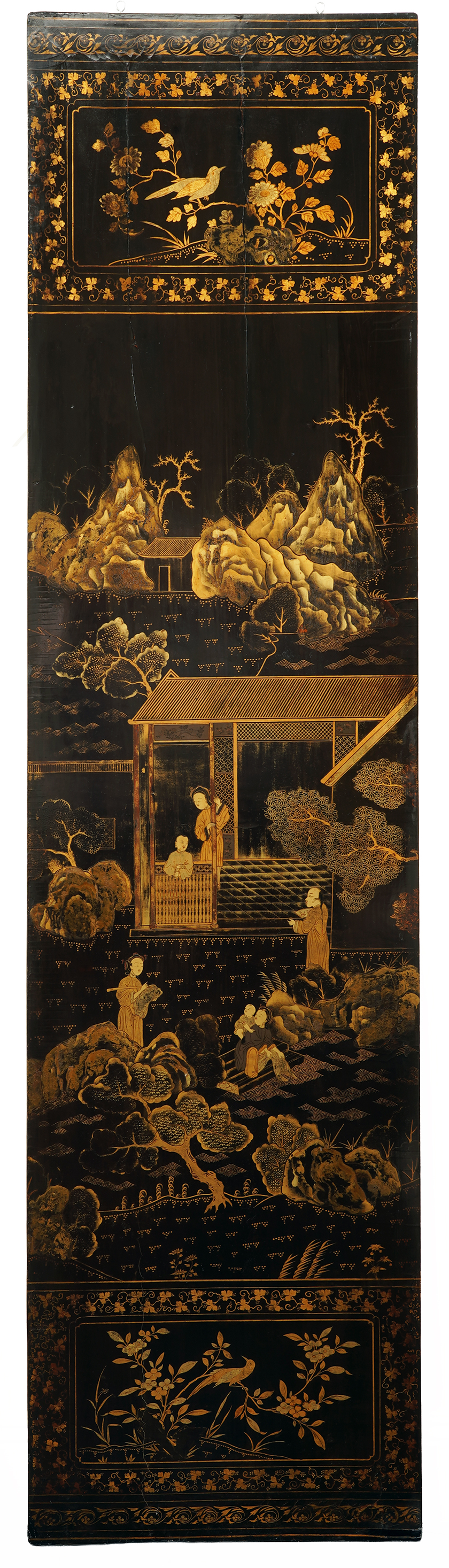
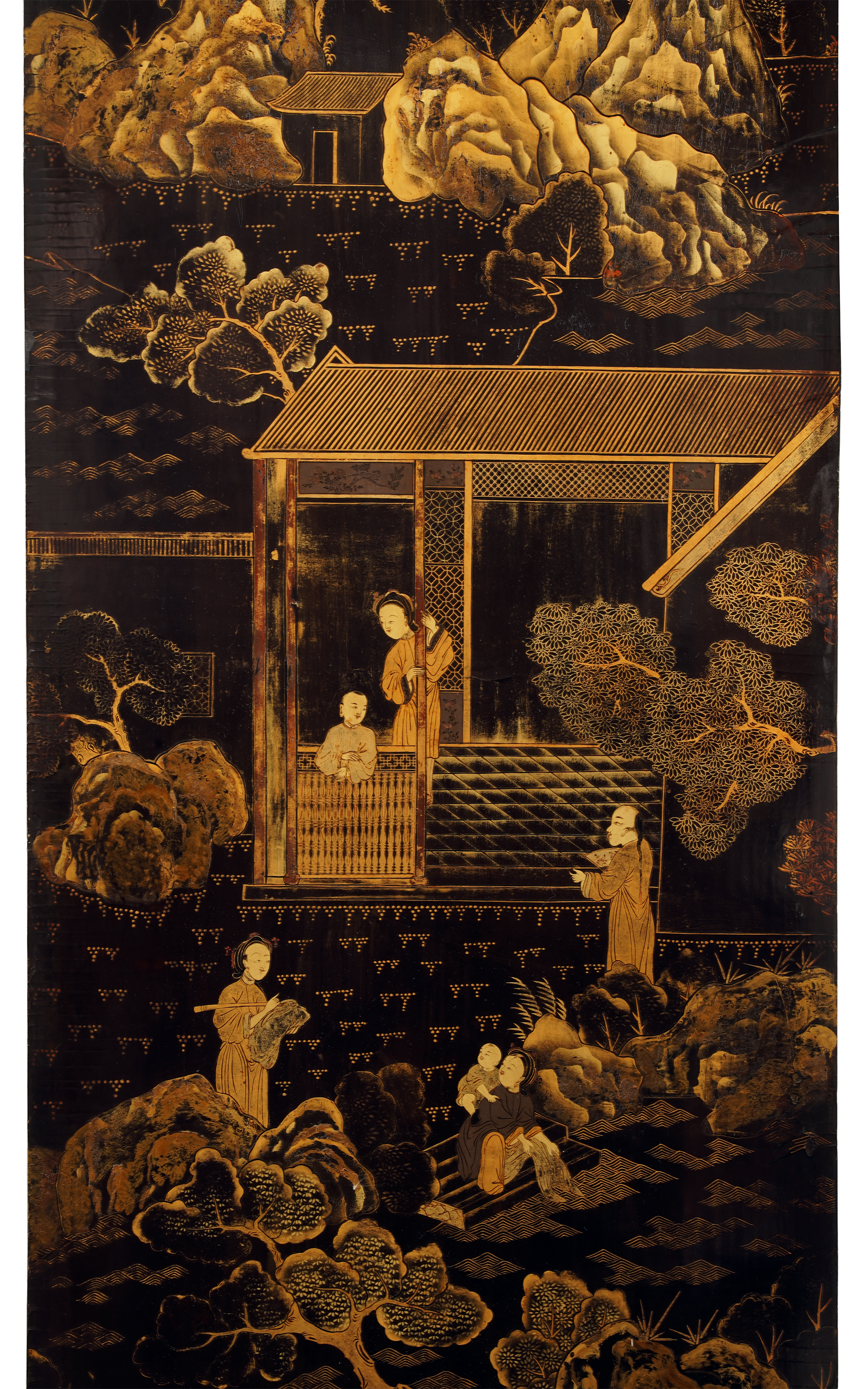
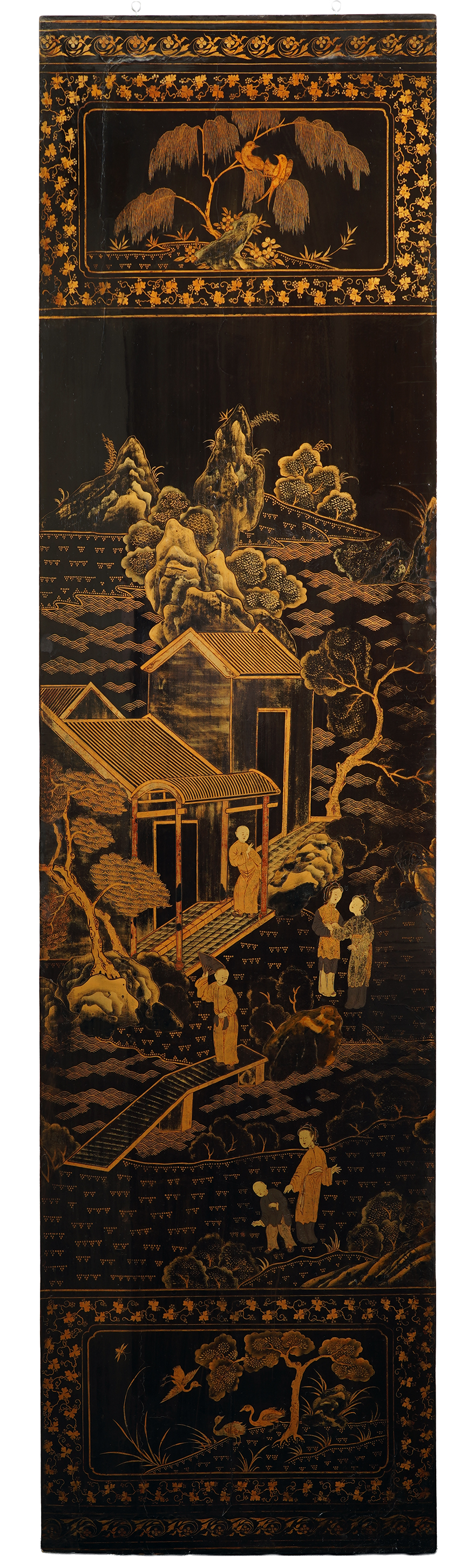
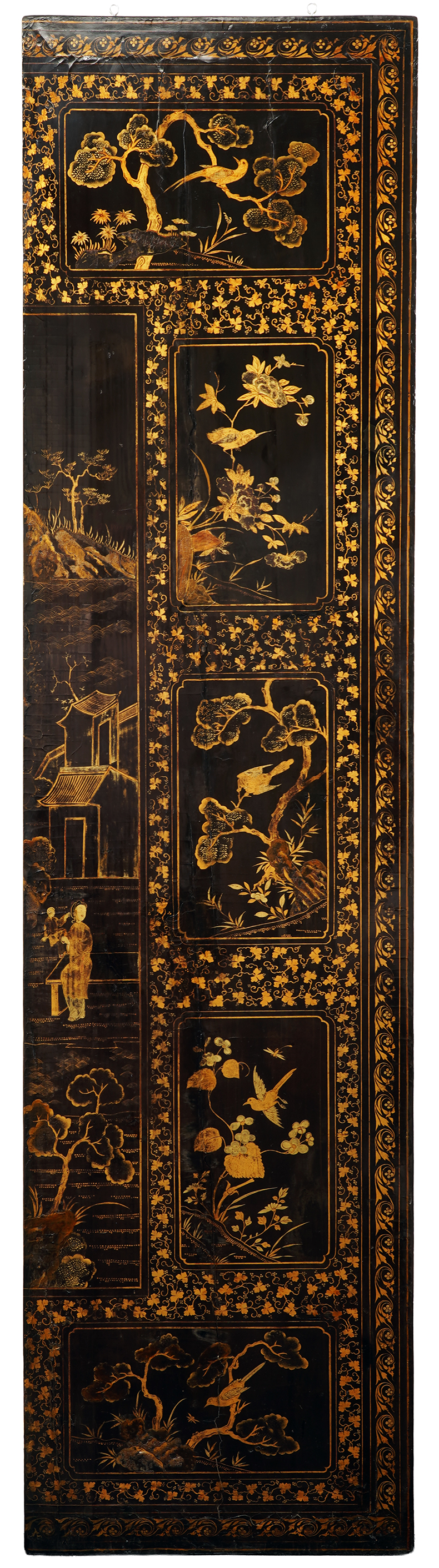
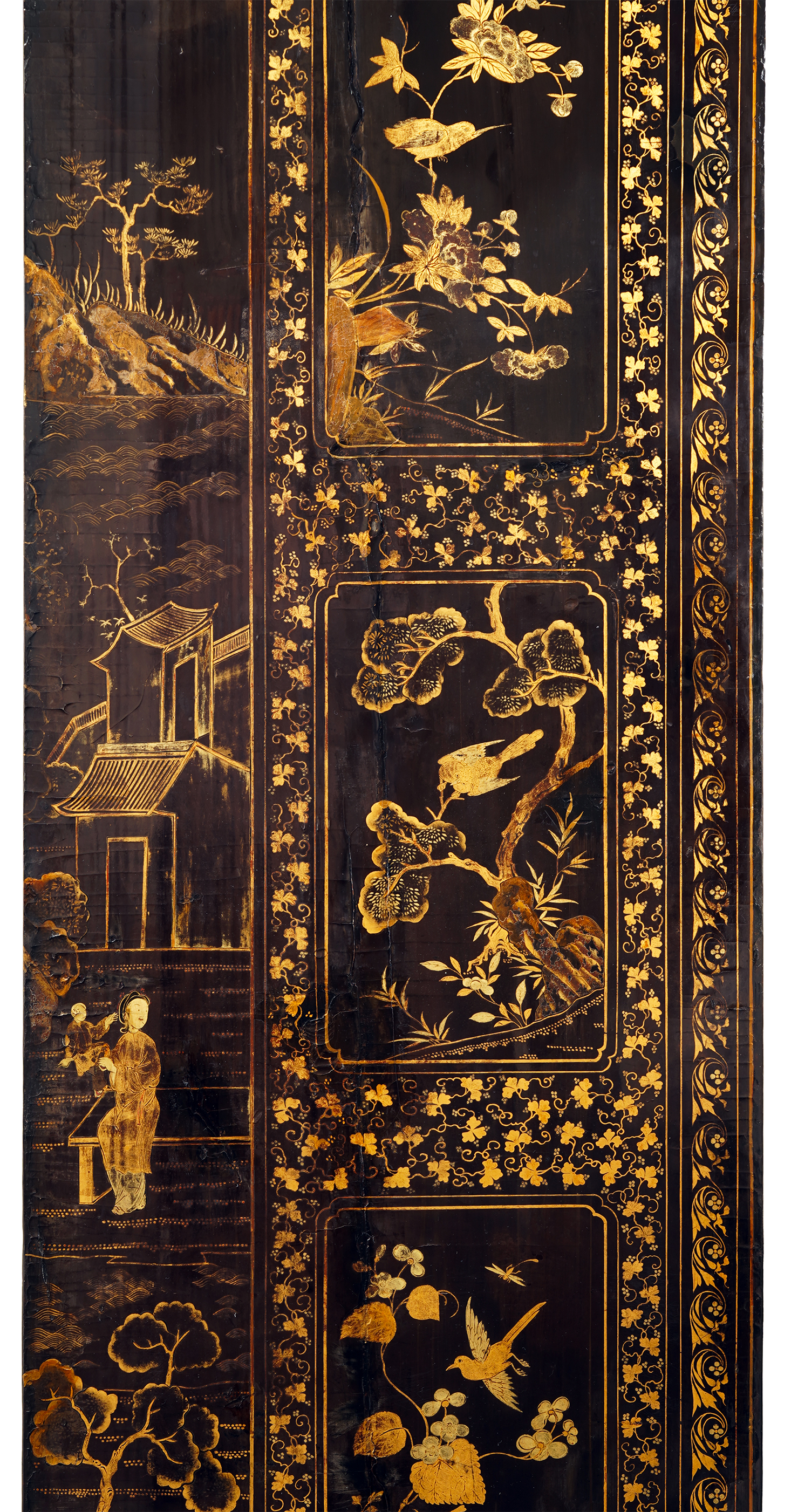
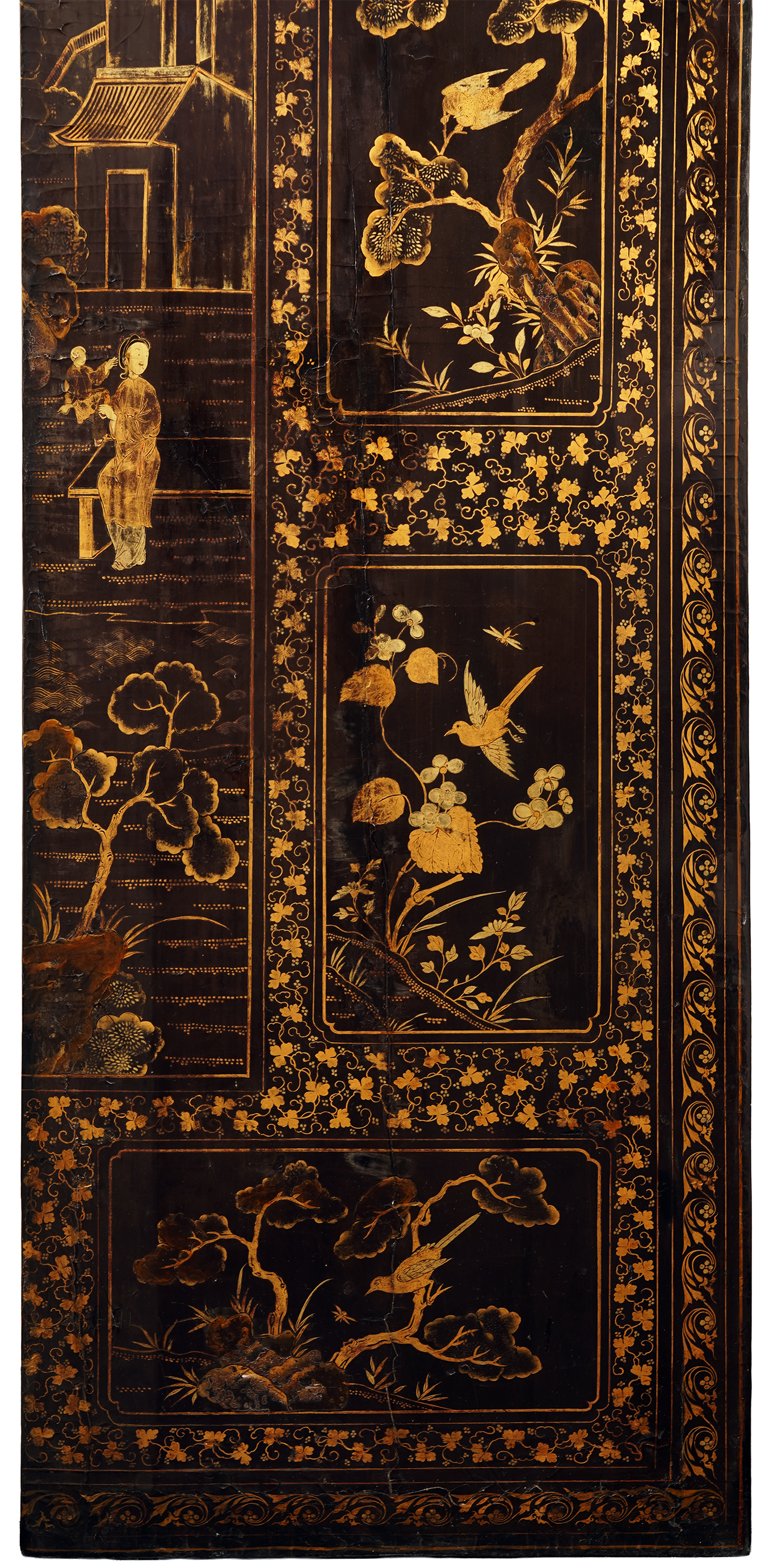
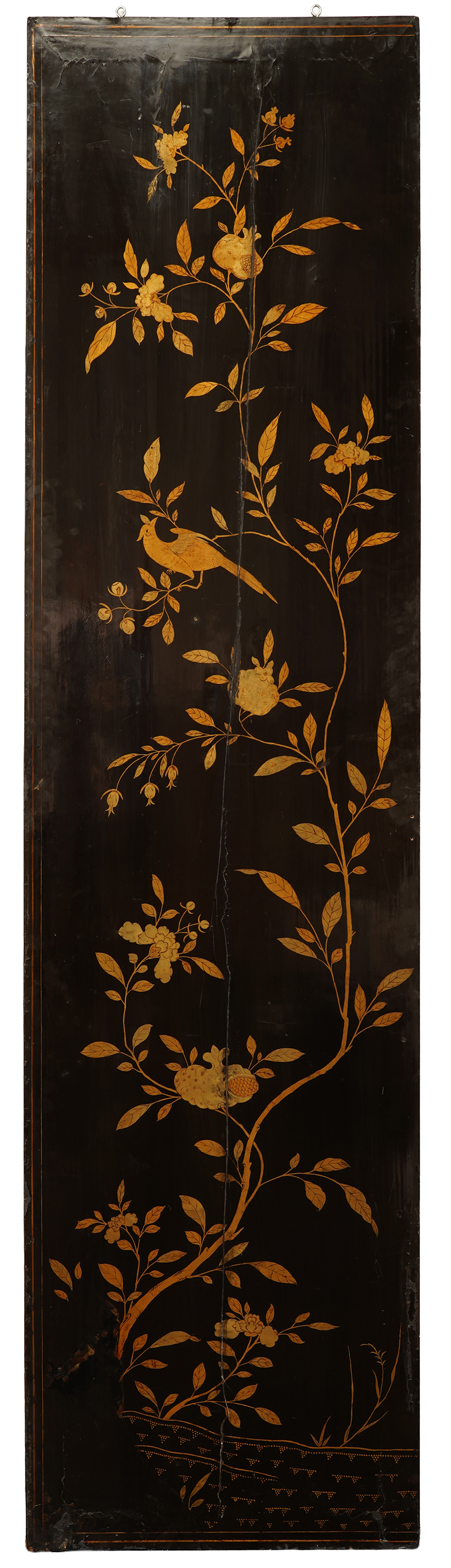
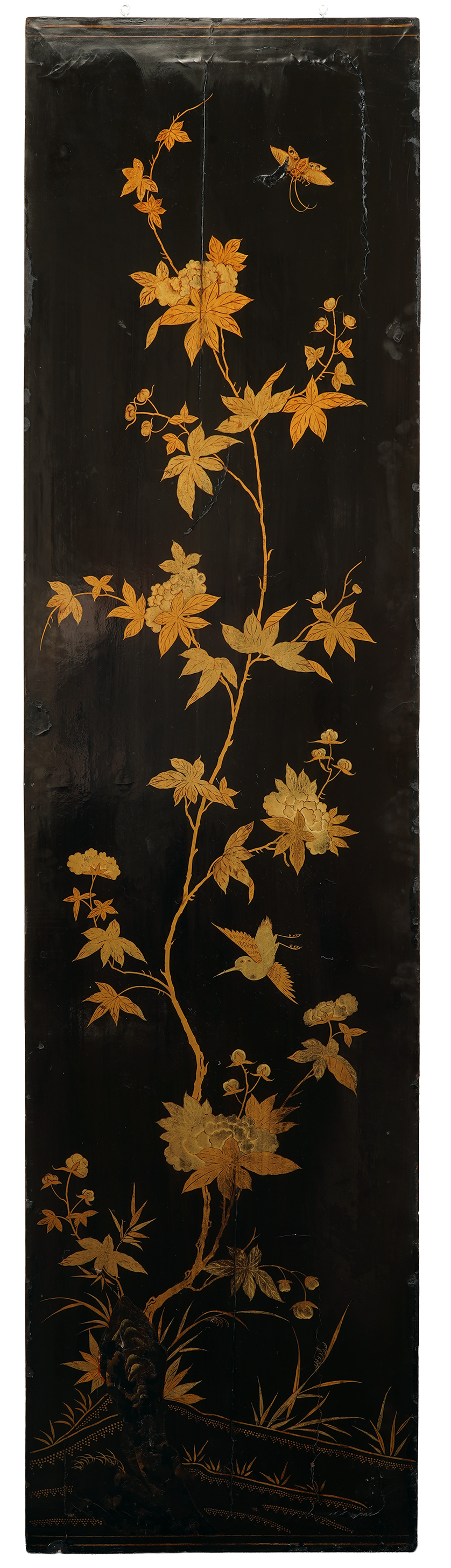
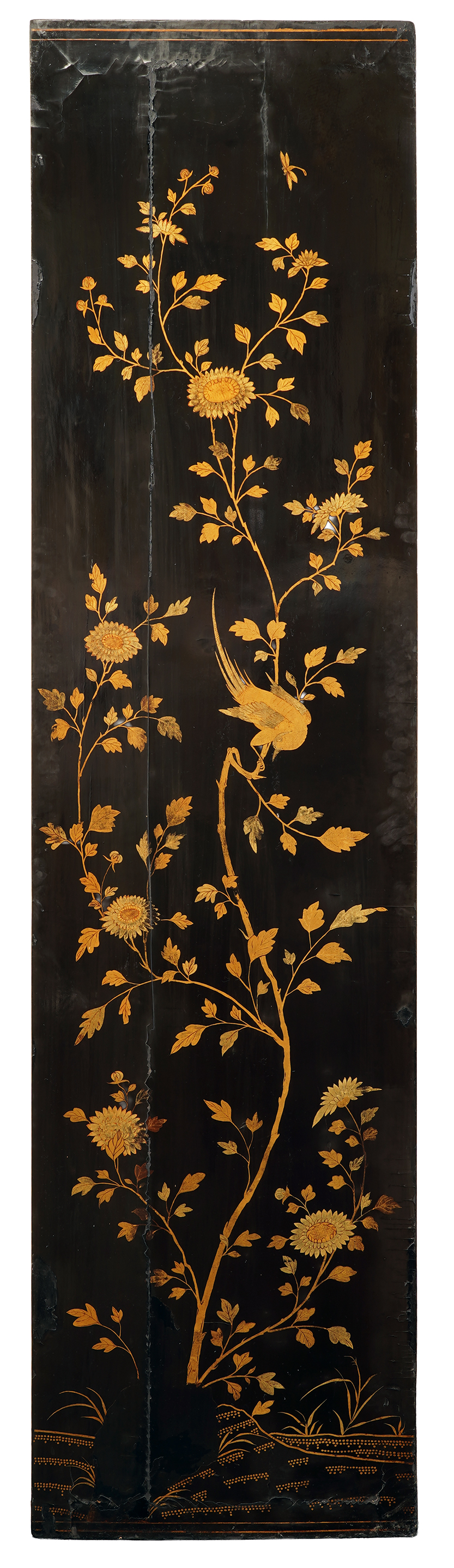
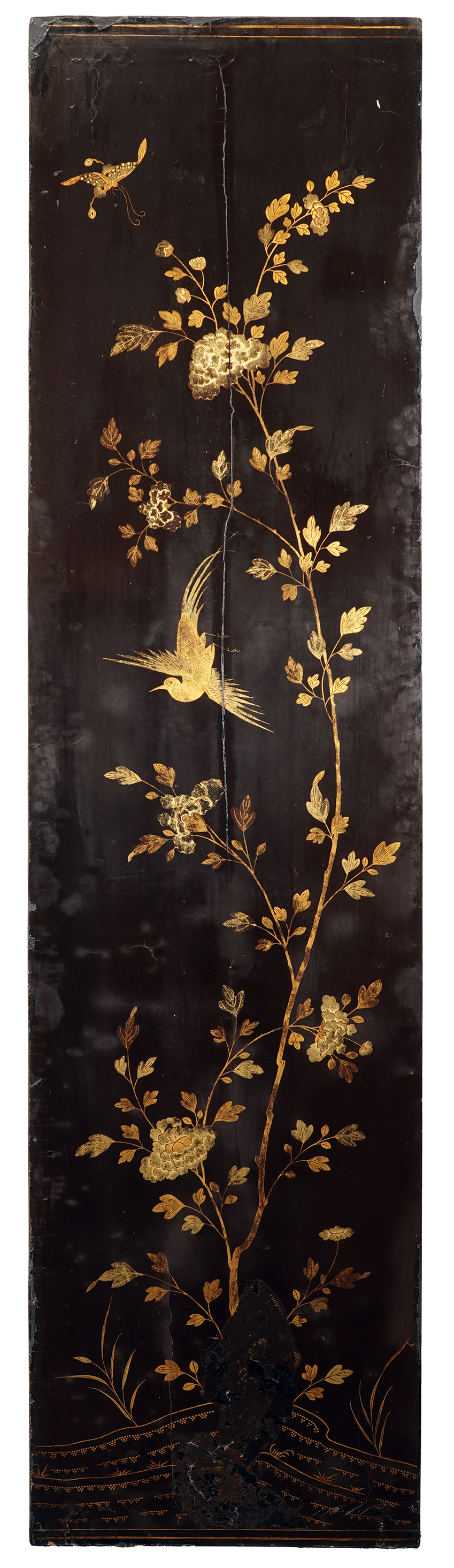
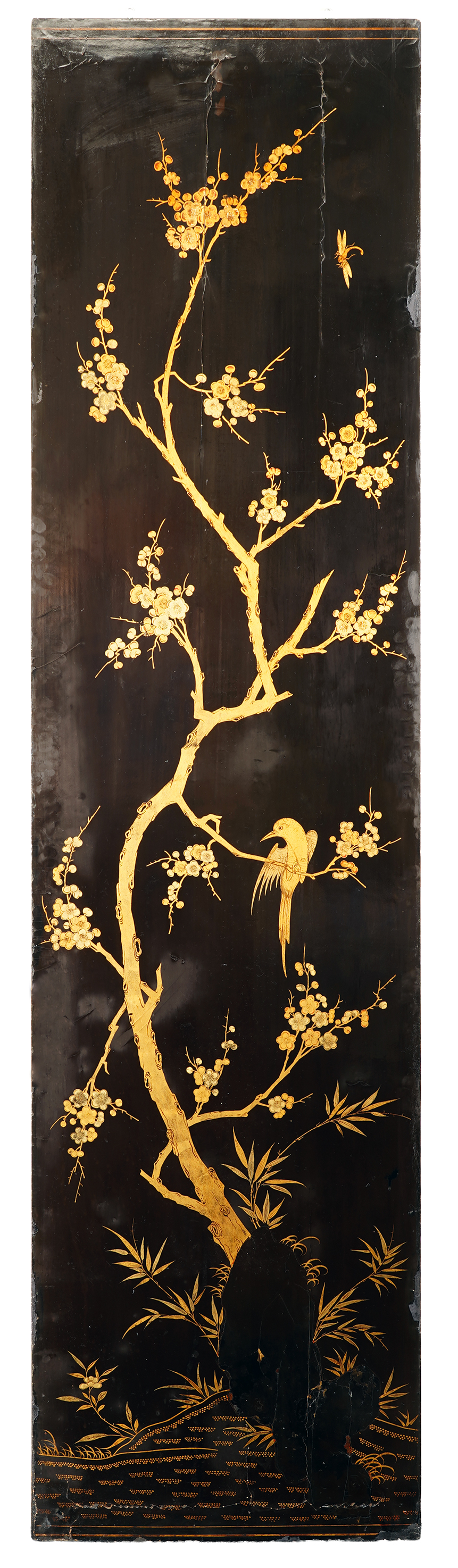
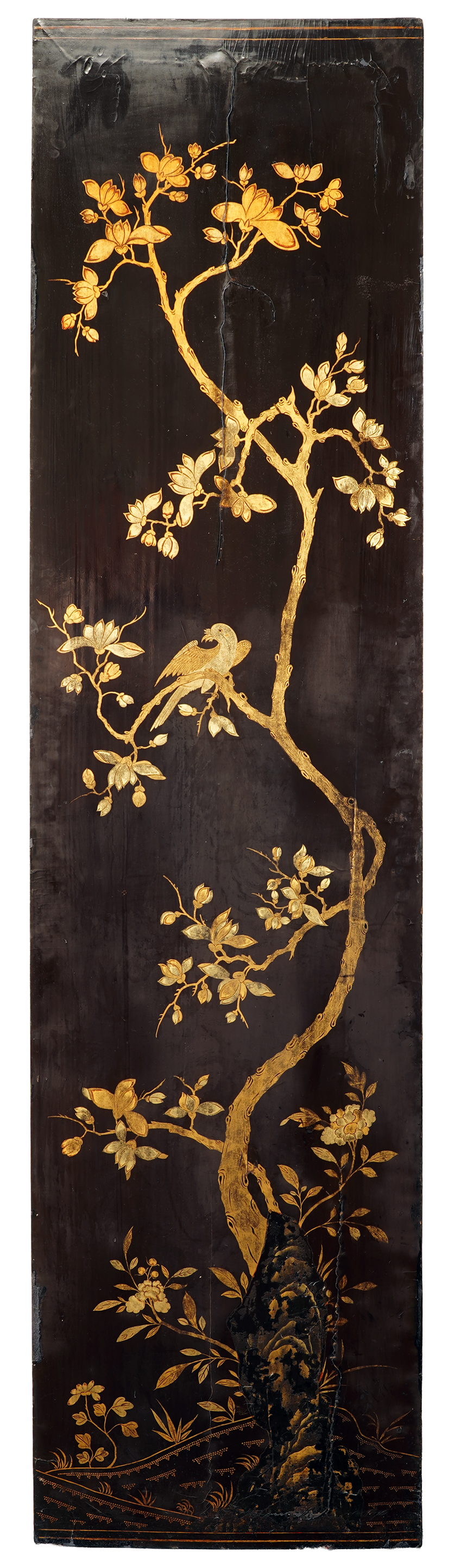
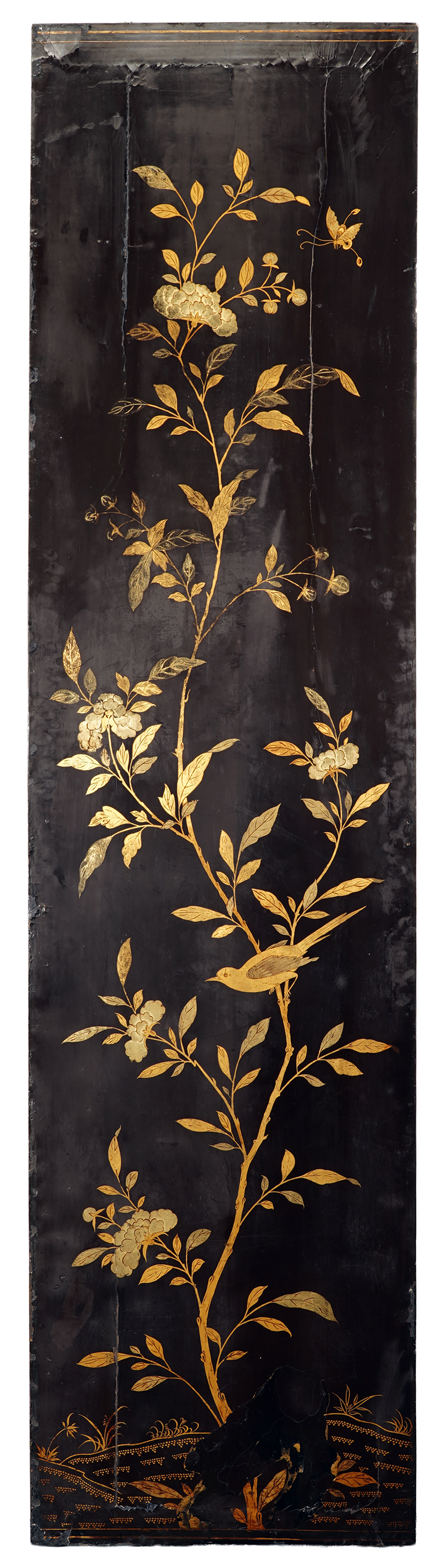
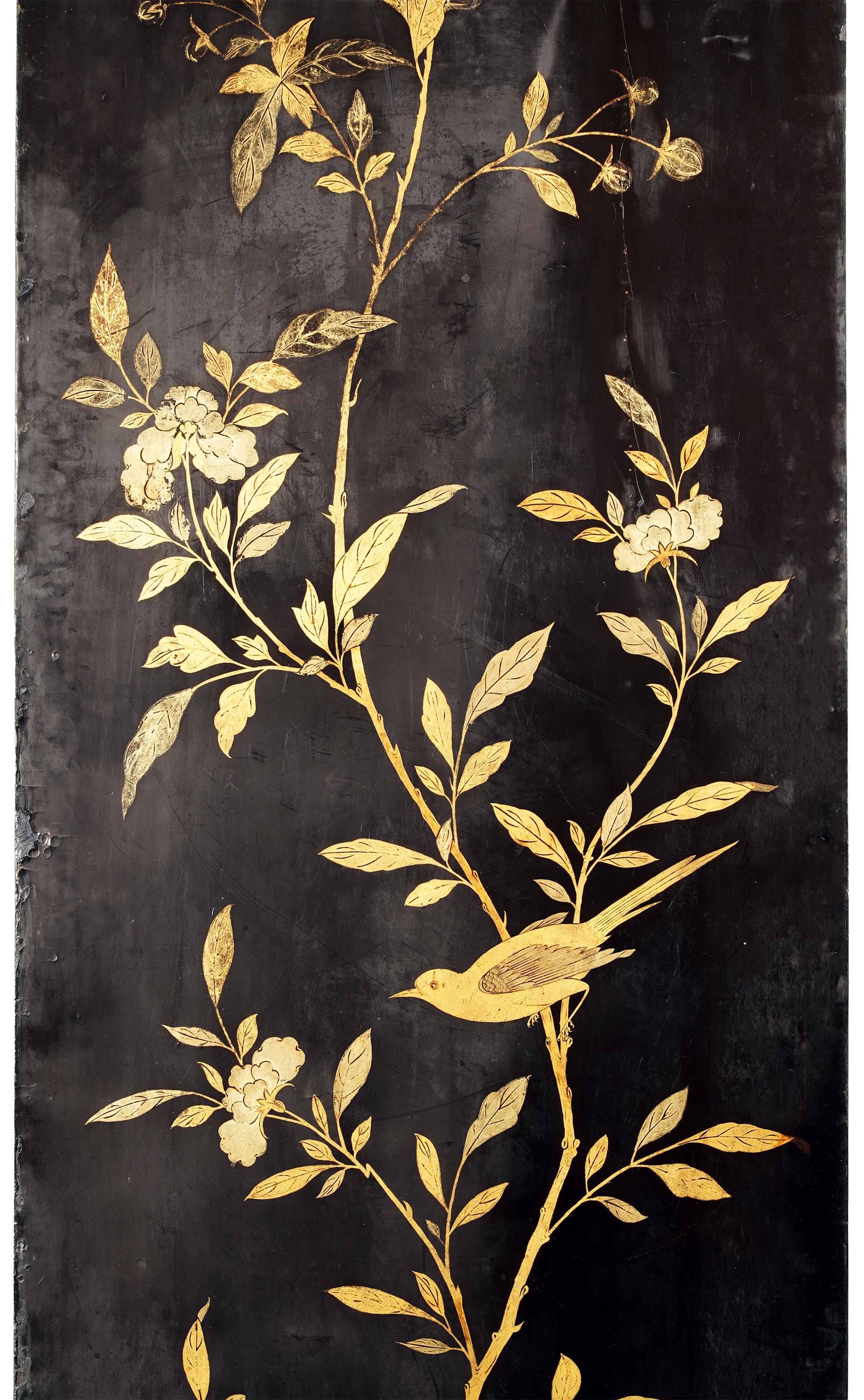
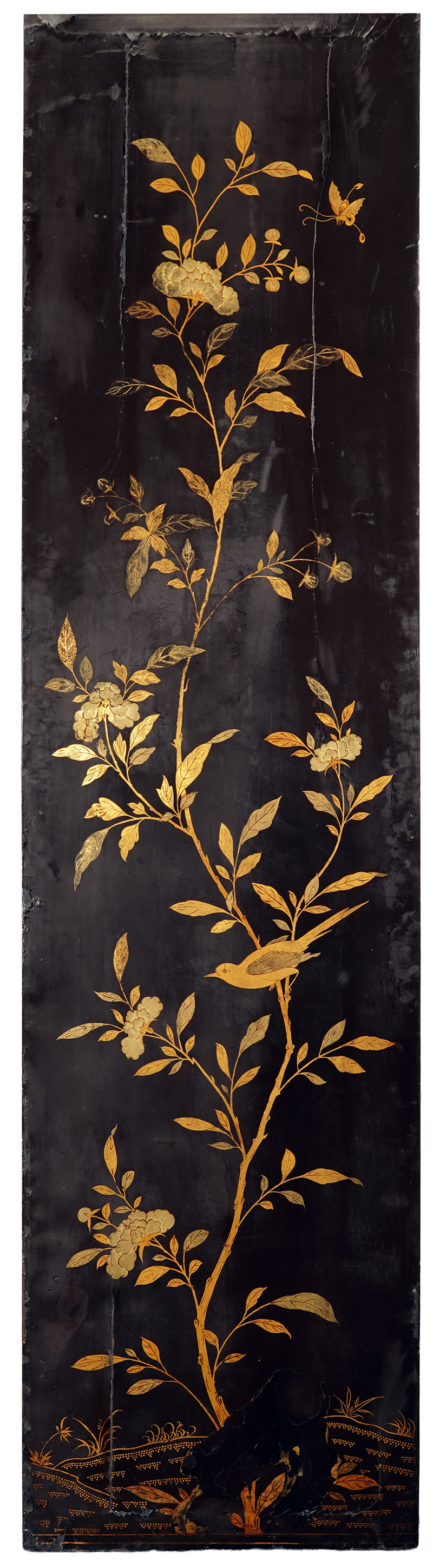
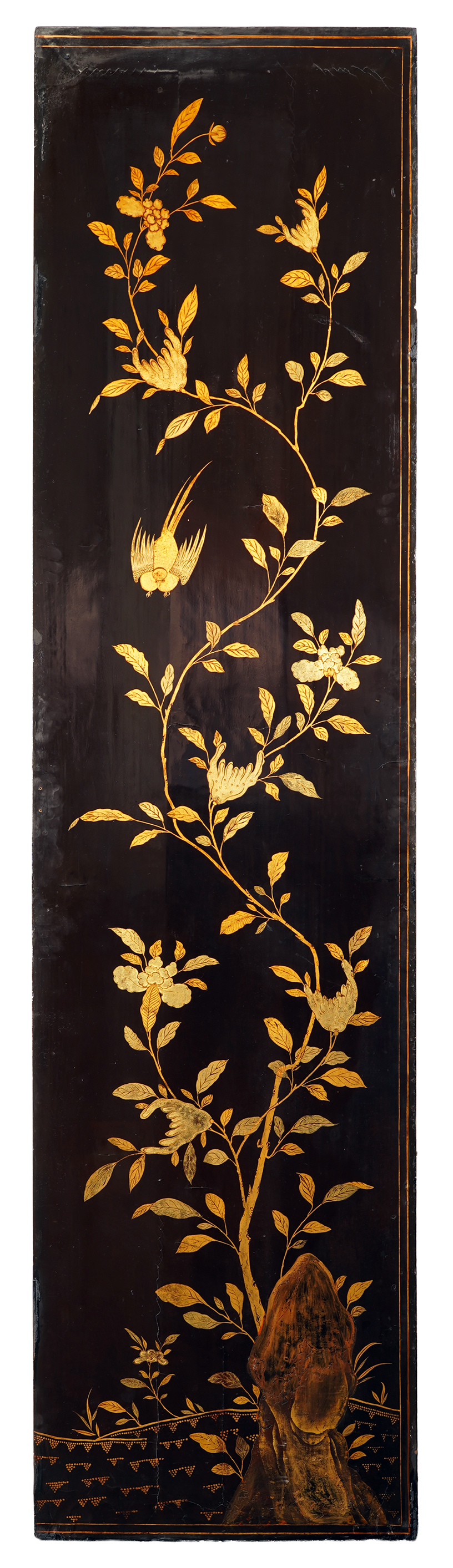
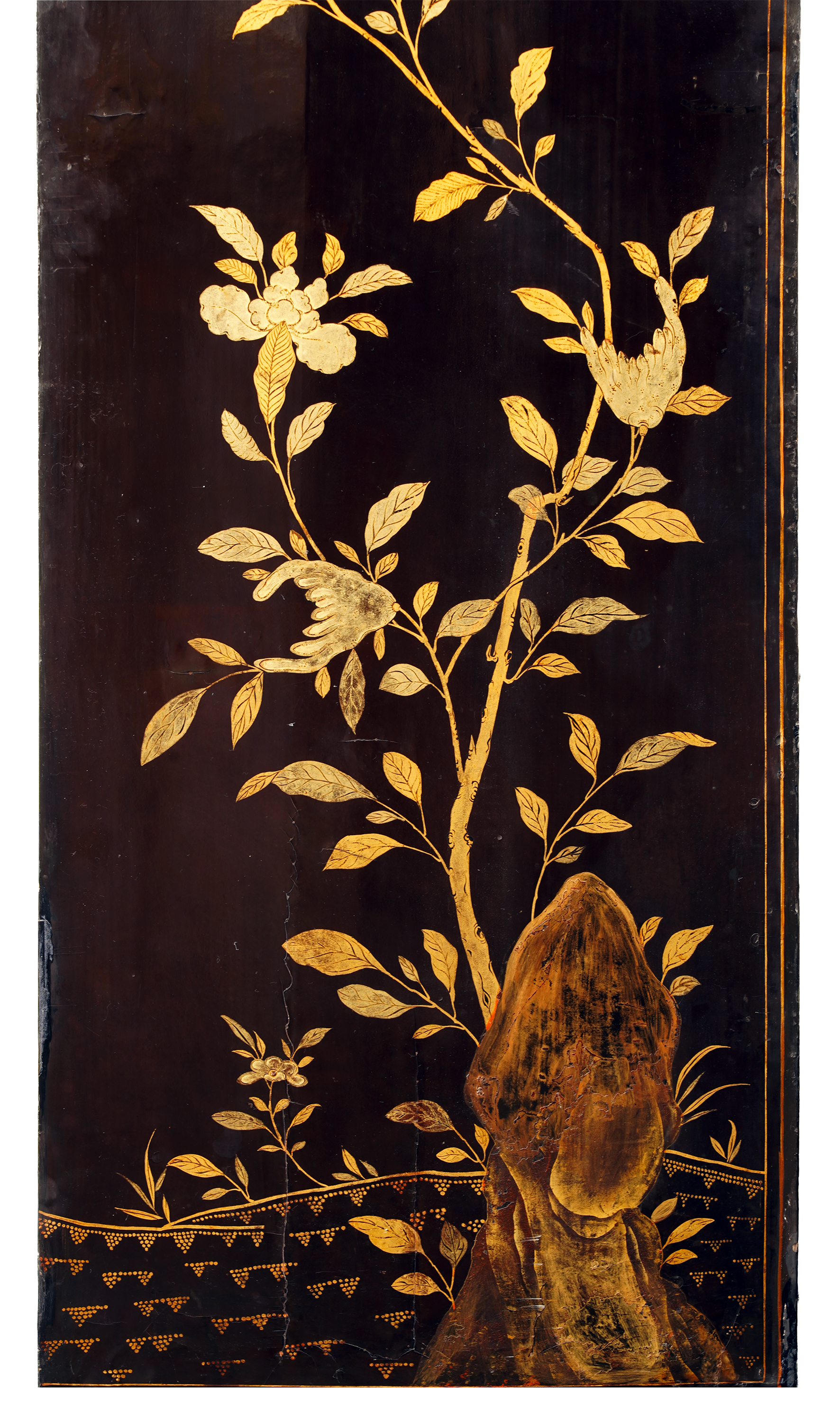
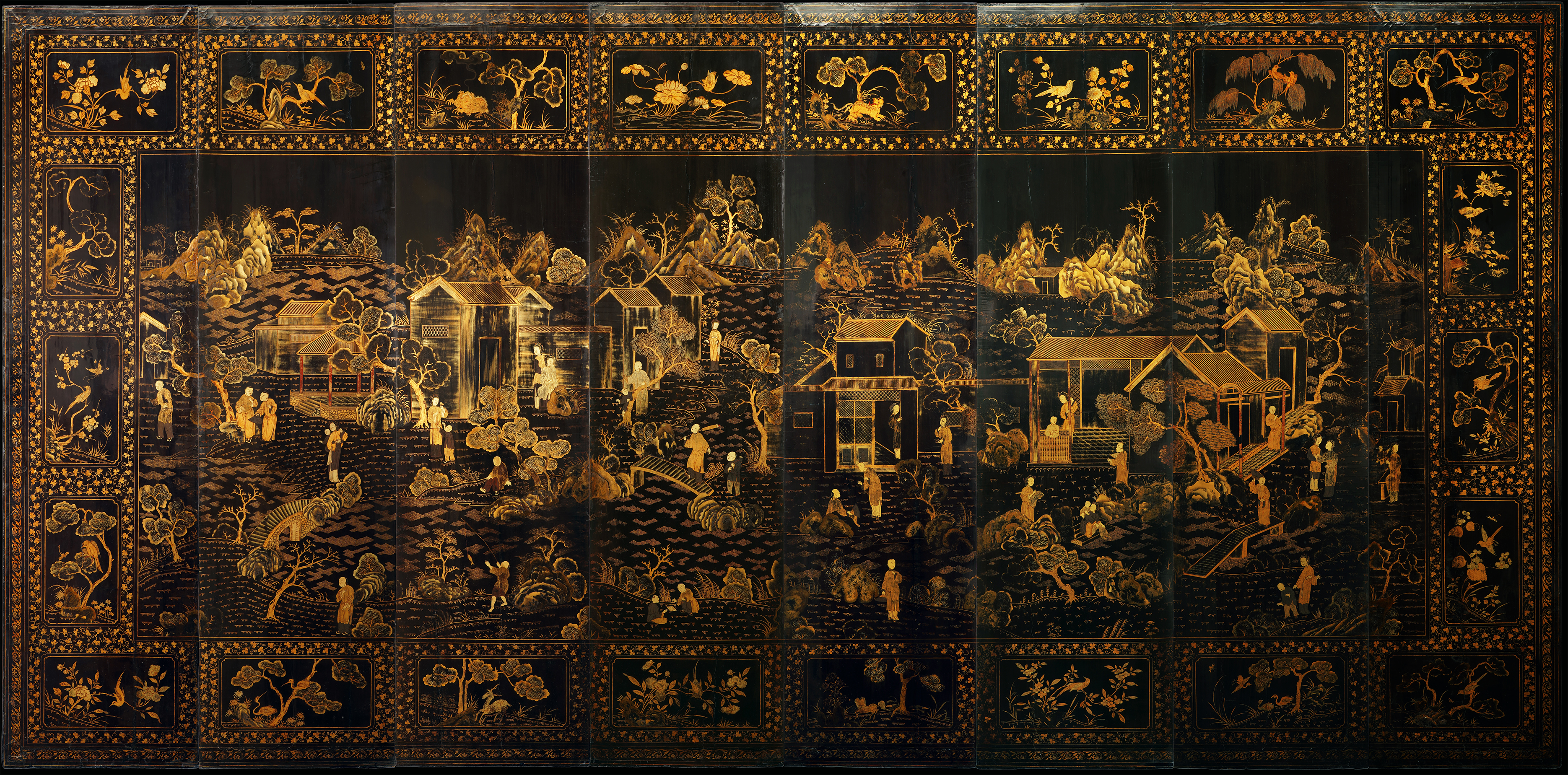
Beautiful eight-panel Chinese lacquer screen featuring a large, continuous landscape (shanshui) richly animated with scenes of daily Chinese life, depicting scholars, traditional pavilions, bridges, and weeping willows set against mountainous backdrops. The main scene is framed by a frieze of leafy scrollwork and cartouches depicting animals in landscapes, a style typical of export pieces. The reverse side of the screen is adorned with large motifs of flowering branches and birds.
The format of this large, multi-panel screen, combined with this very specific style of gold decoration on a black lacquer background known as miaojin, is entirely characteristic of works intended for the European market via the East India Companies, a tradition that reached its peak during the 18th century and continued to be produced throughout the 19th century.
Commentary
During the reign of Emperor Qianlong (1735–1796), the Qing Dynasty experienced one of its most prosperous periods. The Chinese Empire reached its territorial peak, enjoyed strong economic growth, and was marked by remarkable developments in the arts, crafts, and imperial manufacturing.
This era was also marked by a significant expansion of trade with the West. Although foreign trade was strictly controlled by the Canton System, European merchants, particularly British, French, Dutch, and Portuguese, imported large quantities of highly sought-after goods, including porcelain, silks, lacquerware, ivory objects, furniture, and tea, which had become a major consumer product in Europe. Chinese workshops sometimes adapted their creations to Western tastes, producing objects specifically intended for export, decorated with European motifs or bearing the coats of arms of noble families. This trade helped spread the refinement of Chinese art throughout Europe and had a lasting influence on Western decorative arts in the 18th century.
Contact us
Related Items
Chinese lacquer Screen
Tobogan Newsletter
If you want to be up-to-date with our new acquirings you can sign up to our newsletter.